

Molded Case Circuit Breakers (MCCB) | Industrial Circuit Protection
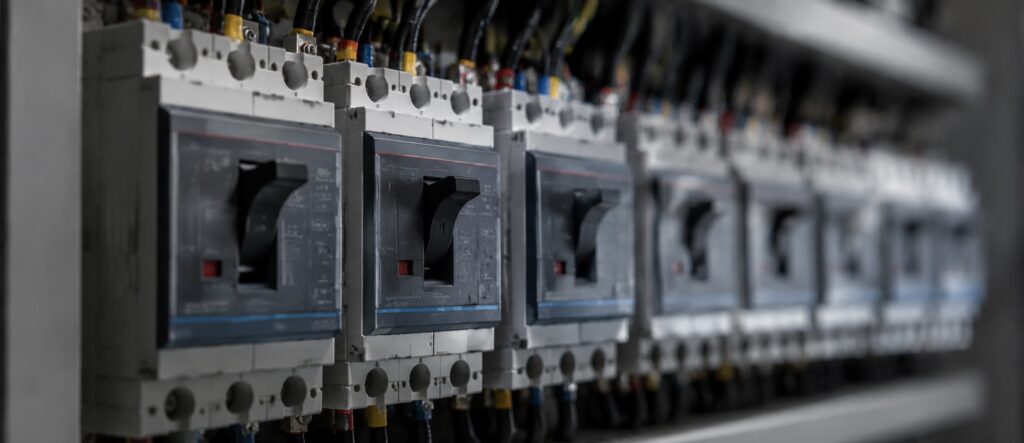
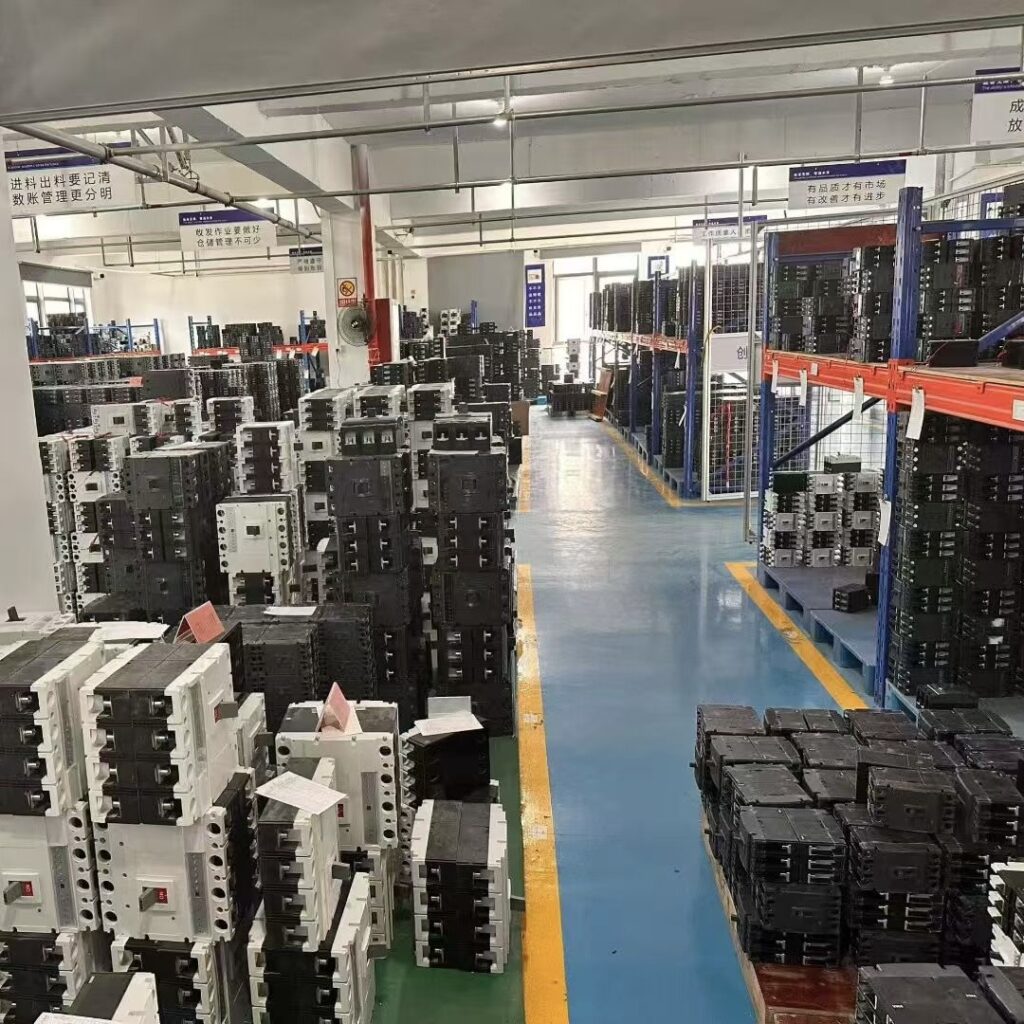
Optimize your power distribution systems with our premium Molded Case Circuit Breakers (MCCB). Designed for electric utilities, panel builders, and global procurement engineers, our MCCB portfolio covers standard and high-breaking capacities across various current ratings to meet diverse project specifications. Leveraging advanced manufacturing excellence and rigorous quality control, we provide global B2B clients with durable, IEC-compliant circuit protection solutions, reliable bulk supply, and professional OEM/ODM customization capabilities to keep your projects on schedule.
Core Advantages of JUTRION Molded Case Circuit Breakers
Delivers exceptional circuit protection with an ultimate breaking capacity reaching 100 kA (AC) and 85 kA (DC).
Available Types and Classifications of JUTRION MCCB:Thermal-Magnetic type,Electronic type,Fixed type,Adjustable type
Target Audience: Perfect for electrical distributors, panel builders, and EPC contractors seeking reliable circuit protection for global projects.
Flexible Customization: Tailored currents, breaking capacities, and accessories to meet your exact project specs.
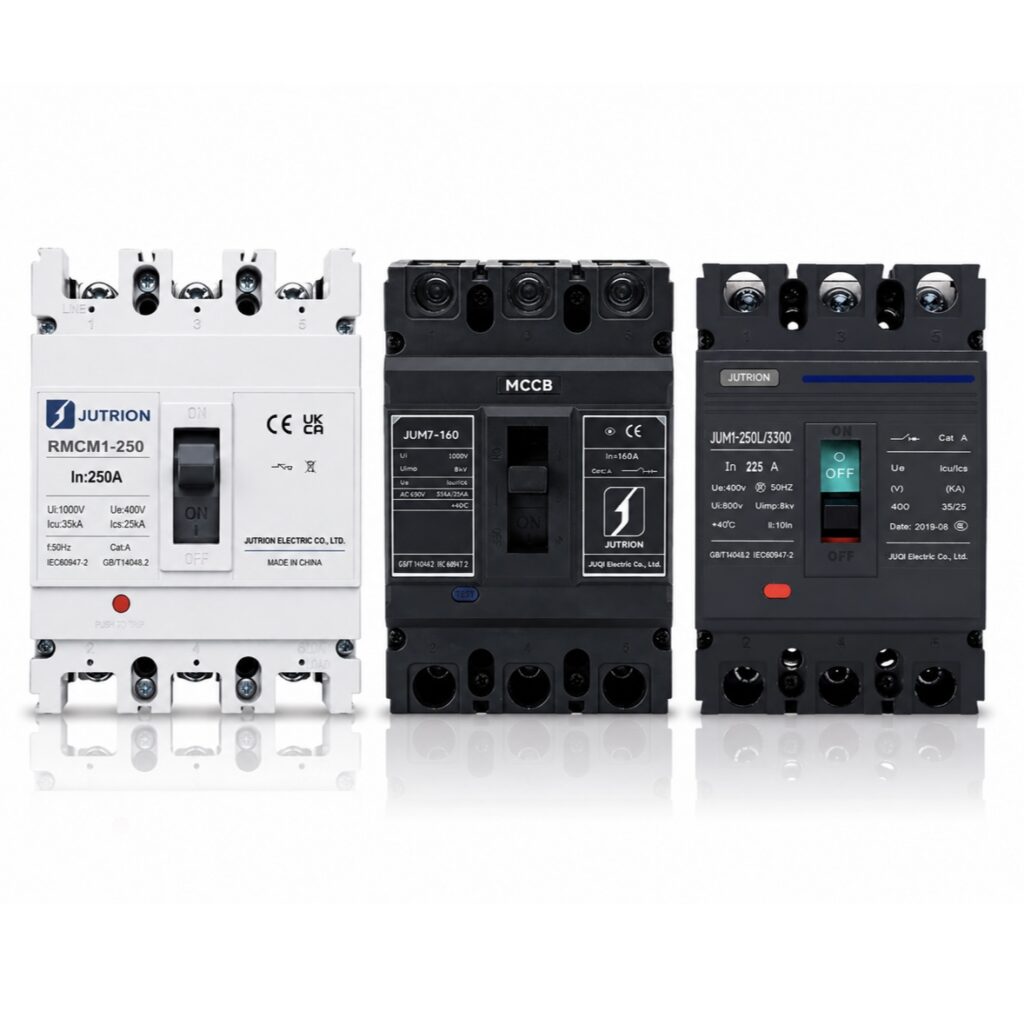
SECURE YOUR DISTRIBUTION NETWORKS WITH PREMIUM JUTRION MCCB ELECTRICAL SOLUTIONS.
Mematuhi Standar Industri
JUTRION MCCB Classifications
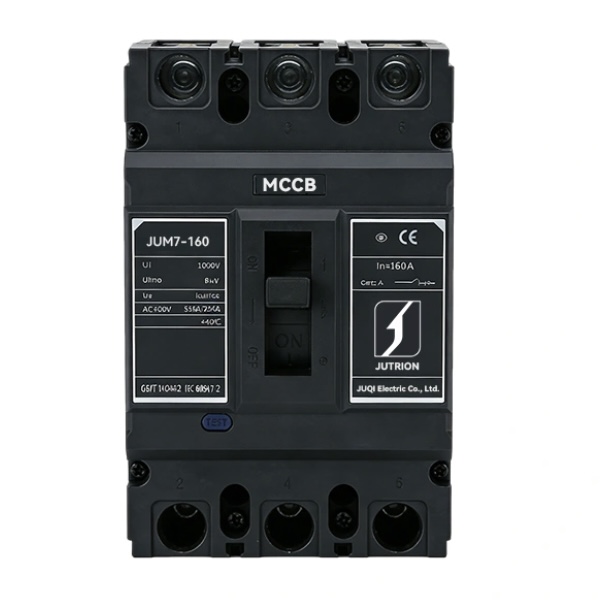
JUM7 Series Molded Case Circuit Breaker
Featuring a highly compact design, the JUM7 series maximizes panel space utilization without compromising on protection performance. Perfect for tight, space-constrained modern electrical enclosures.
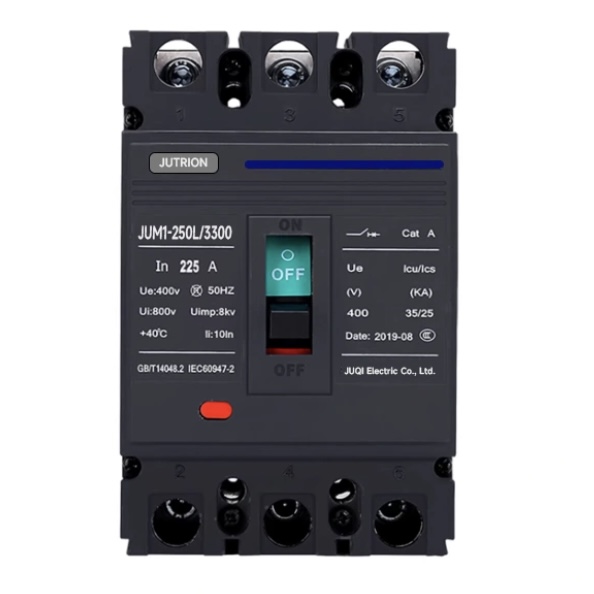
JUM1 Series Molded Case Circuit Breaker
Engineered for high-fault environments, the JUM1 series delivers exceptional short-circuit breaking capacity to handle heavy industrial currents. Built for ultimate operational safety, protection, and grid reliability.
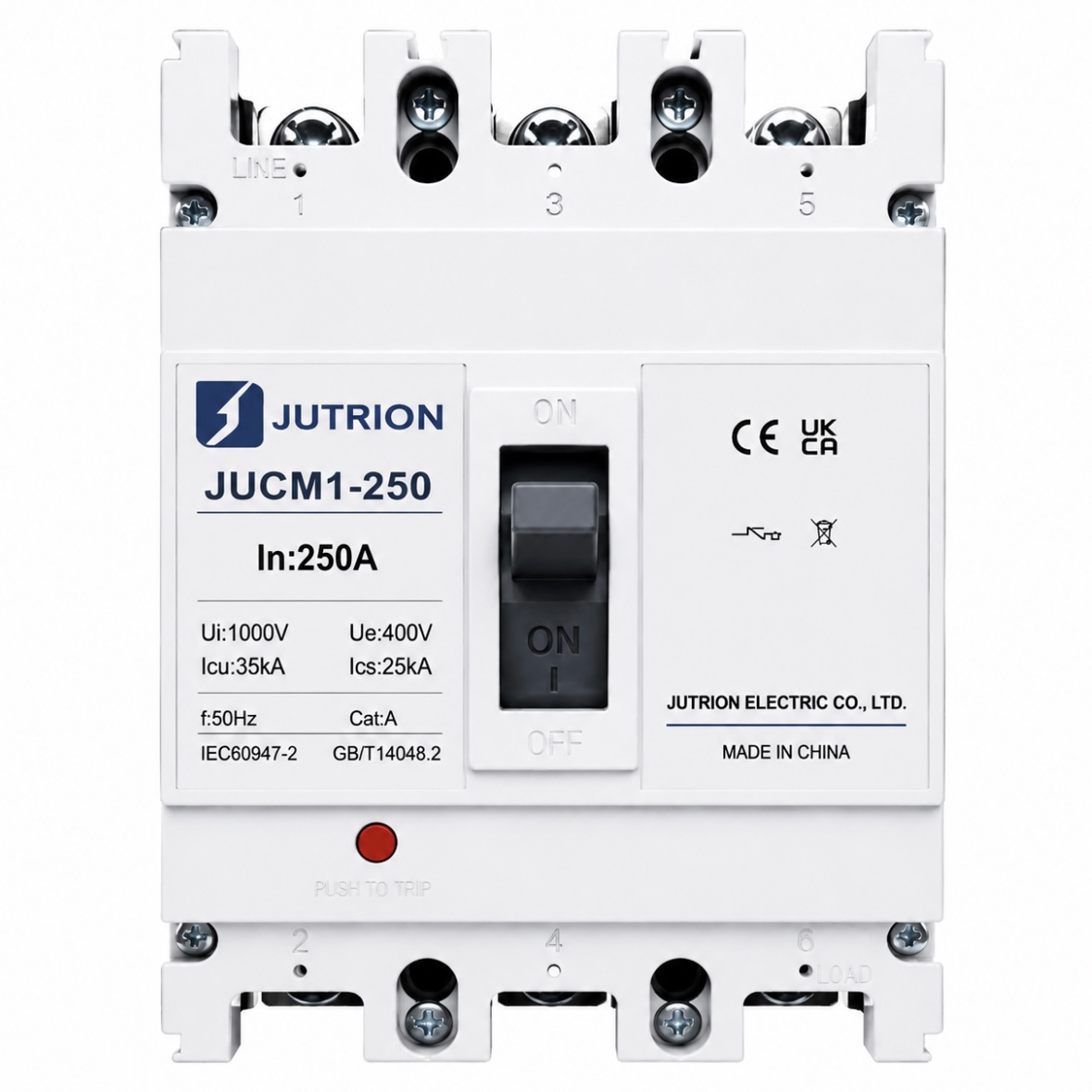
JUCM1 Series Molded Case Circuit Breaker
The classic, versatile power distribution solution. The JUCM1 series offers dependable, cost-effective overload and short-circuit protection for standard commercial and mainstream industrial panels.
MCB vs MCCB Comparison
| Technical Parameter | MCB (Miniature Circuit Breaker) | MCCB (Molded Case Circuit Breaker) |
| System Position | Terminal/Final Distribution Board | Main/Sub-Main Distribution Board |
| Arus Pengenal | ≤125A | 15A to 1600A+ |
| Breaking Capacity | Low (4.5kA – 10kA typical) | High (25kA – 100kA+ typical) |
Where JUTRION MCCBs Excel
Main Power Distribution Boards (MDBs)
Serving as the heavy-duty main incoming breakers or primary feeder protection in industrial plants, commercial complexes, and infrastructure networks to secure the backbone of the electrical grid.
Solar PV & Energy Storage Systems (ESS)
Optimized high-voltage DC protection designed specifically for utility-scale solar farms, combiners, and battery storage systems, ensuring safe operation under harsh environmental conditions.
Industrial Motor Control Centers (MCCs)
Providing reliable overload and short-circuit protection for heavy-duty electric motors, engineered to withstand massive startup inrush currents without nuisance tripping.
Critical Infrastructure & Data Centers
Optimized high-voltage DC protection designed specifically for utility-scale solar farms, combiners, and battery storage systems, ensuring safe operation under harsh environmental conditions.
PARTNER WITH JUTRION – YOUR RELIABLE MCCB MANUFACTURING EXPERT
Discover the JUTRION MCCB Advantage
Plug-and-Play Automation
Fully modular design supporting a complete range of internal auxiliaries, shunt trips, and remote motorized controls for automated switchgear.
Automation & Modular Flexibility
Perfectly compatible with motorized mechanisms for remote switching, plus a full range of plug-and-play internal auxiliaries, shunt trips, and handles.
Desain Ringkas
A space-saving, high-density footprint that maximizes panel space while accommodating a full range of internal accessories.
Kapasitas Pemutusan Tinggi
Engineered with massive fault interruption up to 100kA and Ics = 100% Icu to safely isolate extreme short-circuit shocks and protect downstream assets.
COMMON QUESTIONS ABOUT MCCBS
Let’s dive into some of the most common questions about MCCBs.
What is an MCCB (Molded Case Circuit Breaker), and how does it work?
MCCB stands for Molded Case Circuit Breaker. It is an industrial-grade electrical safety switch designed to protect electrical circuits from overloads (excessive current causing wire overheating) and short circuits (severe electrical faults). When the current exceeds safe limits, the MCCB automatically trips to cut off the power. It is called “molded case” because all its internal tripping mechanisms, contacts, and arc quenchers are completely enclosed in a heavy-duty, insulated plastic housing.
What is the difference between an MCCB and an MCB?
The main differences lie in current rating, breaking capacity, and adjustability. MCBs are for low-current terminal applications (typically up to 125A) with fixed trip characteristics. MCCBs handle heavy-duty industrial currents (up to 1600A/3200A), offer massive breaking capacities (up to 100kA), and feature adjustable trip settings for precise control.
How do I interpret MCCB nameplate ratings like In, Ui, and Ue?
These ratings are critical for safe selection: In is the rated continuous current; Ue is the operational voltage (e.g., AC 415V/690V); and Ui is the insulation voltage, defining the dielectric safety limit. Always ensure your system’s actual running parameters do not exceed these certified limits on the nameplate.
What international standards do JUTRION MCCBs comply with?
Our MCCBs are strictly engineered and manufactured to IEC 60947-2 industrial standards. They hold full CE and TUV certifications, ensuring hassle-free compliance with global site audits.
What is the difference between a Thermal-Magnetic and an Electronic MCCB?
The primary difference lies in their “brain” (the trip unit):
Electronic MCCB: Built with an internal microprocessor. It utilizes current transformers to precisely monitor the current in real time and features fully adjustable protection settings (such as long-time, short-time, instantaneous, and ground fault protection). While more expensive, it provides superior accuracy and coordination, making it perfect for complex industrial and digital projects requiring maximum power uptime.
Thermal-Magnetic MCCB: Relies on physical mechanisms to operate. It uses a bimetallic strip that bends under heat to handle overloads, and an electromagnetic coil to trip instantly during short circuits. It is simple, highly durable, cost-effective, and ideal for standard power distribution.
GET YOUR FREE MCCB QUOTE
Let JUTRION’s engineering team solve your technical challenges.