

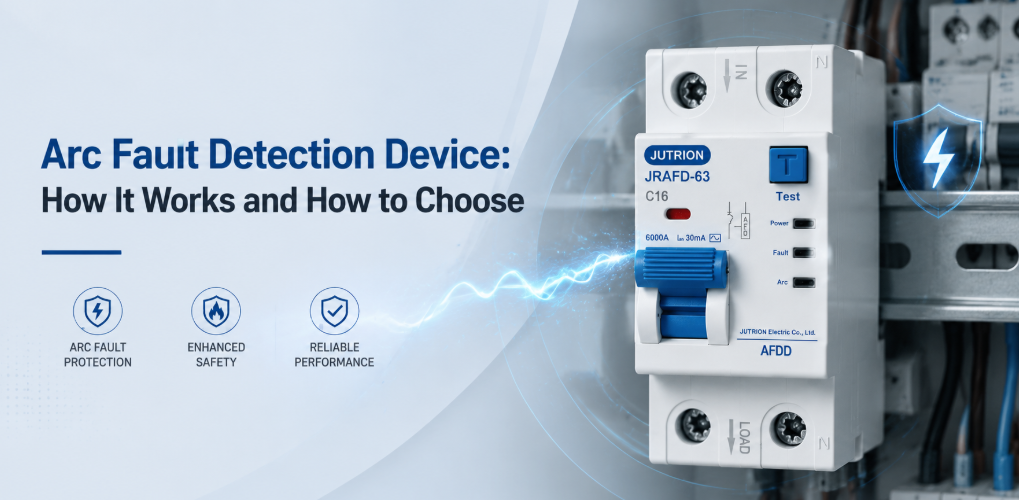
ឧបករណ៍ចាប់កំហុសធ្នូអគ្គិសនី JUTRION AFDD សម្រាប់ការពារកំហុសធ្នូ និងសុវត្ថិភាពអគ្គិសនី“16 A AFDD” មិនមែនជាការបញ្ជាក់លក្ខណៈពេញលេញទេ។ វាមិនប្រាប់អ្នកផ្គត់ផ្គង់ថាស្តង់ដារផលិតផលកំហុសធ្នូមួយណាត្រូវអនុវត្ត ថាតើការការពារលើសទម្ងន់ និងចរន្តសំណល់ត្រូវរួមបញ្ចូលឬអត់ ថាតើសមត្ថភាពចរន្តខ្លីប៉ុន្មានត្រូវការ របៀបដោះស្រាយខ្សែអព្យាក្រឹត ឬថាតើឧបករណ៍នេះត្រូវបានអនុម័តសម្រាប់បន្ទះចែកចាយដែលគ្រោងទុកឬអត់។ ការខកខានទាំងនោះអាចប្រែក្លាយគំនិតការពារអគ្គិភ័យដែលត្រឹមត្រូវទៅជាបញ្ជីសម្ភារៈដែលមិនឆបគ្នា។.
ច្បាប់ជ្រើសរើសជាក់ស្តែងគឺត្រូវធ្វើការពីសៀគ្វីចុងក្រោយចេញទៅក្រៅ។ ដំបូងត្រូវបញ្ជាក់ថាតើកូដដំឡើងតម្រូវឬណែនាំឲ្យមានការការពារកំហុសធ្នូសម្រាប់សៀគ្វីនោះឬអត់។ បន្ទាប់មកជ្រើសរើសស្ថាបត្យកម្មការពារ សម្របសម្រួលរាល់ការវាយតម្លៃអគ្គិសនី និងផ្គូផ្គងឧបករណ៍ទៅនឹងបន្ទះចែកចាយ។ មួយ ឧបករណ៍ចាប់កំហុសធ្នូអគ្គិសនី (AFDD) បន្ថែមការការពារប្រឆាំងនឹងធ្នូស៊េរី និងប៉ារ៉ាឡែលដែលគ្រោះថ្នាក់ វាមិនជំនួសដោយស្វ័យប្រវត្តិនូវ MCB, RCD, RCBO, SPD ឬការអនុវត្តខ្សែភ្លើងត្រឹមត្រូវទេ។.
ចំណុចសំខាន់ៗ
- AFDD ចាប់លំនាំធ្នូស៊េរី និងប៉ារ៉ាឡែលដែលគ្រោះថ្នាក់ ដែលអាចមិនបង្កើតចរន្តលើស ឬលេចធ្លាយដីគ្រប់គ្រាន់ដើម្បីដំណើរការ MCB ឬ RCD ធម្មតា។.
- AFDD បំពេញបន្ថែមឧបករណ៍ការពារផ្សេងទៀតជាជាងជំនួសពួកវា។. ការការពារលើសទម្ងន់ ចរន្តខ្លី ចរន្តសំណល់ និងការការពារការកើនឡើងវ៉ុលភ្លាមៗ នៅតែត្រូវផ្តល់ជូននៅកន្លែងដែលតម្រូវ។.
- ស្តង់ដារផលិតផល និងការដំឡើងឆ្លើយសំណួរផ្សេងៗគ្នា។. IEC 62606 គ្របដណ្តប់តម្រូវការផលិតផល AFDD ខណៈច្បាប់ខ្សែភ្លើងជាតិកំណត់កន្លែងដែលត្រូវការឬណែនាំការការពារ។.
- ស្ថាបត្យកម្មការពារប៉ះពាល់ដល់ការរចនាសៀគ្វីទាំងមូល។. AFDD ឯករាជ្យ, AFDD-MCB, AFDD-RCBO និងការរួមបញ្ចូលម៉ូឌុលដែលបានអនុម័ត ផ្តល់សំណុំមុខងារផ្សេងៗគ្នា។.
- ចរន្តវាយតម្លៃតែមួយមុខមិនគ្រប់គ្រាន់សម្រាប់ការជ្រើសរើសទេ។. វ៉ុល ប្រេកង់ ប៉ូល ខ្សែកោង សមត្ថភាពបំបែក ប្រភេទ RCD បាសបារ ស្ថានីយ ទទឹងម៉ូឌុល និងលក្ខខណ្ឌប្រអប់ ក៏ត្រូវផ្គូផ្គងដែរ។.
- ការដំឡើង និងការធ្វើតេស្តត្រឹមត្រូវគឺចាំបាច់។. ការតម្រង់ខ្សែអព្យាក្រឹត កម្លាំងបង្វិលស្ថានីយ លក្ខខណ្ឌកម្ដៅ នីតិវិធីធ្វើតេស្ត និងការបង្ហាញមូលហេតុនៃការផ្តាច់ សុទ្ធតែប៉ះពាល់ដល់ប្រតិបត្តិការដែលអាចទុកចិត្តបាន និងការស្វែងរកកំហុស។.
ប្រើចំណុចប្រាំពីរខាងក្រោមដើម្បីប្រៀបធៀបជម្រើស AFDD សម្រាប់សៀគ្វីជាក់លាក់ និងទីផ្សារគោលដៅ។.
| ការសម្រេចចិត្ត | សំណួរដែលត្រូវឆ្លើយ | ហេតុអ្វីវាផ្លាស់ប្តូរការជ្រើសរើស |
|---|---|---|
| វិសាលភាពបទប្បញ្ញត្តិ | ប្រទេសណា កំណែកូដ ប្រភេទអគារ ប្រភេទសៀគ្វី និងចរន្តវាយតម្លៃអ្វីដែលត្រូវអនុវត្ត? | តម្រូវការ AFDD មិនមែនជាសកលទេ ហើយអាចផ្លាស់ប្តូរតាមការអនុម័តជាតិ។. |
| ប្រព័ន្ធផលិតផល | តើគម្រោងជា IEC AFDD, UK BS EN AFDD ឬ North American AFCI? | ស្តង់ដារ ការវាយតម្លៃ វិញ្ញាបនប័ត្រ ចំណុចប្រទាក់បន្ទះ និងវាក្យស័ព្ទខុសគ្នា។. |
| ស្ថាបត្យកម្មការពារ | តើការចាប់ធ្នូឯករាជ្យ រួមជាមួយ MCB ឬរួមជាមួយ RCBO? | ជម្រើសកំណត់ថាឧបករណ៍ការពារបន្ថែមណាខ្លះនៅតែចាំបាច់។. |
| ការវាយតម្លៃអគ្គិសនី | តើវ៉ុល ប្រេកង់ ចរន្ត ខ្សែកោង ប្រភេទចរន្តសំណល់ និងសមត្ថភាពបំបែកអ្វីដែលត្រូវការ? | តម្លៃនីមួយៗត្រូវគ្នាទៅនឹងលក្ខខណ្ឌប្រតិបត្តិការ ឬកំហុសផ្សេងៗគ្នា។. |
| ចំណុចប្រទាក់ការផ្គុំ | តើបន្ទះ បាសបារ ប៉ូល ការរៀបចំខ្សែអព្យាក្រឹត ទទឹងម៉ូឌុល និងគ្រឿងបន្ថែមណាដែលត្រូវអនុវត្ត? | ការសមគ្នាមេកានិចតែមួយមុខមិនបង្កើតភាពឆបគ្នាខាងអគ្គិសនី ឬវិញ្ញាបនប័ត្រទេ។. |
| ផលវិបាកប្រតិបត្តិការ | តើមានអ្វីកើតឡើងប្រសិនបើសៀគ្វីផ្តាច់ ហើយតើមូលហេតុនឹងត្រូវកំណត់អត្តសញ្ញាណដោយរបៀបណា? | ភាពបន្ត ការជ្រើសរើស ការបង្ហាញ និងការចូលថែទាំប៉ះពាល់ដល់ការរចនា។. |
| ការគាំទ្រផលិតផល | តើសន្លឹកទិន្នន័យ ការណែនាំ វិញ្ញាបនបត្រ គំរូ និងសេវាកម្មប្ដូរតាមបំណងណាខ្លះនឹងជួយគម្រោង? | ឯកសារច្បាស់លាស់ធ្វើឱ្យការប្រៀបធៀប ការដំឡើង ការអនុម័ត និងការបញ្ជាទិញម្តងទៀតកាន់តែងាយស្រួល។. |
លំដាប់នេះជួយអ្នកទិញប្រៀបធៀបផលិតផលសមមូល និងទំនាក់ទំនងតម្រូវការរបស់ពួកគេប្រកបដោយប្រសិទ្ធភាព។ វាក៏បំបែកការសម្រេចចិត្តដែលច្រើនតែច្រឡំគ្នាផងដែរ។ ឧទាហរណ៍ ខ្សែកោងកាត់ផ្តាច់ប្រភេទ C ពិពណ៌នាអំពីមុខងារការពារចរន្តលើស វាមិនពិពណ៌នាអំពីភាពរសើបចំពោះធ្នូអគ្គិសនីទេ។ ការសម្គាល់ 30 mA ពិពណ៌នាអំពីការការពារចរន្តលេចធ្លាយ វាមិនបញ្ជាក់ថាឧបករណ៍នេះរួមបញ្ចូលមុខងារ AFDD ទេ។.
តើធ្នូអគ្គិសនីជាអ្វី ហើយហេតុអ្វីវាអាចបង្កជាអគ្គិភ័យ?
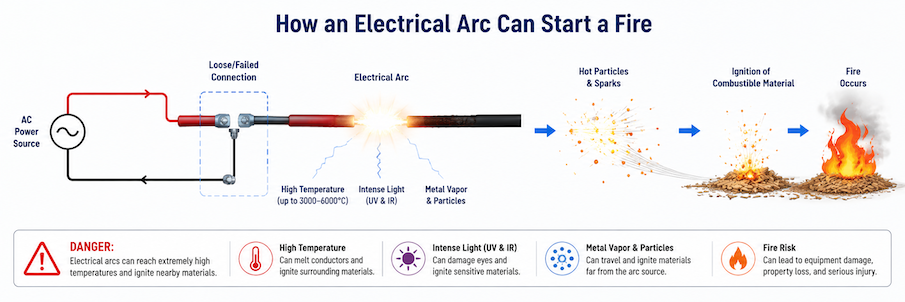
ធ្នូអគ្គិសនីគឺជាការបញ្ចេញចរន្តជាបន្តបន្ទាប់តាមរយៈគម្លាតដែលបានអ៊ីយ៉ូដរវាងចំណុចចម្លងចរន្ត។ នៅក្នុងកុងតាក់ដែលមានសុខភាពល្អ ធ្នូខ្លីបំផុតអាចកើតឡើងនៅពេលទំនាក់ទំនងបើក ហើយជាធម្មតាត្រូវបានទប់ស្កាត់ដោយឧបករណ៍។ ធ្នូកំហុសគឺខុសគ្នា៖ វាកើតឡើងដោយអចេតនានៅអ៊ីសូឡង់ដែលខូច ខ្សែចម្លងដែលបាក់ ឬការតភ្ជាប់មិនល្អ ហើយអាចបញ្ចេញកំដៅខ្លាំងម្តងហើយម្តងទៀតទៅក្នុងវត្ថុធាតុនៅក្បែរនោះ។.
An AFDD មានតម្លៃព្រោះធ្នូគ្រោះថ្នាក់ខ្លះនៅក្រោមកម្រិតដំណើរការរបស់ឧបករណ៍ការពារធម្មតា។ ធ្នូស៊េរីអាចកើតឡើងនៅស្ថានីយរលុង ខ្សែចម្លងដែលខូចមួយផ្នែក ឬទំនាក់ទំនងឌុយខូច។ បន្ទុកនៅតែភ្ជាប់ស៊េរីជាមួយកំហុស ដូច្នេះបន្ទុក 6 A អាចបន្តទាញចរន្តប្រហែលធម្មតារបស់វា ខណៈកំដៅខ្លាំងកើតឡើងនៅផ្ទៃទំនាក់ទំនងតូចមួយ។ A 16 A ឧបករណ៍បំបែកសៀគ្វីខ្នាតតូច (MCB) គ្មានមូលហេតុផ្ទុកលើសដើម្បីផ្តាច់ទេ ហើយ RCD អាចមិនឃើញអតុល្យភាពទេ ប្រសិនបើចរន្តត្រឡប់តាមខ្សែអព្យាក្រឹត។.
ធ្នូប៉ារ៉ាឡែលឆ្លងកាត់រវាងខ្សែចម្លងនៅសក្តានុពលផ្សេងគ្នា។ វាអាចតាមអ៊ីសូឡង់ដែលខូចដោយសារប្រដាប់តោង ការសង្កត់ សំណើម ការប៉ះពន្លឺអ៊ុលត្រាវីយូឡេ សត្វល្អិត ឬការចាស់ដោយកម្ដៅ។ ផ្លូវធ្នូអាចកំណត់ និងរំខានចរន្ត ដោយរារាំងឧបករណ៍បំបែកធម្មតាពីការឃើញសៀគ្វីខ្លីលោហៈស្ថិរភាព។ ធ្នូពីខ្សែទៅដីអាចដំណើរការ RCD ប៉ុន្តែធ្នូពីខ្សែទៅអព្យាក្រឹតអាចនៅមានតុល្យភាពពីទស្សនៈរបស់ RCD។.
សញ្ញាព្រមានទូទៅរួមមានស្ថានីយរន្ធរលុង ទំនាក់ទំនងឌុយពាក់ ខ្សែកាបជាប់នៅខាងក្រោយគ្រឿងសង្ហារឹម ខ្សែចម្លងខូចពេលបកអ៊ីសូឡង់ ខ្សែអាចបត់បែនបានដែលពត់ម្តងហើយម្តងទៀតនៅជិតឧបករណ៍ប្រើប្រាស់ និងអ៊ីសូឡង់ដែលត្រូវចាក់ទម្លុះដោយវីសឬដែកគោល។ កំហុសខ្លះចាប់ផ្តើមជាការតភ្ជាប់ធន់ខ្ពស់ដែលឡើងកម្ដៅ និងអុកស៊ីតកម្មមុនពេលធ្នូអន្តរកាលលេចឡើង។ ខ្លះទៀតវិវត្តតាមផ្លូវអ៊ីសូឡង់ដែលឆេះកាបូនបន្ទាប់ពីការខូចខាតដើម។ យន្តការទាំងនេះពន្យល់ពីមូលហេតុដែលកម្លាំងបង្វិលត្រឹមត្រូវ ការរៀបចំខ្សែកាបដោយប្រុងប្រយ័ត្ន គ្រឿងបន្លាស់សមស្រប និងការត្រួតពិនិត្យតាមកាលកំណត់នៅតែសំខាន់ ទោះបីជាមានការការពារ AFDD ត្រូវបានដំឡើងក៏ដោយ។.
ឧបករណ៍ធម្មតាក៏អាចបង្កើតលក្ខណៈអគ្គិសនីដែលស្រដៀងនឹងផ្នែកខ្លះនៃរលកធ្នូ។ ទំនាក់ទំនងកុងតាក់ រ៉ឺឡេ ឌីម័រ ម៉ូទ័រប្រ៊ុស និងការផ្គត់ផ្គង់ថាមពលរបៀបប្តូរ គឺជាឧទាហរណ៍ដែលធ្លាប់ស្គាល់។ AFDD ដែលអនុលោមតាមស្តង់ដារប្រើលក្ខណៈសញ្ញាជាច្រើន និងរយៈពេលរបស់វា ជាជាងប្រតិកម្មចំពោះផ្កាភ្លើងឬការរំខានប្រេកង់ខ្ពស់រាល់ដង។ ការបែងចែកនេះគាំទ្រប្រតិបត្តិការធម្មតា ខណៈអនុញ្ញាតឱ្យឧបករណ៍ឆ្លើយតបនៅពេលលំនាំគ្រោះថ្នាក់បំពេញតាមលក្ខណៈវិនិច្ឆ័យផ្តាច់របស់វា។.
AFDD វិភាគលក្ខណៈអគ្គិសនីជាបន្តបន្ទាប់ដូចជារយៈពេលផ្ទុះ ភាពមិនទៀងទាត់ សមាសធាតុប្រេកង់ខ្ពស់ ការដាច់ចរន្ត និងឥរិយាបថជុំវិញចំណុចសូន្យ AC។ ក្បួនដោះស្រាយរបស់វាត្រូវតែបែងចែកលំនាំគ្រោះថ្នាក់ពីធ្នូប្តូរធម្មតា ប្រតិបត្តិការរ៉ឺឡេ ឌីម័រ ម៉ូទ័រប្រ៊ុស និងការផ្គត់ផ្គង់ថាមពលអេឡិចត្រូនិក។ នៅពេលលក្ខណៈវិនិច្ឆ័យដែលបានកំណត់ត្រូវបានបំពេញ វាបញ្ជាយន្តការបើកដើម្បីផ្តាច់សៀគ្វី។.
គោលការណ៍ដំណើរការនេះនាំទៅរកព្រំដែនជ្រើសរើសបី៖
- AFDD មិនមែនគ្រាន់តែជា MCB ដែលរសើបជាងនោះទេ។ ទំហំចរន្ត និងការស្គាល់លំនាំធ្នូ គឺជាគោលការណ៍ការពារផ្សេងគ្នា។.
- AFDD មិនមែនជា RCD ទេ។ កម្រិតលេចធ្លាយដីដូចជា 30 mA មិនពិពណ៌នាអំពីការរកឃើញធ្នូទេ។.
- AFDD មិនអាចទូទាត់សម្រាប់ខ្សែចម្លងដែលមានកម្រិតទាបពេក សមត្ថភាពសៀគ្វីខ្លីមិនគ្រប់គ្រាន់ ប្រភេទ RCD ខុស ឬស្ថានីយមិនល្អទេ។.
ក្នុងការអនុវត្ត ខ្ញុំដំបូងគូសផែនទីមុខងារការពារដែលត្រូវការក្នុងម៉ាទ្រីស៖ ផ្ទុកលើស សៀគ្វីខ្លី ចរន្តសំណល់ កំហុសធ្នូ និងវ៉ុលលើសបណ្តោះអាសន្ន។ មុខងារដែលត្រូវការនីមួយៗត្រូវតែត្រូវបានចាត់តាំងទៅឧបករណ៍សមស្រប ឬផលិតផលរួមបញ្ចូលគ្នា។ នេះបង្ហាញពីការការពារដែលបាត់ និងជៀសវាងការចំណាយពីរដងសម្រាប់មុខងារមួយដោយមិនយល់ពីការសម្របសម្រួល។.
| ឧបករណ៍/មុខងារ | លក្ខខណ្ឌចម្បងដែលបានរកឃើញ | អ្វីដែលវាមិនជំនួសជាទូទៅ |
|---|---|---|
| MCB ឬហ្វ្យូស | ចរន្តលើសផ្ទុកលើស និងសៀគ្វីខ្លី | ការរកឃើញចរន្តសំណល់ ឬលំនាំធ្នូ |
| RCCB/RCD | អតុល្យភាពចរន្តសំណល់ | ការការពារចរន្តលើស លុះត្រាតែរួមបញ្ចូលគ្នាជាក់លាក់ |
| RCBO | ចរន្តលើសបូកចរន្តសំណល់ | ការរកឃើញធ្នូ លុះត្រាតែផលិតផលនោះច្បាស់ជា AFDD-RCBO |
| AFDD | ហត្ថលេខាធ្នូគ្រោះថ្នាក់ដែលបានកំណត់ | មុខងារផ្សេងទៀតដែលមិនបានបញ្ជាក់នៅលើវិញ្ញាបនបត្រផលិតផល |
| SPD | ការកំណត់វ៉ុលលើសបណ្តោះអាសន្ន | ការការពារចរន្តលើស ចរន្តសំណល់ ឬកំហុសធ្នូ |
បញ្ជាក់កន្លែងដែលច្បាប់អនុវត្ត មុនពេលជ្រើសរើសកម្រិត
ការអនុលោមផលិតផល និងការអនុលោមការដំឡើងឆ្លើយសំណួរផ្សេងគ្នា។ ស្តង់ដារផលិតផលប្រាប់អ្នកផលិតពីរបៀបដែល AFDD ត្រូវបានសាងសង់ និងសាកល្បង។ ស្តង់ដារដំឡើងប្រាប់អ្នករចនាពីកន្លែងដែលវិធានការការពារត្រូវបានទាមទារ ឬណែនាំ។ ច្បាប់ជាតិ និងអាជ្ញាធរដែលមានយុត្តាធិការកំណត់ថាការបោះពុម្ពណាមួយអាចអនុវត្តបាន។.
គម្រោង IEC៖ ប្រើស្តង់ដារផលិតផល និងស្តង់ដារដំឡើងរួមគ្នា
IEC 62606:2013+A1:2017+A2:2022 ការបោះពុម្ពរួម 1.2, អនុវត្តចំពោះឧបករណ៍រកឃើញ និងការពារកំហុសធ្នូសម្រាប់ការប្រើប្រាស់ក្នុងគ្រួសារ និងការប្រើប្រាស់ស្រដៀងគ្នាក្នុងសៀគ្វី AC។ វាទទួលស្គាល់ឧបករណ៍ដែលមានមធ្យោបាយបើកដែលប្រើជាមួយការការពារដែលបានប្រកាស ផលិតផលដែលរួមបញ្ចូលឧបករណ៍ការពារផ្សេងទៀត និងអង្គភាពរកឃើញធ្នូដាច់ដោយឡែកដែលផ្គុំជាមួយឧបករណ៍ការពារដែលបានប្រកាស។ វិសាលភាពនេះកំណត់គ្រួសារផលិតផល វាមិនសម្រេចដោយខ្លួនឯងនូវរាល់ទីតាំងដែល AFDD ត្រូវតែដំឡើងទេ។.
បរិបទដំឡើងត្រូវបានរកឃើញនៅក្នុងស្តង់ដារដូចជា IEC 60364-4-42:2024, ដែលដោះស្រាយការការពារប្រឆាំងនឹងផលប៉ះពាល់កម្ដៅ។ ការកែប្រែឆ្នាំ 2024 របស់វាបានរៀបចំឡើងវិញ និងពង្រីកតម្រូវការសម្រាប់ទីតាំងដែលផលវិបាកអគ្គិភ័យធ្ងន់ធ្ងរ។ ស្តង់ដារជាតិដែលផ្អែកលើ IEC 60364 អាចទទួលយកបទប្បញ្ញត្តិទាំងនេះនៅពេលផ្សេងគ្នា ឬជាមួយការកែប្រែ។ ដូច្នេះ “ប្រទេស IEC” មិនមែនជាសេចក្តីថ្លែងការណ៍អនុលោមគ្រប់គ្រាន់ទេ។.
កត់ត្រាប្រទេសគោលដៅ ស្តង់ដារជាតិ និងការបោះពុម្ពពិតប្រាកដ ចំណាត់ថ្នាក់ការកាន់កាប់ ថាតើសៀគ្វីផ្គត់ផ្គង់រន្ធដោត ឬឧបករណ៍ថេរ កម្រិតរបស់វា និងករណីលើកលែងណាមួយ។ ប្រសិនបើផលិតផលមានបំណងសម្រាប់ទីផ្សារជាច្រើន បង្កើតម៉ាទ្រីសទីផ្សារជាជាងការអះអាងសកលតែមួយ។.
ចក្រភពអង់គ្លេស៖ គ្រប់គ្រងការផ្លាស់ប្តូរការបោះពុម្ព
លក្ខណៈបច្ចេកទេសរបស់ចក្រភពអង់គ្លេសត្រូវតែកំណត់ទីតាំង BS 7671 បច្ចុប្បន្ន។ ឧបករណ៍ពិនិត្យការបោះពុម្ព IET បញ្ជាក់ថា BS 7671:2018+A4:2026 ត្រូវបានបោះពុម្ពផ្សាយ ហើយវិសោធនកម្ម 3:2024 នៅតែមានសុពលភាពរហូតដល់ថ្ងៃទី 15 ខែតុលា ឆ្នាំ 2026។ គម្រោងដែលបានរចនាក្នុងអំឡុងពេលផ្លាស់ប្តូរនេះគួរតែបញ្ជាក់ថាការបោះពុម្ពណាមួយបង្កើតជាមូលដ្ឋានកិច្ចសន្យា ជាជាងលាយអត្ថបទពីអត្ថបទគេហទំព័រ A2, A3 និង A4។.
កុំចម្លងបញ្ជី “អគារចាំបាច់” ពីប្លុកអ្នកដំឡើងដែលគ្មានកាលបរិច្ឆេទ។ ពិនិត្យបទប្បញ្ញត្តិបច្ចុប្បន្ន និយមន័យ វិសាលភាពសៀគ្វី ករណីលើកលែង និងតម្រូវការគម្រោង។ ស្តង់ដារអតិថិជន ក្រុមហ៊ុនធានារ៉ាប់រង យុទ្ធសាស្ត្រអគ្គិភ័យ ឬការវាយតម្លៃហានិភ័យដែលបានកត់ត្រាក៏អាចបង្ហាញអំពីភាពត្រឹមត្រូវនៃការការពារលើសពីច្បាប់ជាតិអប្បបរមាផងដែរ។.
អាមេរិកខាងជើង៖ បញ្ជាក់ AFCI មិនមែន AFDD IEC ទូទៅទេ
នៅសហរដ្ឋអាមេរិក និងកាណាដា ពាក្យធម្មតាគឺឧបករណ៍រំខានសៀគ្វីកំហុសធ្នូ (AFCI)។. UL Solutions កំណត់អត្តសញ្ញាណ UL 1699 សម្រាប់ការវាយតម្លៃ AFCI របស់សហរដ្ឋអាមេរិក និង CSA C22.2 No. 270 សម្រាប់កាណាដា។ ផលិតផលអាមេរិកខាងជើងរួមមានទម្រង់ឧបករណ៍បំបែកសៀគ្វី និងរន្ធដោតដែលមានប្រភេទកម្មវិធីដែលបានកំណត់។.
AFDD ផ្លូវដែក DIN របស់ IEC 62606 និង AFCI ដែលបានចុះបញ្ជី UL មិនអាចផ្លាស់ប្តូរគ្នាបានទេ ដោយគ្រាន់តែឧបករណ៍ទាំងពីរឆ្លើយតបនឹងធ្នូ។ វ៉ុល ប្រេកង់ កម្រិតសៀគ្វី ការចុះបញ្ជីបន្ទះ ការតភ្ជាប់អព្យាក្រឹត កម្មវិធីសាកល្បង និងកូដដំឡើងខុសគ្នា។ សម្រាប់ការងារនៅសហរដ្ឋអាមេរិក ក៏ត្រូវផ្ទៀងផ្ទាត់ការបោះពុម្ព NEC ដែលបានទទួលយកក្នុងមូលដ្ឋាន និងវិសោធនកម្មផងដែរ។ សម្រាប់ឧបករណ៍បំបែកជំនួស ការសម្គាល់ UL និងការណែនាំកម្មវិធី សង្កត់ធ្ងន់លើការកំណត់អត្តសញ្ញាណផលិតផល ការណែនាំ និងភាពឆបគ្នាជាមួយបន្ទះដែលអាចអនុវត្តបាន។.
ជ្រើសរើសស្ថាបត្យកម្មការពារ មុនពេលប្រៀបធៀបម៉ូដែល AFDD
IEC 62606 អនុញ្ញាតឱ្យមានវិធីសាស្ត្រសាងសង់ជាច្រើន ប៉ុន្តែកាតាឡុកអាចពណ៌នាពួកវាខុសៗគ្នា។ សំណួរវិស្វកម្មគឺថាតើមុខងារណាខ្លះស្ថិតនៅក្នុងផលិតផលដែលបានជ្រើសរើស ហើយមុខងារណាខ្លះត្រូវផ្តល់ដោយឧបករណ៍ពាក់ព័ន្ធដែលបានប្រកាស។.
| ស្ថាបត្យកម្ម | មុខងារដែលជាធម្មតាមានវត្តមាន | ការពិចារណាសមស្របបំផុត | ហានិភ័យនៃការផ្ទៀងផ្ទាត់ចម្បង |
|---|---|---|---|
| AFDD ជាមួយមធ្យោបាយបើក | ការរកឃើញធ្នូ និងការបើកសៀគ្វី | គម្រោងដែលប្រើឧបករណ៍ការពារចរន្តលើស ឬចរន្តសំណល់ដែលបានប្រកាសដោយឡែក | សន្មតថាវាមានការការពារ MCB ឬ RCD នៅពេលដែលវាមិនមាន |
| AFDD រួមបញ្ចូលជាមួយ MCB | ការការពារធ្នូ ចរន្តលើស និងសៀគ្វីខ្លី | សៀគ្វីដែលការការពារចរន្តសំណល់ដាច់ដោយឡែក ឬមិនត្រូវបានទាមទារ | ការលុបចោលការការពារ RCD ដែលត្រូវការ ឬការប្រើ RCD រួមគ្នាដែលមិនសមស្រប |
| AFDD រួមបញ្ចូលជាមួយ RCBO | ធ្នូ ចរន្តលើស សៀគ្វីខ្លី និងចរន្តសំណល់ | ការការពារសៀគ្វីចុងក្រោយជាលក្ខណៈបុគ្គល និងការបំបែកកំហុសកាន់តែច្បាស់ | ចាត់ទុកព័ត៌មានលម្អិត RCBO ទាំងអស់ជាស្តង់ដារ នៅពេលដែលប្រភេទ ភាពរសើប ខ្សែកោង និងប៉ូលខុសគ្នា |
| ឯកតា AFD បូកឧបករណ៍ការពារដែលបានប្រកាស | អាស្រ័យលើការរួមបញ្ចូលគ្នាដែលបានអនុម័ត | ប្រព័ន្ធរបស់ក្រុមហ៊ុនផលិតដែលបានរចនាសម្រាប់ការផ្គុំនៅទីវាល | ការរួមបញ្ចូលម៉ូឌុលដែលមើលឃើញថាត្រូវគ្នាដែលមិនដែលត្រូវបានវាយតម្លៃរួមគ្នា |
AFDD-RCBO ជាញឹកញាប់គឺជាស្ថាបត្យកម្មច្បាស់បំផុតសម្រាប់សៀគ្វីចុងក្រោយដែលត្រូវការទាំងការការពារចរន្តសំណល់បន្ថែម និងការកាត់បន្ថយកំហុសធ្នូ។ វាបន្ថែមការរកឃើញធ្នូទៅលើមុខងារចរន្តលើស សៀគ្វីខ្លី និងចរន្តសំណល់ដែលភ្ជាប់ជាមួយ RCBO. ការរៀបចំនេះកំណត់ការកាត់ផ្តាច់ចរន្តសំណល់ ឬធ្នូទៅសៀគ្វីមួយ និងកាត់បន្ថយការតភ្ជាប់គ្នា។ ប្រភេទចរន្តសំណល់នៅតែត្រូវសមស្របនឹងបន្ទុក ខ្សែកោង MCB ត្រូវសម្របសម្រួលជាមួយលក្ខខណ្ឌកំហុស និងចរន្តចាប់ផ្តើម ហើយឧបករណ៍ត្រូវតែឆបគ្នាជាមួយបន្ទះ។.
ឧបករណ៍ខាងលើដែលចែករំលែក RCCB ជាមួយសៀគ្វីចុងក្រោយ AFDD-MCB ជាច្រើនអាចកាត់បន្ថយថ្លៃឧបករណ៍ ប៉ុន្តែព្រឹត្តិការណ៍ចរន្តសំណល់មួយអាចផ្តាច់សៀគ្វីជាច្រើន។ ការលេចធ្លាយពីបន្ទុកអេឡិចត្រូនិកជាច្រើនអាចកកកុញ ហើយការវិនិច្ឆ័យកាន់តែពិបាក។ អ្នករចនាត្រូវពិចារណាពីការបាត់បង់សេវាដែលមិនចង់បាន ការជ្រើសរើស ការលេចធ្លាយដីដែលអនុញ្ញាត និងច្បាប់ណាមួយដែលទាមទារការការពារជាលក្ខណៈបុគ្គល។.
ម៉ូឌុលដាច់ដោយឡែកផ្តល់ភាពបត់បែននៅពេលដែលក្រុមហ៊ុនផលិតប្រកាសការរួមបញ្ចូលគ្នា។ ទទឹងស្រដៀងគ្នា ពណ៌ដែលត្រូវគ្នា ឬផ្លូវដែក DIN ធម្មតាមិនបញ្ជាក់ដោយខ្លួនឯងនូវការសម្របសម្រួលសៀគ្វីខ្លី ការភ្ជាប់ការកាត់ផ្តាច់ ឬដំណើរការសីតុណ្ហភាពស្ថានីយទេ។ ការចែករំលែកបន្ទះដែលមានស្រាប់ និងព័ត៌មានលម្អិតនៃការការពារជាមួយក្រុមហ៊ុនផលិតធ្វើឱ្យងាយស្រួលក្នុងការកំណត់អត្តសញ្ញាណការរួមបញ្ចូលគ្នាដែលសមស្រប។.
កន្លែងដែលការការពារ AFDD ផ្តល់តម្លៃច្រើនបំផុត
AFDD ត្រូវបានប្រើជាចម្បងលើសៀគ្វីចុងក្រោយដែលខ្សែខូច ឬការតភ្ជាប់អគ្គិសនីរលុងអាចបង្កើតកំហុសធ្នូគ្រោះថ្នាក់ដែលការការពារចរន្តលើស ឬចរន្តសំណល់ធម្មតាមិនអាចរកឃើញ។ តម្រូវការការការពារ AFDD អាស្រ័យលើទាំងលទ្ធភាពនៃការខូចខាតខ្សែ និងផលវិបាកដែលអាចកើតមាននៃអគ្គិភ័យ។.
បន្ទប់គេង និងអគារដែលមានកន្លែងស្នាក់នៅ
- បន្ទប់គេង សណ្ឋាគារ ផ្ទះថែទាំ កន្លែងស្នាក់នៅនិស្សិត ផ្ទះសំណាក់ និងបរិស្ថានស្នាក់នៅស្រដៀងគ្នាគឺស្ថិតក្នុងចំណោមកម្មវិធីទូទៅបំផុតសម្រាប់ AFDD។ ដោយសារអ្នកស្នាក់នៅអាចមិនកត់សម្គាល់ក្លិន សំឡេង ឬសញ្ញាដំបូងនៃកំហុសអគ្គិសនីនៅពេលកំពុងគេង AFDD ផ្តល់ស្រទាប់ការពារបន្ថែមដោយការរកឃើញកំហុសធ្នូដែលបណ្តាលមកពីការតភ្ជាប់រលុង ខ្សែខូច ឬខ្សែឧបករណ៍ដែលខូចគុណភាព។.
សៀគ្វីពិតប្រាកដដែលត្រូវការការការពារ AFDD អាស្រ័យលើបទប្បញ្ញត្តិអគ្គិសនីក្នុងស្រុក និងស្តង់ដារតំឡើង។ អ្នករចនាក៏គួរពិចារណាពីការបន្តថាមពលសម្រាប់ប្រព័ន្ធសង្គ្រោះបន្ទាន់ សំឡេងរោទិ៍ និងឧបករណ៍ទាក់ទងនឹងសុវត្ថិភាពផ្សេងទៀត។.
អគារឈើ និងបរិស្ថានដែលងាយឆេះ
- អគារស៊ុមឈើ សិក្ខាសាលាកែច្នៃឈើ ជង្រុក កន្លែងស្តុកទំនិញ និងទីតាំងផ្សេងទៀតដែលមានវត្ថុធាតុងាយឆេះ បង្កហានិភ័យអគ្គិភ័យខ្ពស់ជាង ប្រសិនបើមានធ្នូអគ្គិសនីកើតឡើង។ AFDD អាចជួយកាត់បន្ថយហានិភ័យនេះ ដោយរំខានកំហុសធ្នូដែលកំពុងវិវត្ត មុនពេលវាក្លាយជាប្រភពបញ្ឆេះ។.
ការការពារ AFDD គួរតែបំពេញបន្ថែម—មិនមែនជំនួស—ការដំឡើងខ្សែឱ្យបានត្រឹមត្រូវ ការការពារចរន្តលើស ការរចនាប្រអប់ ការត្រួតពិនិត្យជាប្រចាំ និងការថែទាំអនាម័យល្អនោះទេ។.
សារមន្ទីរ បណ្ណសារ និងអគារប្រវត្តិសាស្ត្រ
- សារមន្ទីរ បណ្ណាល័យ វិចិត្រសាល បណ្ណសារ និងអគារប្រវត្តិសាស្ត្រ ជារឿយៗមានទ្រព្យសម្បត្តិវប្បធម៌ ឬប្រវត្តិសាស្ត្រដែលមិនអាចជំនួសបាន។ ដោយសារខ្សែភ្លើងអាចលាក់នៅពីក្រោយជញ្ជាំង ឬពិបាកត្រួតពិនិត្យ AFDD អាចគាំទ្រយុទ្ធសាស្ត្រការពារអគ្គិភ័យទាំងមូល ដោយកាត់បន្ថយលទ្ធភាពនៃការបញ្ឆេះដោយកំហុសធ្នូ។.
ការជួសជុល និងការដំឡើងអគ្គិសនីចាស់
- គម្រោងជួសជុល និងការដំឡើងអគ្គិសនីចាស់ៗ អាចមានអ៊ីសូឡង់ចាស់ ប្រអប់តភ្ជាប់ដែលមិនអាចចូលទៅដល់ ខ្សែខូច ឬខ្សែភ្លើងដែលត្រូវបានកែប្រែច្រើនដងក្នុងអាយុកាលប្រើប្រាស់របស់វា។ ការខូចខ្សែដែលបណ្តាលមកពីការខួង ការសង្កត់ ការរំញ័រ ឬការផ្លាស់ទីម្តងហើយម្តងទៀត ក៏អាចបង្កើនប្រូបាប៊ីលីតេនៃកំហុសធ្នូផងដែរ។.
នៅពេលការត្រួតពិនិត្យរកឃើញហានិភ័យអគ្គិភ័យកើនឡើង ការការពារ AFDD អាចត្រូវបានពិចារណាសម្រាប់សៀគ្វីចុងក្រោយដែលរងផលប៉ះពាល់ ស្របតាមតម្រូវការដំឡើងក្នុងតំបន់។.
សៀគ្វីខាងក្រៅ និងសៀគ្វីដែលខូចញឹកញាប់
- ខ្សែភ្លើងខាងក្រៅ ឧបករណ៍ចល័ត ខ្សែបន្ថែម សៀគ្វីរន្ធនៅកន្លែងដែលរៀបចំឡើងវិញញឹកញាប់ និងការដំឡើងដែលប៉ះពាល់នឹងរំញ័រ សំណើម សត្វកកេរ ឬការខូចខាតមេកានិក អាចជួបប្រទះប្រូបាប៊ីលីតេខ្ពស់នៃការខូចខ្សែ។ នៅពេលសមស្រប AFDD អាចផ្តល់ការការពារបន្ថែមសម្រាប់សៀគ្វីចុងក្រោយទាំងនេះ ដោយផ្តល់ថាឧបករណ៍ដែលបានជ្រើសរើសត្រូវគ្នានឹងវ៉ុលសៀគ្វី ចរន្ត លក្ខណៈបន្ទុក និងលក្ខខណ្ឌបរិស្ថាន។.
ឧទាហរណ៍កម្មវិធី
- កន្លែងស្នាក់នៅនិស្សិតដំឡើង AFDD-RCBO នៅលើសៀគ្វីរន្ធបន្ទប់គេងដែលផ្គត់ផ្គង់ឆ្នាំងសាក កុំព្យូទ័រ ម៉ាស៊ីនកម្តៅចល័ត និងឧបករណ៍ប្រើប្រាស់ប្រចាំថ្ងៃផ្សេងទៀត។ ដោយផ្តល់ការការពារកំហុសធ្នូ ចរន្តលើស សៀគ្វីខ្លី និងចរន្តសំណល់សម្រាប់សៀគ្វីចុងក្រោយនីមួយៗ កំហុសអាចត្រូវបានញែកដាច់ពីគ្នាយ៉ាងឆាប់រហ័ស ដោយមិនផ្តាច់តំបន់ផ្សេងទៀតនៃអគារ។.
កម្មវិធីដែលត្រូវការដំណោះស្រាយកំហុសធ្នូផ្សេងទៀត
AFDD ដែលរចនាឡើងសម្រាប់ការដំឡើង AC ក្នុងគ្រួសារ និងស្រដៀងគ្នា មិនគួរត្រូវបានអនុវត្តដោយស្វ័យប្រវត្តិចំពោះខ្សែបញ្ជូនឧស្សាហកម្មបីហ្វាស លទ្ធផលដ្រាយល្បឿនអថេរ សៀគ្វីខ្សែ photovoltaic (PV) ប្រព័ន្ធផ្ទុកថាមពលថ្ម ឬបណ្តាញ DC ផ្សេងទៀតឡើយ។ កម្មវិធីទាំងនេះមានលក្ខណៈអគ្គិសនី ឥរិយាបថធ្នូ និងស្តង់ដារផលិតផលខុសគ្នា ដូច្នេះត្រូវការឧបករណ៍ការពារពិសេសដែលរចនាឡើងជាពិសេសសម្រាប់ប្រព័ន្ធទាំងនោះ។.
វាក៏សំខាន់ផងដែរក្នុងការបែងចែក AFDD ពី ការការពារពន្លឺធ្នូ. AFDDs are intended to detect and interrupt dangerous electrical arc faults in final circuits to reduce fire risk, whereas arc-flash protection focuses on protecting personnel from high-energy arc-flash events in industrial switchgear through equipment design, energy-reduction methods, safe working procedures, and appropriate personal protective equipment (PPE). These two technologies address different hazards and should not be considered interchangeable.
Freeze the Electrical and Assembly Parameters
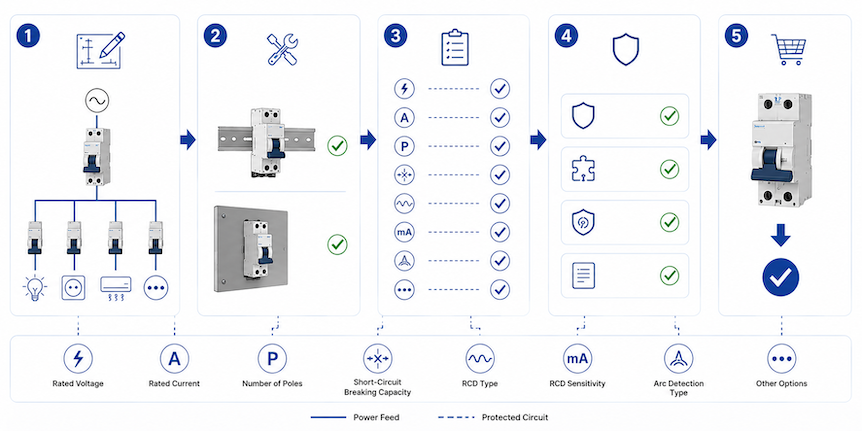
Once the architecture is decided, the AFDD schedule should be completed like any other engineered protective-device schedule. Each parameter represents a condition that the device must carry, detect, or interrupt.
Circuit Ratings: Voltage, Frequency, Current, and Poles
Confirm the nominal voltage, permitted voltage range, and supply frequency. The electronic detection circuit needs a valid supply; a 230 V, 50 Hz marking cannot be assumed suitable for 120 V, 60 Hz. If the product is marked for a range, confirm that all integrated protective functions operate throughout that range.
Identify single-phase, line-to-neutral, line-to-line, or other circuit arrangements. Check whether the device is 1P+N, two-pole, or another configuration, and which poles are protected and switched. Some products require designated line and neutral terminals or a specific supply/load orientation.
Rated current and conductor protection. The rated current is the continuous current the protective device can carry under defined conditions. It must satisfy the familiar coordination relationship between design current, protective-device rating, and conductor current-carrying capacity, with correction factors applied for ambient temperature, grouping, installation method, and thermal insulation.
Suppose a final circuit has a 13 A design current and its corrected conductor capacity is 18 A. A 16 A integrated AFDD-RCBO may be a candidate because the design current does not exceed the device rating and the device rating does not exceed the corrected conductor capacity. That simple check does not finish the design: voltage drop, disconnection time, inrush, terminal capacity, and board derating still matter.
Do not increase an AFDD from 16 A to 25 A merely to stop trips. If the trip indication shows overload, the load or circuit needs correction. If it shows an arc event, the higher current marking will not solve the arc signature and may leave the conductor underprotected.
Overcurrent Curve and Short-Circuit Capacity
For an integrated MCB or RCBO, the B, C, or other curve defines the instantaneous overcurrent operating range. C curve can tolerate more inrush than B curve, but it also needs higher fault current for instantaneous operation. The designer must verify the required automatic disconnection time using the applicable fault-loop or short-circuit calculation.
The curve does not adjust AFDD sensitivity. Changing curve to address an arc trip is a category error. Use trip indication and circuit testing to determine which function operated.
Breaking capacity and backup protection. The device’s rated short-circuit capacity must be adequate for the prospective short-circuit current at its installation point. A 6 kA device should not be selected for a calculated 8 kA location unless a manufacturer-documented backup arrangement increases the conditional capability under the exact conditions.
Where backup protection is used, record the upstream fuse or breaker model, rating, maximum prospective current, and applicable coordination table. A generic statement such as “protected by upstream MCCB” is not enough. The AFDD electronics do not compensate for contacts or terminals exposed beyond their short-circuit rating.
Residual-Current Sensitivity and Type
For an AFDD-RCBO, specify both rated residual operating current and RCD type. A 30 mA value is commonly associated with additional protection, but the applicable rule and circuit must be checked. It is a sensitivity value, not a universal fire-protection setting.
RCD type defines the residual-current waveforms the device can detect correctly. Type A is widely used where equipment can produce pulsating DC residual current. Loads involving frequency control, smooth DC components, or specialized power electronics may require another type according to the equipment instructions and national rules. Never assume that arc detection makes the residual-current type irrelevant.
Board, Busbar, Terminal, and Thermal Compatibility
Distribution-board compatibility deserves more than a photograph. Share the board series, rail, busbar geometry, phase position, terminal form, enclosure depth, module width, accessories, and maximum assembly current. A supplier can then recommend a suitable format and explain whether a new busbar, enclosure, or wiring arrangement is needed.
Check conductor material, cross-sectional range, stripping length, tightening torque, number of conductors allowed per terminal, and ferrule requirements. Confirm ambient-temperature and grouping derating. A row of heavily loaded electronic protective devices can run warmer than an isolated catalogue test condition.
For retrofit work, space must include conductor bending and safe access to test buttons and indicators. Replacing a one-module RCBO with a wider AFDD-RCBO can require a new enclosure. Moving circuits to make space can alter phase balance, RCD grouping, neutral routing, and schedules; it is not only a mechanical exercise.
Application Example: Choosing an AFDD for a Hotel Guest Room Circuit
The following hypothetical example shows how the decisions connect. It is not a universal design or a substitute for project calculations. Assume a 230 V, 50 Hz single-phase hotel-room socket circuit. The circuit supplies a maximum assessed load of 3.0 kW, uses copper conductors, requires 30 mA additional residual-current protection under the project rules, and originates in a compatible distribution board. The calculated prospective short-circuit current at the board is 3.4 kA. The applicable project risk assessment requires arc-fault protection because occupants sleep in the premises.
Step 1: Calculate the design current.
For this simplified single-phase resistive-equivalent assessment:
Ib = P / (V × PF)
ដែល Ib is design current in amperes, P is active power in watts, V is circuit voltage in volts, and PF is power factor. Using 3,000 W, 230 V, and an assumed aggregate power factor of 0.95:
Ib = 3,000 / (230 × 0.95) = 13.7 A
A 16 A overcurrent function is a plausible starting point because its rated current exceeds the calculated 13.7 A design current. The result does not independently prove that 16 A is correct. The designer still needs the actual load profile, diversity rules, socket-circuit requirements, inrush behavior, and conductor calculation.
Step 2: Check the conductor relationship.
Assume the selected cable has a tabulated current-carrying capacity of 24 A under its reference installation method. The combined correction factor for ambient temperature, grouping, and thermal conditions is assumed to be 0.78. The corrected conductor capacity is:
Iz = Mwent × C = 24 × 0.78 = 18.72 A
ដែល Iz is corrected current-carrying capacity, It is tabulated capacity, and C is the combined correction factor. The basic relationship is then:
Ib ≤ In ≤ Iz
In this example, 13.7 A ≤ 16 A ≤ 18.72 A. That relationship supports a 16 A integrated overcurrent function under the stated assumptions. The engineer must still verify overload conventions under the applicable standard, voltage drop, conductor terminals, and required disconnection time. If later grouping reduces the correction factor, the same device and cable may no longer coordinate.
Step 3: Select the function combination.
The circuit needs arc-fault, residual-current, overload, and short-circuit protection. An AFDD integrated with an RCBO can provide those four functions at the circuit origin and avoid placing multiple room circuits behind one shared RCCB. A possible schedule entry begins with “AFDD-RCBO, 1P+N, 230 V AC, 50 Hz, 16 A, 30 mA.” It remains incomplete until curve, RCD type, short-circuit capacity, neutral switching, and board system are stated.
Assume the connected equipment includes laptop chargers, television power supplies, and other Class I and Class II electronic loads. The designer selects the RCD type from the expected residual-current waveforms and equipment instructions; Type A may be appropriate for common pulsating-DC-producing loads, but that choice must be confirmed rather than copied from this example. The overcurrent curve is selected from the inrush profile and fault-loop calculation, not from AFDD behavior.
Step 4: Check short-circuit and assembly conditions.
The measured or calculated prospective short-circuit current is 3.4 kA. A device with 6 kA rated short-circuit capacity could exceed that value, subject to the relevant product rating, test conditions, and board design. A 3 kA device would not be acceptable at this point. If an upstream protective device is used to achieve a higher conditional rating, the exact pair must appear in the manufacturer’s coordination data.
The proposed AFDD-RCBO must then be checked against the hotel distribution-board series. The review covers busbar part number and geometry, supply side, neutral connection, module width, enclosure depth, row current, adjacent-device derating, terminal size, and permitted accessories. If the device is two modules wide and the board schedule has only one spare way, selecting a compact unverified substitute is not an engineering solution. The board layout or approved product system must change.
Step 5: Confirm the complete product configuration.
The result is a 16 A AFDD-RCBO candidate for a 230 V, 50 Hz, 1P+N final circuit, with 30 mA residual-current protection and at least 6 kA short-circuit capacity under the example conditions. The remaining choices are the overcurrent curve, RCD type, neutral switching, module width, busbar connection, and trip-indication format.
This final check shows why no single calculation selects the whole product. The current calculation supports the 16 A rating but does not determine RCD type. The 6 kA value addresses prospective short-circuit current but does not confirm board compatibility. Each parameter answers a different technical question.
Review the Installation as a System, Not a Row of Devices
AFDD installation quality directly affects the hazard being controlled. Loose terminals, nicked conductors, mixed neutrals, and overheated enclosures can create faults or unwanted trips. Work should be performed by a qualified person using safe isolation, verification of absence of voltage, local wiring rules, and the manufacturer’s instructions.
Place protection at the final-circuit origin.
AFDDs are generally applied at the origin of the final circuit they protect. A downstream device leaves upstream cable outside its arc-fault coverage unless another approved measure protects that section. Do not assume that one AFDD at a distribution-board incomer provides equivalent protection for every final circuit.
Individual circuit protection also improves fault location and continuity. If one upstream device monitors many nonlinear loads, the combined signatures become more complex and a trip removes a wider area. Use only topologies permitted by the product instructions and installation standard.
Keep every line and neutral in the correct circuit.
Shared or crossed neutrals are a frequent cause of residual-current trips in boards with RCBO functions. They can also defeat isolation expectations. Trace the circuit before conversion, keep line and neutral associated, and follow the designated supply and load terminals.
Multiwire or shared-neutral arrangements require products and connection methods specifically accepted for that system. Do not split related conductors across independent single-pole devices without the required common operation and manufacturer approval.
Control termination and heat.
Prepare conductors without cutting strands, trapping insulation, or exposing excess copper. Use a calibrated torque tool at the value stated by the manufacturer. Do not put two conductors in a terminal unless it is designed and documented for that use. Recheck any connection disturbed during busbar installation.
Apply enclosure and device derating rules, especially in full boards, high ambient temperatures, or installations with sustained loads. If the manufacturer specifies spacing or maximum adjacent loading, include it in the layout review. A correct front-label rating can still be misapplied under a different thermal condition.
Protect continuity-critical loads deliberately.
Fire protection and continuity are both safety considerations. A trip on life-support equipment, safety services, refrigeration for medicines, alarms, or process controls can create another hazard. The answer is not to omit required protection casually. Use the local rules and a documented risk assessment to determine circuit separation, alarming, alternative supplies, redundancy, or another accepted protective measure.
Trip indication is especially valuable where restoration time matters. Specify whether the product distinguishes arc, residual-current, overcurrent, overtemperature, internal fault, and manual opening. Indicator behavior is manufacturer-specific; include its operating table in the handover documents.
How to Test an AFDD After Installation
Commissioning has two layers. Standard installation tests verify the wiring and conventional protective functions. The manufacturer’s functional procedure verifies designated AFDD electronics and opening behavior. Neither layer replaces the other.
- Inspect: Check model, ratings, certification markings, poles, line/load orientation, neutral, busbar engagement, conductor preparation, torque, labels, and enclosure compatibility.
- Verify the circuit: Complete continuity, insulation resistance, polarity, prospective fault-current or loop tests, and other tests required by the local installation standard.
- Test integrated protection: Where an RCD function is present, perform the specified RCD tests with suitable instruments and methods.
- Operate the AFDD test function: Follow the product instructions under the stated supply and handle conditions. Confirm opening, indication, and reset.
- Apply representative load: Check normal operation and record any unusual equipment restrictions stated by the manufacturer.
- Document: Record the exact part number, serial or batch where required, test results, trip-code guide, and replacement constraints.
Do not create a field arc by loosening a terminal, cutting insulation, or striking conductors. Such a test is unsafe and does not reproduce the standardized product test. Use only approved test equipment and procedures.
The test button is also easy to overstate. It checks functions defined by that product; it does not prove the condition of every downstream joint, confirm cable insulation, or demonstrate operation for every imaginable arc. Periodic inspection and testing remain necessary.
Use the Trip Cause Before Resetting
When an integrated AFDD trips, identify which function operated before resetting it. Some devices retain a mechanical indication; others show an LED sequence only during a defined reset or power-up procedure. Repeated switching can erase useful evidence.
| Observed condition | Likely investigation path | Unsafe shortcut to avoid |
|---|---|---|
| Arc indication after a particular load operates | Inspect its cord, plug, switch, internal connections, socket, and compatibility guidance | Replacing the AFDD with an MCB without testing the load |
| Residual-current indication | Check insulation, connected equipment, accumulated leakage, and crossed neutrals | Increasing RCD sensitivity value without design review |
| Overcurrent indication | Measure load, check inrush, short circuits, conductor protection, and selected curve | Installing a higher current rating to stop trips |
| Immediate trip after board modification | Verify line/load orientation, neutral association, busbar position, and wiring damage | Assuming a new device is defective before checking installation |
| Internal-fault or failed self-test indication | Follow manufacturer replacement and warranty instructions | Bypassing the electronic function permanently |
If no visible defect is found, disconnect portable loads and inspect accessible accessories under safe isolation. Reconnect equipment systematically only after required tests. For unusual electronic loads, provide the manufacturer with the AFDD model, production code, circuit data, load model, trip indication, and timing. “Nuisance trip” is a symptom description, not a diagnosis.
Frequently Asked AFDD Selection Questions
Дали AFDD го заменува RCBO?
Only a product explicitly certified as an AFDD integrated with an RCBO provides arc, overload, short-circuit, and residual-current functions in one unit. A standalone AFDD does not automatically provide those functions. Read the markings, certificate scope, and data sheet.
How do I choose the AFDD current rating?
Coordinate the rating with design current, corrected conductor capacity, installation method, ambient temperature, grouping, and integrated overcurrent characteristics. Do not select it from the connected appliance rating alone or increase it to mask unexplained trips.
Is an AFDD mandatory on every final circuit?
No universal rule applies worldwide. The answer depends on the adopted installation standard, edition, building use, circuit purpose and rating, national amendments, and project requirements. Confirm the exact jurisdiction before producing the bill of materials.
What is the difference between AFDD and AFCI?
AFDD is normally associated with IEC 62606 and IEC-style installations. AFCI is the North American term associated with standards such as UL 1699 and local NEC requirements. They mitigate similar arc hazards but are not automatically interchangeable products.
Can one AFDD protect several final circuits?
Do not assume so. AFDDs are generally applied at the origin of the final circuit, and individual devices improve fault location and continuity. Any shared arrangement must be permitted by the applicable standard and the manufacturer’s instructions.
Why can an AFDD trip when an MCB and RCD would not?
The AFDD analyzes arc signatures rather than relying only on excessive current or earth-leakage imbalance. A series arc may remain at normal load current, while a line-to-neutral parallel arc may create no residual imbalance. The trip indication should still be checked because an integrated product may have operated for another function.
The Final AFDD Selection Rule
An AFDD choice is ready for quotation when four things are clear: the circuit application, the applicable market requirement, the protection functions and ratings, and the distribution-board interface. If the inquiry can state only “AFDD, 16 A,” the manufacturer will need more information before recommending the right model.
For B2B buyers, the easiest next step is to send the destination country, voltage and frequency, rated current, required protection combination, pole arrangement, short-circuit level, residual-current requirement, board details, quantity, and certification needs. You can contact JUTRION with these details to discuss suitable AFDD options, product documents, samples, and OEM/ODM requirements.
ឯកសារយោងបច្ចេកទេស
- IEC 62606 consolidated edition 1.2 — General requirements for arc fault detection and protection devices
- IEC 60364-4-42:2024 — Protection against thermal effects
- IET — BS 7671 current edition and transition checker
- IET — BS 7671:2018+A4:2026 publications
- UL Solutions — AFCI device testing and certification
- BEAMA — Guide to arc fault detection devices
