

Công tắc chuyển nguồn tự động hai nguồn
Giải pháp công tắc chuyển nguồn tự động (ATS) hai nguồn JUTRION được thiết kế để đảm bảo nguồn điện liên tục cho tải quan trọng. Thiết bị cho phép tự động chuyển đổi giữa nguồn điện chính và nguồn dự phòng, đảm bảo hệ thống vận hành ổn định khi xảy ra sự cố mất điện hoặc bất thường về điện.
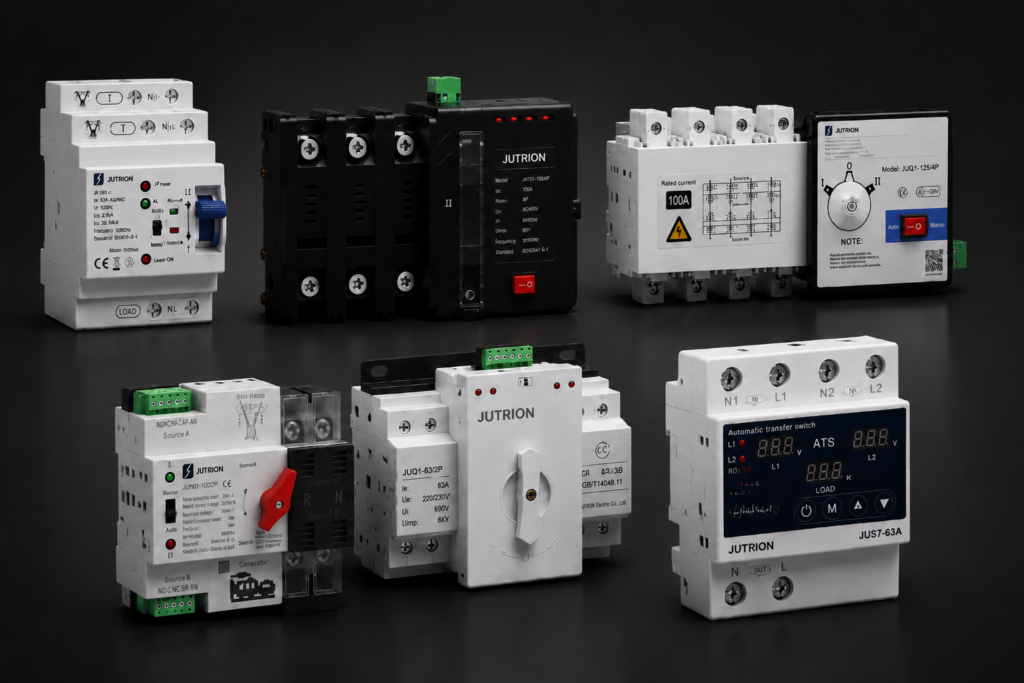
JUTRION - Nhà sản xuất hàng đầu về công tắc chuyển nguồn tự động hai nguồn
Là nhà sản xuất ATS hàng đầu với hơn một thập kỷ kinh nghiệm đã được kiểm chứng trong ngành, JUTRION tích hợp nghiên cứu và phát triển nội bộ, sản xuất chính xác và kiểm soát chất lượng nghiêm ngặt vào giải pháp chuỗi cung ứng trọn gói. Chúng tôi cung cấp các thiết bị đảm bảo liên tục nguồn điện cao cấp, hoàn toàn tuân thủ tiêu chuẩn cùng hỗ trợ kỹ thuật một kèm một được cá nhân hóa cho khách hàng trên toàn thế giới.
Tuân thủ Tiêu chuẩn Ngành
Dòng sản phẩm ATS JUTRION Electric
Dòng sản phẩm ATS JUTRION Electric Khám phá các giải pháp Công tắc chuyển nguồn tự động (ATS) toàn diện của chúng tôi được thiết kế để chuyển đổi nguồn điện liền mạch. Dòng sản phẩm đa năng này bao gồm loại DIN-rail nhỏ gọn, loại PC hiệu suất cao và Công tắc chuyển nguồn tự động hai nguồn loại CB đáng tin cậy, đảm bảo nguồn điện không gián đoạn và bảo vệ tối ưu cho các tải quan trọng của bạn.

Công tắc chuyển nguồn tự động hai nguồn DIN-rail JR2-63
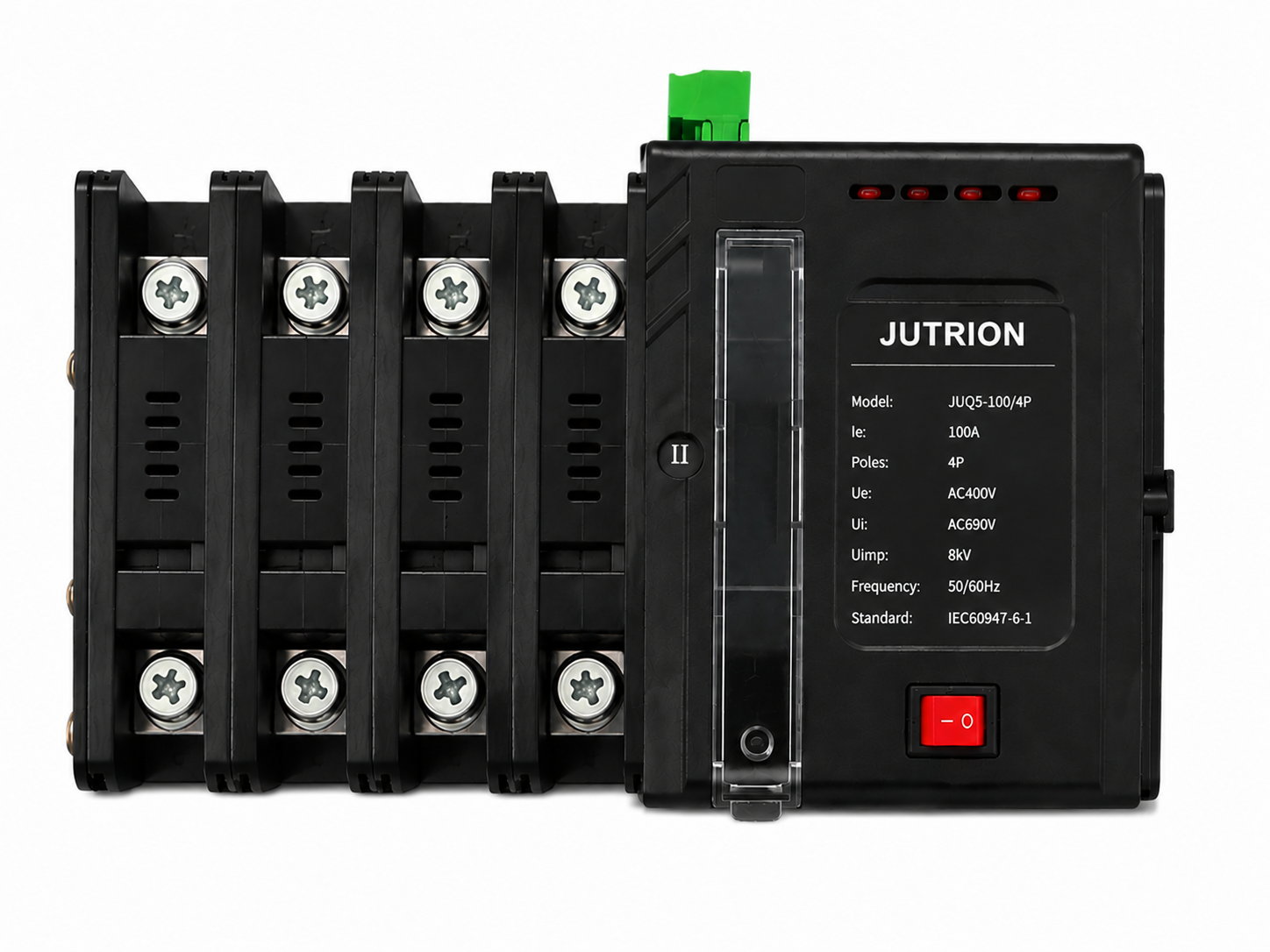
Công tắc chuyển nguồn tự động hai nguồn loại PC JUQ5

Công tắc chuyển nguồn tự động hai nguồn loại PC JUQ1

Công tắc chuyển nguồn tự động hai nguồn loại PC JUKG7

Công tắc chuyển nguồn tự động hai nguồn loại CB JUQ1
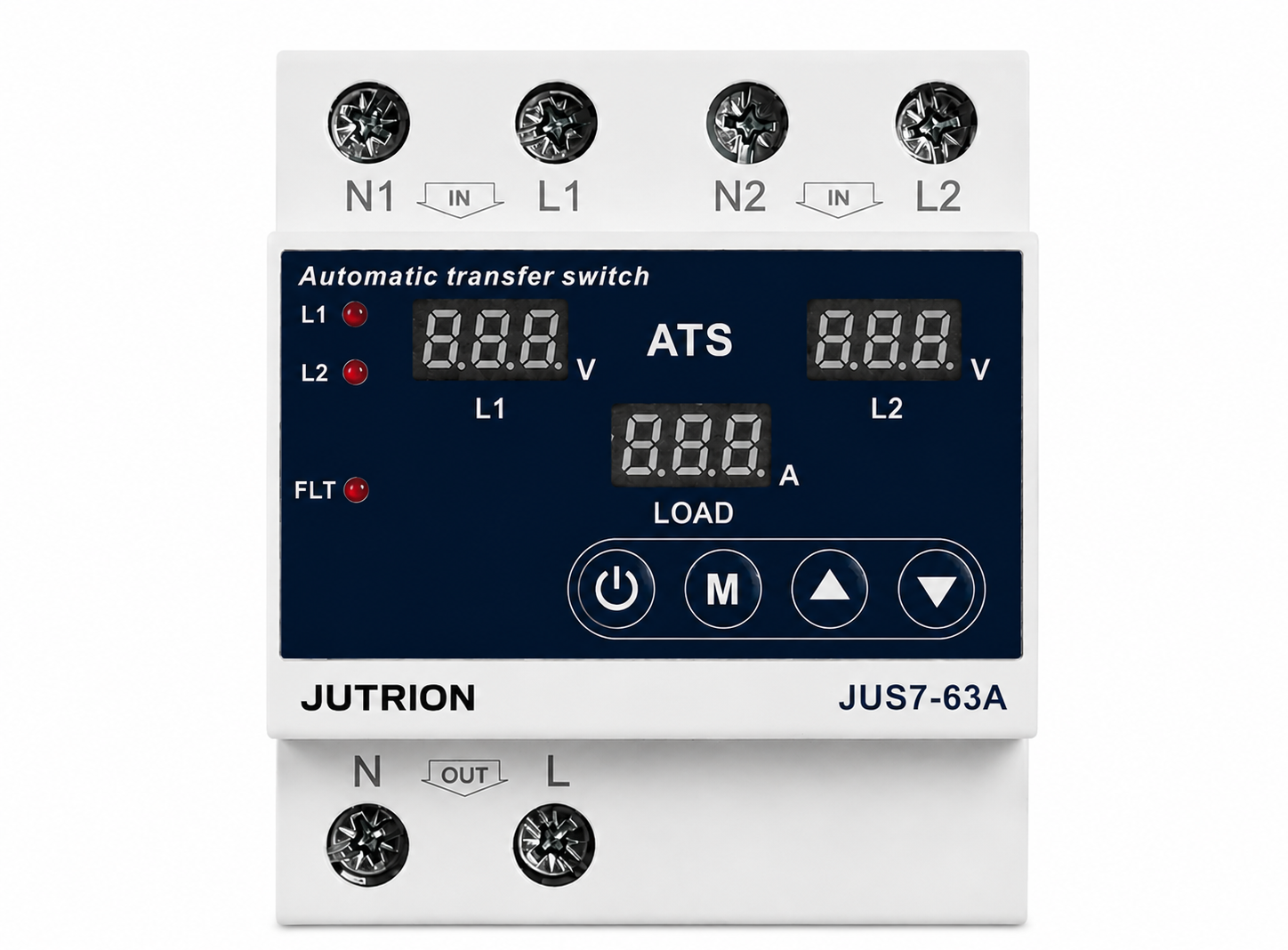
Công tắc chuyển nguồn tự động hai nguồn JUS7
Tại sao nên hợp tác với JUTRION Electric cho nhu cầu ATS của bạn?
Tại JUTRION, tính chuyên nghiệp được định nghĩa bằng sự kiểm soát toàn diện. Không giống như các đơn vị lắp ráp thông thường, chúng tôi sản xuất và giám sát mọi linh kiện quan trọng trước khi tích hợp vào bộ ATS hoàn chỉnh. Khả năng kiểm soát nội bộ toàn diện này cho phép chúng tôi thực thi các tiêu chuẩn chất lượng nghiêm ngặt ở từng giai đoạn sản xuất. Điều này không chỉ đảm bảo mọi công tắc chuyển nguồn tự động đều tuân thủ các tiêu chuẩn toàn cầu khắt khe mà còn mang lại cho chúng tôi sự linh hoạt đặc biệt để hỗ trợ các yêu cầu OEM/ODM tùy chỉnh với độ chính xác và tốc độ cao.
Cách JUTRION thúc đẩy doanh nghiệp của bạn: Các dịch vụ toàn diện của chúng tôi
- Giải pháp OEM/ODM tùy chỉnh: Thiết kế ATS, thương hiệu và cấu hình được tùy chỉnh để đáp ứng các yêu cầu cụ thể về thị trường và dự án của bạn.
- Hỗ trợ chuỗi cung ứng trọn gói: Sản xuất đáng tin cậy, kiểm soát chất lượng nghiêm ngặt từ linh kiện đến thành phẩm và vận chuyển toàn cầu liền mạch.
- Hỗ trợ kỹ thuật một kèm một: Tiếp cận trực tiếp đội ngũ kỹ sư chuyên nghiệp của chúng tôi để lựa chọn sản phẩm, hướng dẫn lắp đặt và khắc phục sự cố.
- Đảm bảo chất lượng và tuân thủ nghiêm ngặt: Kiểm tra toàn diện tại nhà máy đảm bảo tất cả các công tắc chuyển nguồn tự động đều tuân thủ các tiêu chuẩn điện toàn cầu.
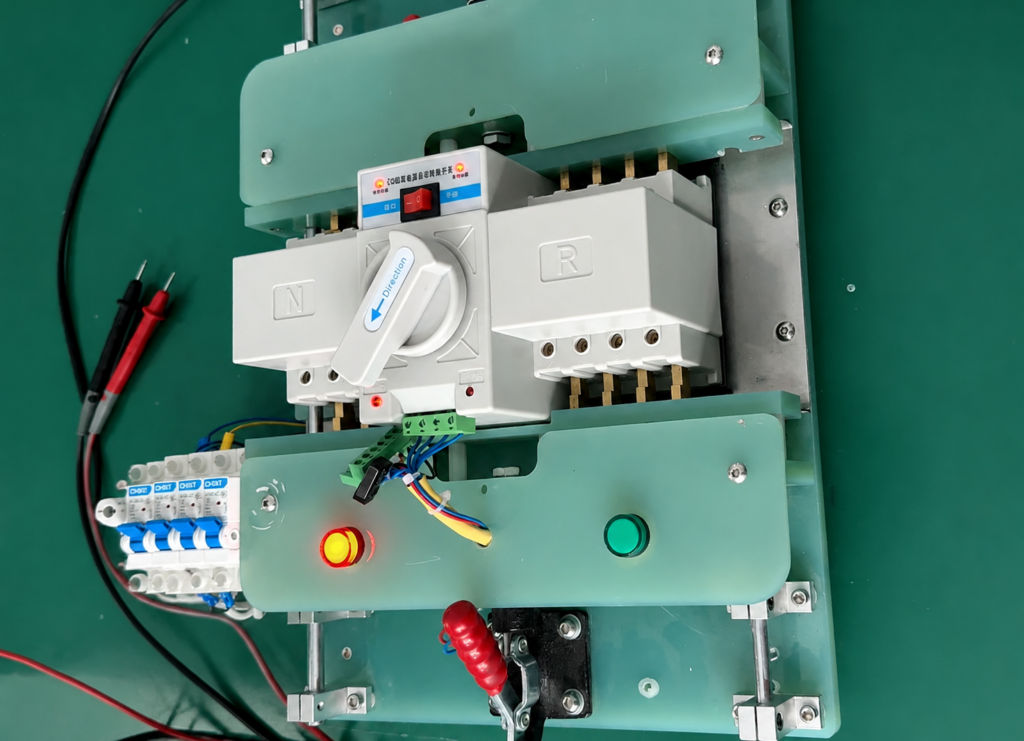

Hãy để chúng tôi cung cấp mẫu thử cho bạn để kiểm tra và đánh giá.
Cho dù bạn cần các thông số cụ thể hay thương hiệu tùy chỉnh, đội ngũ kỹ sư của chúng tôi sẽ điều chỉnh mẫu thử để phù hợp hoàn hảo với yêu cầu dự án của bạn. Hãy cùng xây dựng mối quan hệ hợp tác đáng tin cậy bắt đầu từ sự kết hợp hoàn hảo.
Hướng dẫn lựa chọn ATS JUTRION: Cách chọn ATS lý tưởng cho ứng dụng của bạn
ATS loại PC: Hiệu suất & Thông số kỹ thuật
Tích hợp công tắc cách ly tải nặng với cấu trúc đơn khối, không có các phần tử ngắt mạch. Có khóa liên động kép cơ khí và điện với ba vị trí (ON I – OFF – ON II) để có chức năng cách ly hoàn toàn.
- Dòng điện chịu đựng cao
- Không có bảo vệ quá dòng
- Tốc độ chuyển mạch nhanh
- Độ tin cậy cao
ATS loại CB: Hiệu suất & Thông số kỹ thuật
Được lắp ráp từ hai bộ ngắt mạch MCB/MCCB cùng một khóa liên động cơ khí. Về bản chất là sự liên kết của hai bộ ngắt mạch được trang bị rơ-le nhiệt-từ tích hợp để bảo vệ quá tải và ngắn mạch.
- Bộ ngắt mạch tích hợp
- Bảo vệ quá tải & ngắn mạch
- Tiết kiệm chi phí & không gian
- Chức năng kép
| So sánh | ATS loại PC | ATS loại CB |
|---|---|---|
| Cấu trúc cơ bản | Thiết bị chuyển mạch tích hợp | Hai bộ ngắt mạch có khóa liên động |
| Bảo vệ quá dòng | Thường không tích hợp | Tích hợp trong bộ ngắt mạch |
| Bảo vệ ngắn mạch | Yêu cầu bảo vệ đầu nguồn | Được cung cấp bởi MCB/MCCB |
| Hiệu suất chuyển mạch | Nhanh hơn và bền hơn | Phù hợp cho các ứng dụng thông dụng |
| Ứng dụng điển hình | Tải trọng quan trọng và công nghiệp | Tải trọng dân dụng và thương mại thông thường |
| Chi phí | Cao hơn | Tiết kiệm hơn |
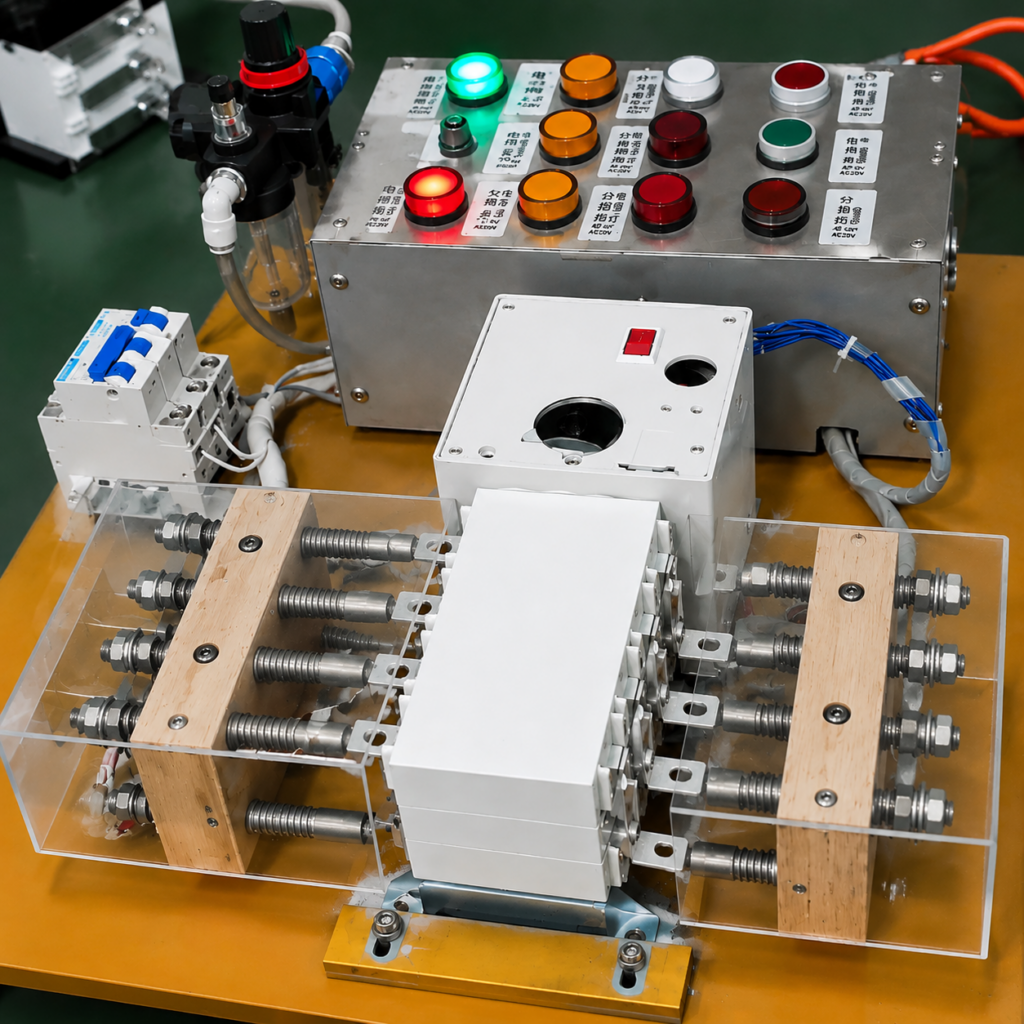
Thông số kỹ thuật ATS
- Điện Áp Định Mức:AC 110V/220V/380V /400V/415V
- Dòng điện định mức:16A – 3200A
- Số cực:2P/3P/4P
- Thời gian chuyển mạch:≤ 0,2 giây (Loại chuyển mạch nhanh), ≤ 2 giây (Loại thông thường)
- Tuổi thọ điện và cơ khí:≥ 5000–10000 chu kỳ
- Phương thức lắp đặt:Tự động / Bằng tay / Điện / Từ xa
- Chế độ điều khiển:Tự động hoàn toàn / Bằng tay / Điều khiển từ xa
- Chức năng phát hiện:Điện áp / Mất pha / Thứ tự pha
- Phương thức lắp đặt:Loại bảng điều khiển / Cố định / Ngăn kéo
- Enclosure:IP20 / IP30 / IP40 (tùy chọn)
Điều kiện vận hành cho sản phẩm ATS JUTRION
| Tóm tắt so sánh | Mẫu tiêu chuẩn | Mẫu cực đoan |
| Nhiệt độ môi trường vận hành định mức | -5°C đến +40°C (Tuân thủ IEC) | -25°C đến +70°C (Dải nhiệt độ rộng) |
| Đặc tính giảm dòng theo nhiệt độ | Giảm dòng áp dụng trên 40°C theo đường cong tiêu chuẩn. | Dòng định mức đầy đủ không giảm dòng lên đến 70°C. |
| Vật liệu cách điện và vỏ chịu nhiệt | Nhựa nhiệt dẻo chống cháy cường độ cao với khả năng chống lão hóa vượt trội. | Cách điện cải tiến chịu nhiệt cao với buồng dập hồ quang không biến dạng. |
| Cấp linh kiện bộ điều khiển | MCU cấp công nghiệp đảm bảo logic chuyển mạch nguồn đáng tin cậy. | Linh kiện cấp quân sự / nhiệt độ mở rộng cho thời gian hoạt động bền bỉ. |
| Khả năng chống oxy hóa ở nhiệt độ cao của các bộ phận dẫn điện | Tiếp điểm hợp kim bạc cao cấp với thanh cái đồng độ tinh khiết cao. | Tiếp điểm hợp kim bạc dày hơn và thanh cái đồng đỏ mở rộng giúp giảm thiểu độ tăng nhiệt. |
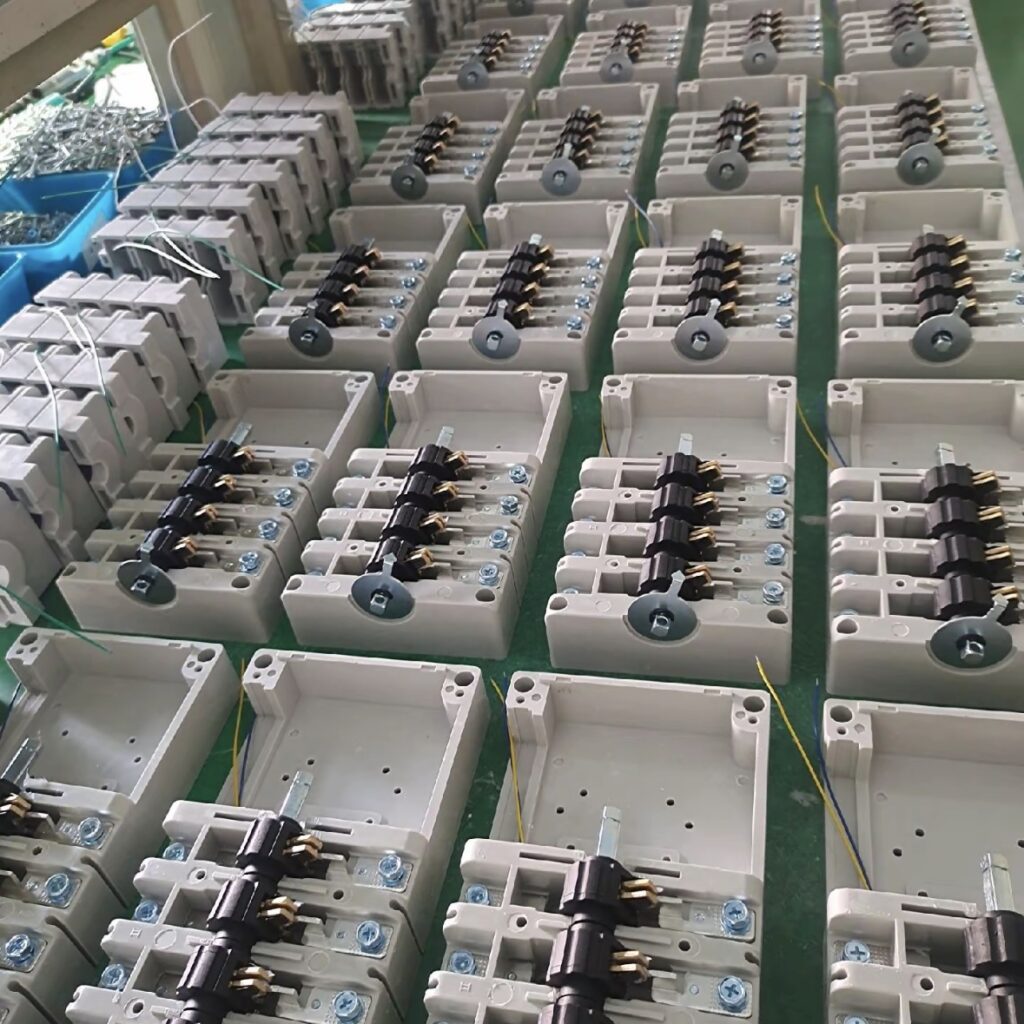
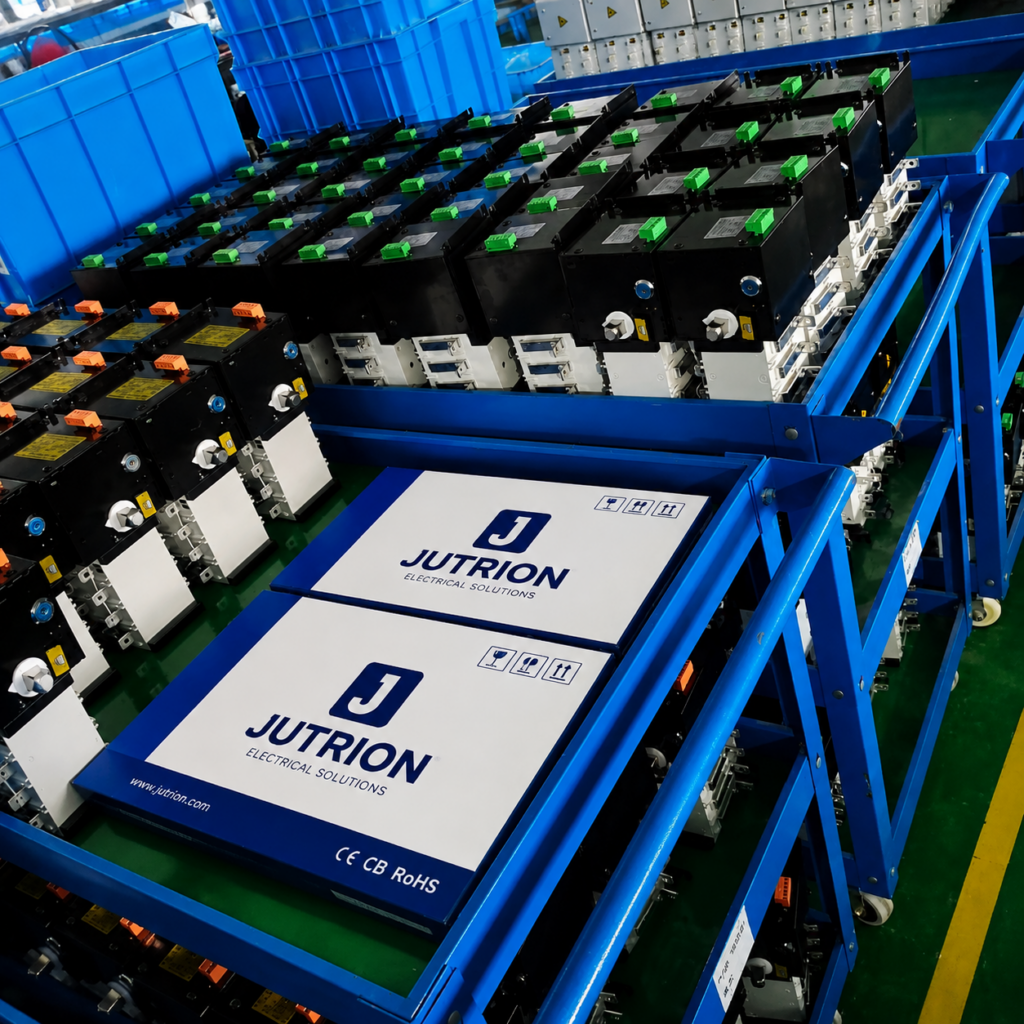
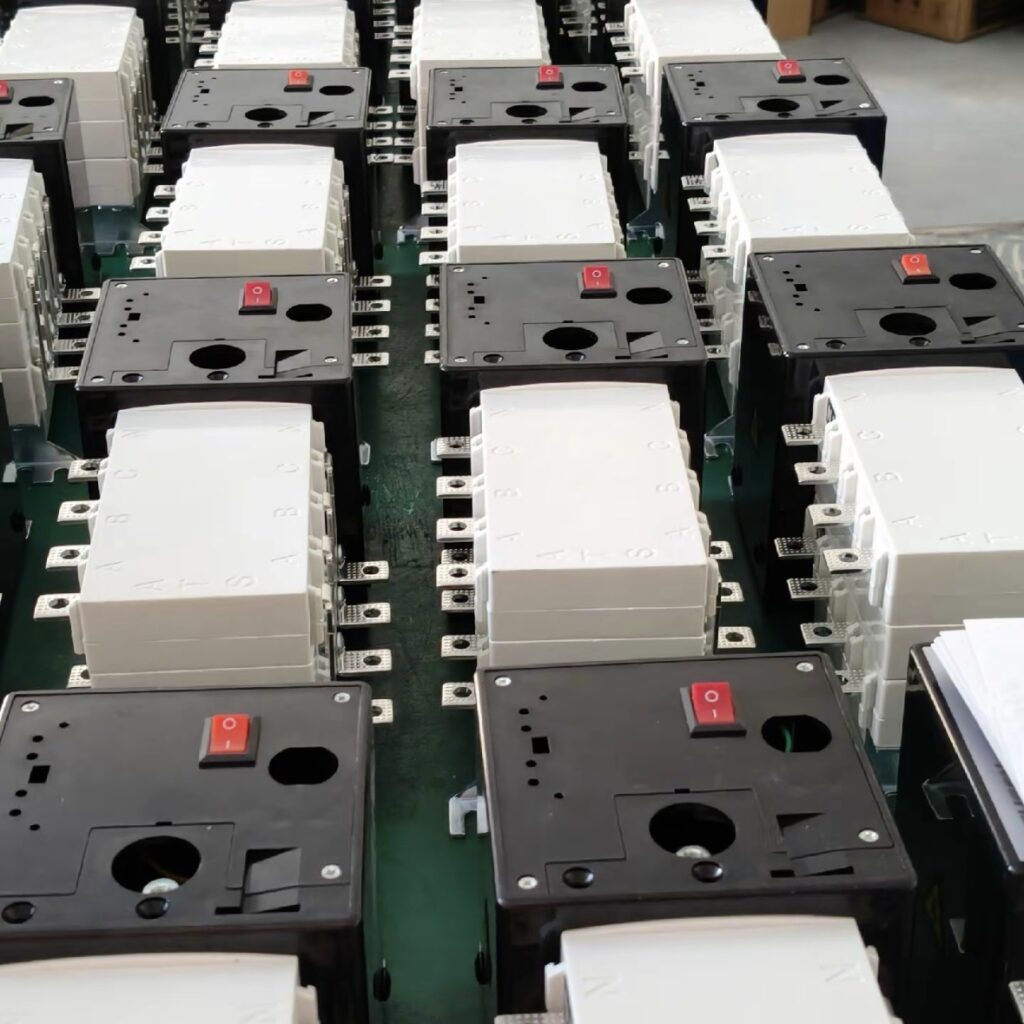
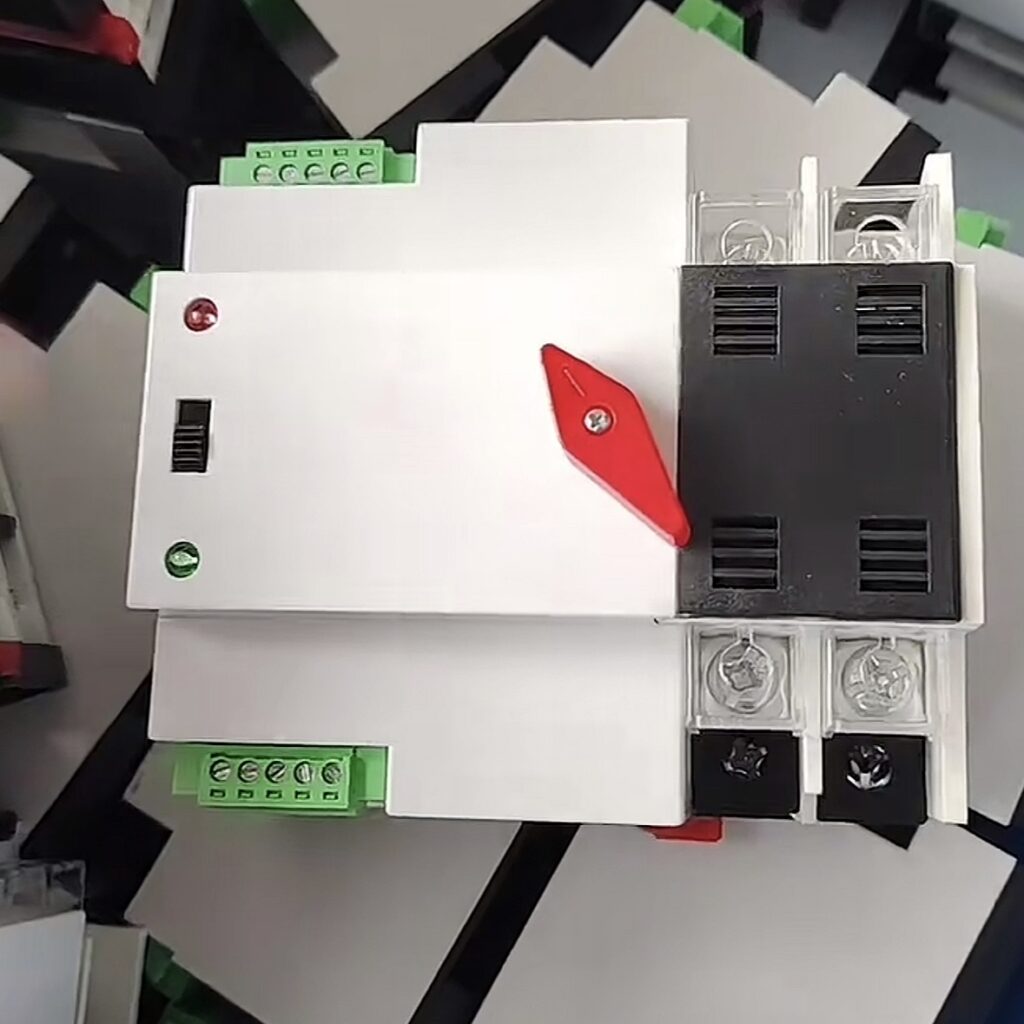
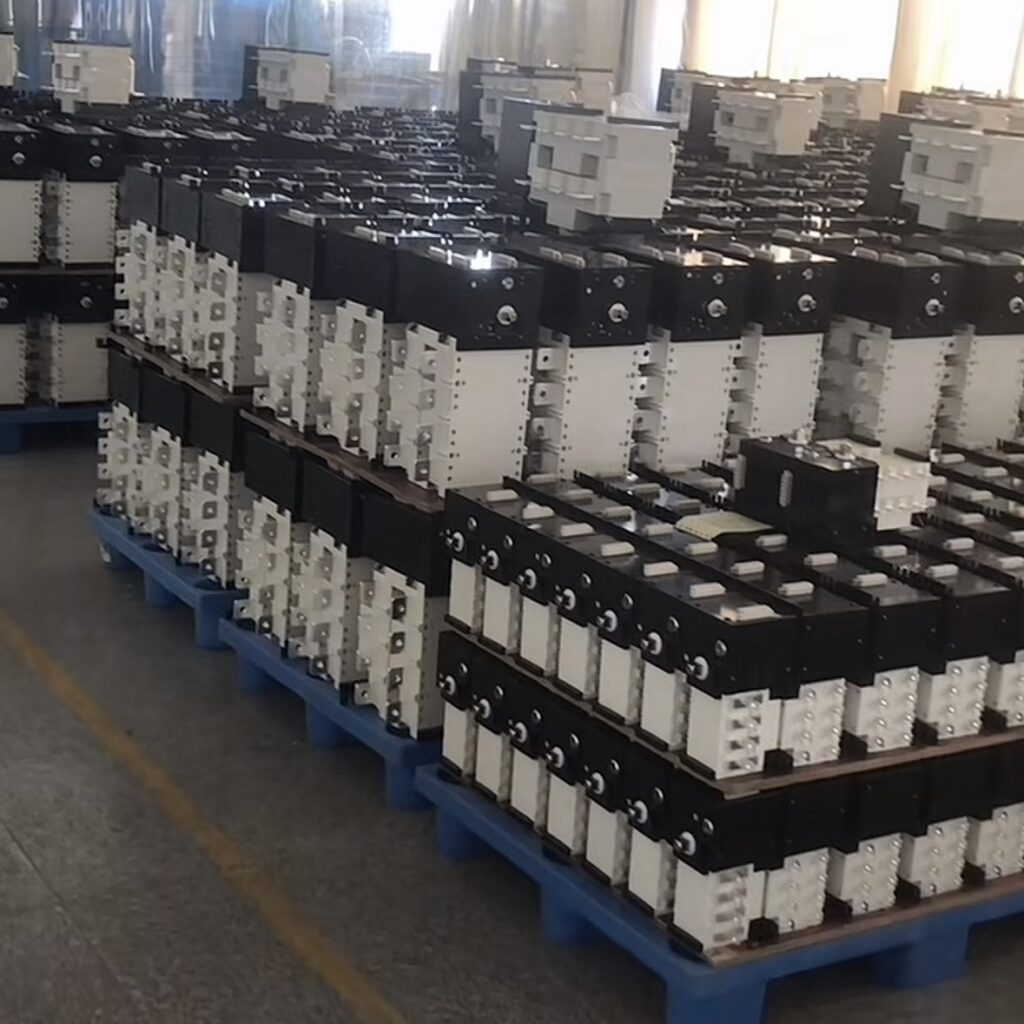
Nhà máy sản xuất ATS JUTRION
Thông tin OEM/ODM và đặt hàng
| Hạng mục | Tùy chọn có sẵn |
|---|---|
| Dòng điện định mức | 16A–3200A, tùy theo dòng sản phẩm |
| Pole Options | 2P / 3P / 4P |
| Branding | Logo, label, packaging |
| Controller | Standard or customized functions |
| Communication | RS485 / dry-contact options on selected models |
| Samples | Available for evaluation |
| Certificates | Confirm by model and market |
| Lead Time | Customized Samples: 2–3 Working Days; Bulk Order Lead Time: Confirmed Based on Order Quantity |
Everything About Automatic Transfer Switches: The Engineer’s Selection Guide
What is a dual-power automatic transfer switch (ATS)?
A dual-power automatic transfer switch (ATS) is an intelligent electrical device designed to ensure continuous power delivery for critical loads. It automatically switch electrical emergency power from a primary power source to a backup power source (such as a generator or a secondary utility line) in the event of a power failure or electrical abnormality, maintaining stable and uninterrupted system operation.
How a Dual Power Automatic Transfer Switch Works
1.Continuous Monitoring
The built-in microprocessor controller monitors the primary power supply 24/7, tracking critical electrical parameters including voltage, frequency, and phase alignment.
2.Anomaly Detection
Upon detecting a power failure or electrical abnormality—such as a total blackout, under-voltage, over-voltage, or phase loss—the controller instantaneously issues a transfer command.
3.Safe & Rapid Transition
The ATS rapidly disconnects the primary power source and automatically closes the backup power circuit within milliseconds, minimizing interruption to ensure the continuous operation of critical loads.
4.Auto-Restoration
Once the primary power grid recovers and stabilizes, the ATS safely and automatically transfers the load back from the backup source to the main supply, resuming normal operation.
Where ATS is Used: Key Industry Applications
Critical Infrastructure & Data Center
Sub-industries: Data Centers, Server Rooms, Telecom Hubs
Description: Ideal for environments where even a momentary power interruption can cause catastrophic data loss or system crashes. ATS ensures absolute power redundancy for continuous server operations.
Healthcare & Medical Facilities
Sub-industries: Hospitals, Operating Rooms, Emergency Centers
Description: Crucial for safeguarding life-support systems, medical imaging equipment, and emergency lighting, ensuring uncompromised operational safety during grid failures.
Solar & Renewable Energy Systems
Sub-industries: Solar PV Plants, Microgrids, Battery Energy Storage Systems (BESS)
Description: Dynamically manages power routing between the solar inverter, battery storage, and the utility grid. It guarantees continuous clean energy supply and seamless backup transitions.
Tự Động Hóa Công Nghiệp & Sản Xuất
Sub-industries: Automated Assembly Lines, Chemical Plants, Semiconductor Fab
Description: Protects automated production machinery and continuous industrial processes from costly downtime, material waste, and equipment damage caused by power fluctuations.
Commercial Buildings & Infrastructure
Sub-industries: Shopping Malls, Office Towers, Airports, Hotels
Description: Widely deployed to feed critical building loads such as fire pumps, evacuation elevators, ventilation systems, and emergency exit routing illumination.
Residential & Smart Home Standby Power
Sub-industries: Apartments, Smart Villas, Remote Off-grid Cabins
Description: Seamlessly integrates into terminal distribution boxes to switch between the main utility grid and local standby generators, ensuring domestic comfort and security.
How to Choose the Right Automatic Transfer Switch (ATS)?
Class Selection: PC-Class vs. CB-Class (Core)
- PC-Class: Single-unit integrated transfer switch featuring high-speed switching and robust short-circuit withstand capabilities. Ideal for critical loads such as fire protection systems, server rooms, UPS inputs, and main utility-to-generator emergency systems. Requires upstream circuit breakers for short-circuit protection.
- CB-Class: Assembled from dual circuit breakers with integrated overload and short-circuit protection. Offers a lower cost profile and is strictly suited for non-critical, general loads like standard lighting and HVAC. Standard CB-class switches should not be deployed in critical fire protection circuits.
Rated Current Selection
- Standard Loads: Switch rated current (Ie) >= Total calculated current x 1.25.
- Inductive Loads (Motors, VFDs, etc.): The current capacity must be scaled up to 1.5 times the load current to handle high inrush current.
- Generator Circuits: Match strictly according to the generator’s rated output current.
Pole Count Selection
- 2P: Tailored for single-phase 220V circuits.
- 3P: Designed for three-phase balanced circuits with zero harmonic distortion on the neutral line.
- 4P: Mandatory for TN-S distribution systems, dual distinct power grids (e.g., utility + generator), circuits with downstream residual current protection (RCD), high-harmonic load environments, and mandatory fire protection circuits.
Two-Position vs. Three-Position Configurations
- Two-Position (ON I – ON II): Features only main and backup closed positions. Delivers faster transfer times, ideal for standard loads utilizing self-transfer and self-restoring sequences.
- Three-Position (ON I – OFF – ON II): Features an intermediate “OFF” position providing a complete physical isolation gap. Highly recommended for fire protection systems, equipment maintenance overrides, and heavy-duty motor loads to guarantee absolute power source separation.
Controller Customization Based on Project Demands
- Standard Configuration: Built-in phase loss, under-voltage, and over-voltage protection.
- Utility-to-Generator Application: Upgraded with a specialized generator start/stop time delay module.
- Data Center Automation: Upgraded with RS485 communication protocols and dry contact signal feedback.
- Fire Protection Projects: Upgraded with a forced EPS/fire linkage emergency trip function.
Dual Power Automatic Transfer Switch Maintenance and Testing
- Visual & Contact Inspection: Monthly check for physical wear, loose terminal connections, or signs of overheating and arcing on the main contacts. Ensure the arc chutes are clean and intact.
- Mechanical Interlock Verification: Periodically inspect the mechanical and electrical dual interlocking mechanisms to guarantee they move smoothly without jamming, preventing dangerous cross-conduction.
- Manual Operation Testing: Conduct regular manual transfer cycles using the manual operating handle under zero-load conditions to verify basic mechanical linkages.
- Automated Sequence Testing: Perform annual simulated grid failure tests. Verify that the microprocessor controller accurately detects voltage drops or phase losses and cleanly executes the transfer within the specified milliseconds.
- Environmental & Cleaning Routine: Keep the enclosure free of industrial dust, moisture, and debris to protect the motorized mechanisms and internal electronics from premature aging.
How to Install an Automatic Transfer Switch (ATS)?
- Safety First & Power Isolation
Always shut down and isolate both the primary utility grid and the standby generator before starting. Verify that no voltage is present on any incoming terminals using a reliable digital multimeter to ensure absolute technician safety. - Enclosure Mounting
Mount the ATS securely inside a distribution box or control panel. Ensure the mounting surface is completely flat to prevent mechanical distortion of the internal interlocking shafts, and maintain sufficient clearance for ventilation and manual handle operation. - Main & Backup Power Wiring
Connect the incoming primary utility cables to the Main Power terminals (Source I) and the generator or secondary grid cables to the Backup Power terminals (Source II). Ensure all phases (L1, L2, L3) and the neutral wire (N) align perfectly with the terminal markings. - Load Terminal Connections
Route the heavy-duty copper conductors from the output terminals of the ATS directly to your critical load distribution board. Tighten all terminal screws strictly to the manufacturer-specified torque values to prevent loose contacts and abnormal temperature rises during continuous operation. - Secondary Control & Signal Wiring
Connect the control circuitry wires to the built-in microprocessor controller. If your project demands automated system automation, wire the specialized RS485 communication ports for dry contact feedback or connect the forced fire linkage trip signals.

CONTACT JUTRION FOR YOUR SAMPLE REQUEST