

Dual-Power Automatic Transfer Switch
JUTRION dual power automatic transfer switch (ATS) solution is designed for critical load power continuity. It enables automatic switching between the main power supply and the backup power source, ensuring stable system operation during power failures or electrical abnormalities.
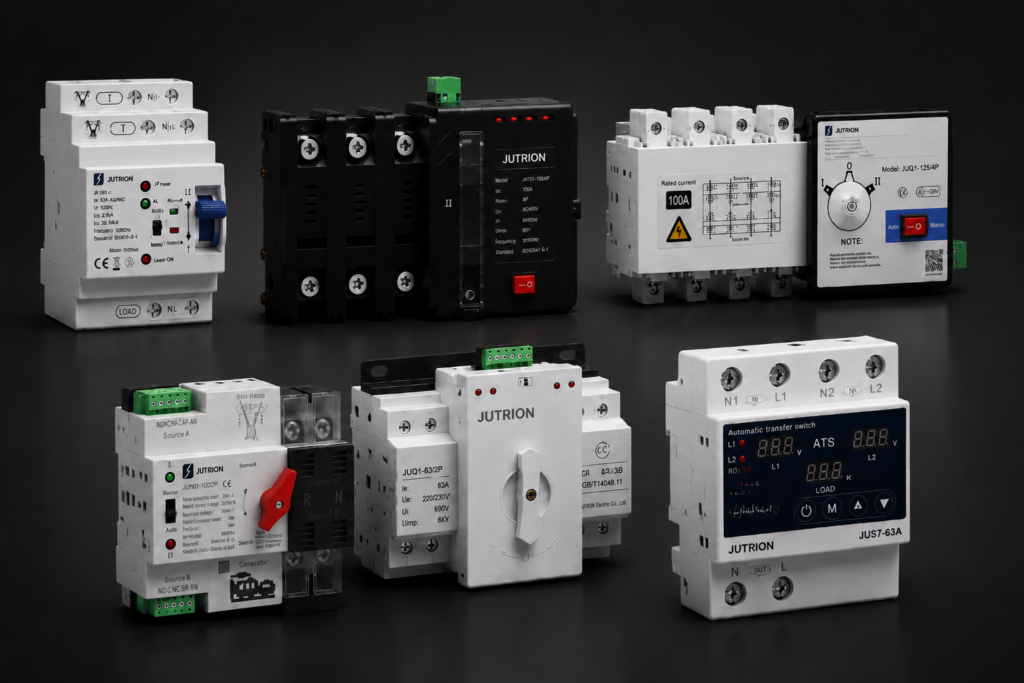
JUTRION-A Premier Manufacturer of Dual-Power Automatic Transfer Switches
As a leading ATS manufacturer with over a decade of industry-proven experience, JUTRION integrates in-house R&D, precision manufacturing, and strict quality control into an end-to-end supply chain solution. We deliver premium, fully compliant power continuity devices and personalized one-on-one technical support to clients worldwide.
Compliant with Industry Standards
JUTRION Electric ATS Product Series
JUTRION Electric ATS Product Series Discover our comprehensive Automatic Transfer Switch (ATS) solutions designed for seamless power transition. This versatile series includes compact DIN-rail types, high-performance PC-class, and reliable CB-class Dual Power Automatic Transfer Switches, ensuring uninterrupted power supply and ultimate protection for your critical loads.

JR2-63 DIN-rail Dual Power Automatic Transfer Switch
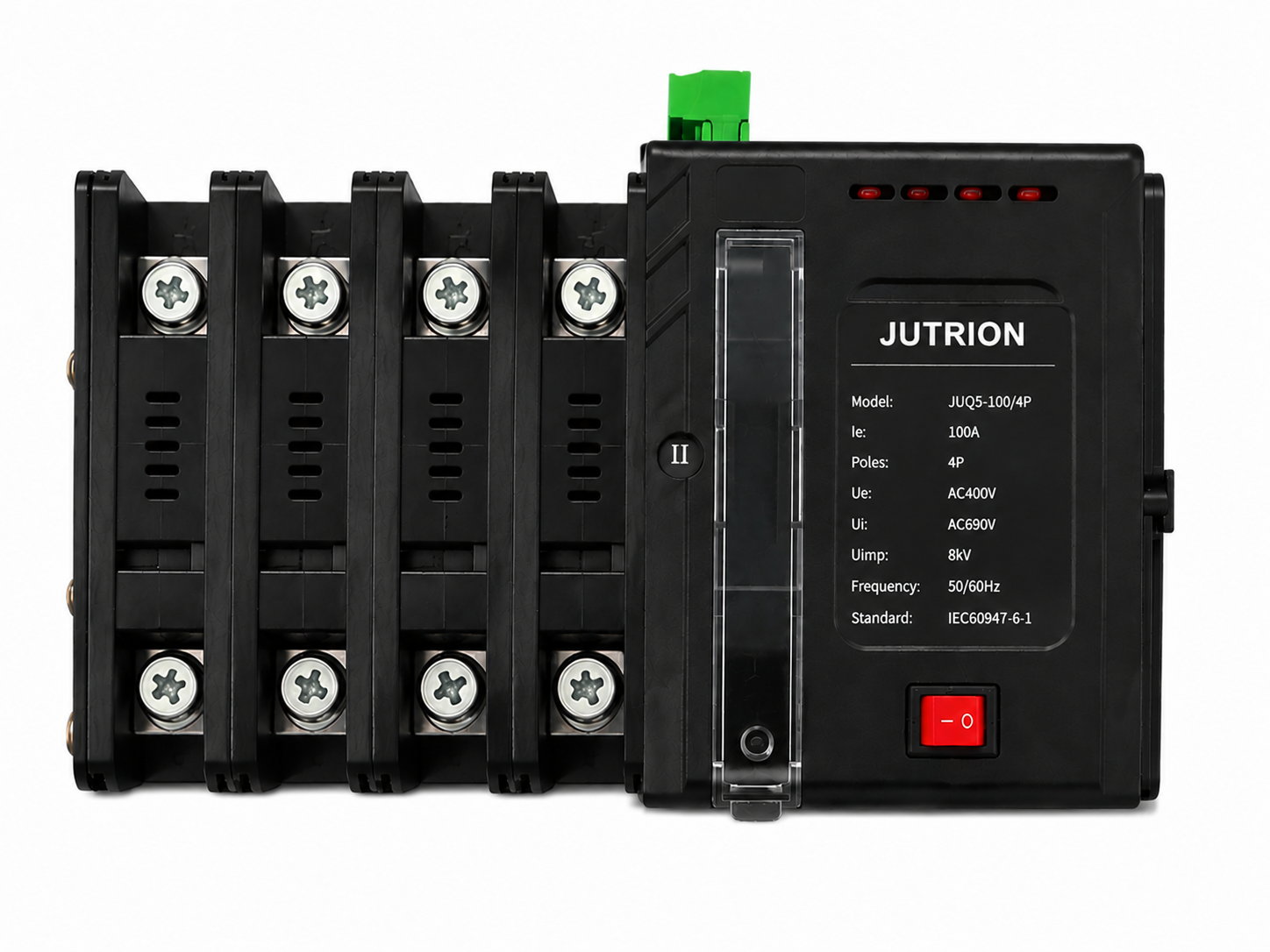
JUQ5 PC class Dual Power Automatic Transfer Switch

JUQ1 PC class Dual Power Automatic Transfer Switch

JUKG7 PC class Dual Power Automatic Transfer Switch

JUQ1 CB class Dual Power Automatic Transfer Switch
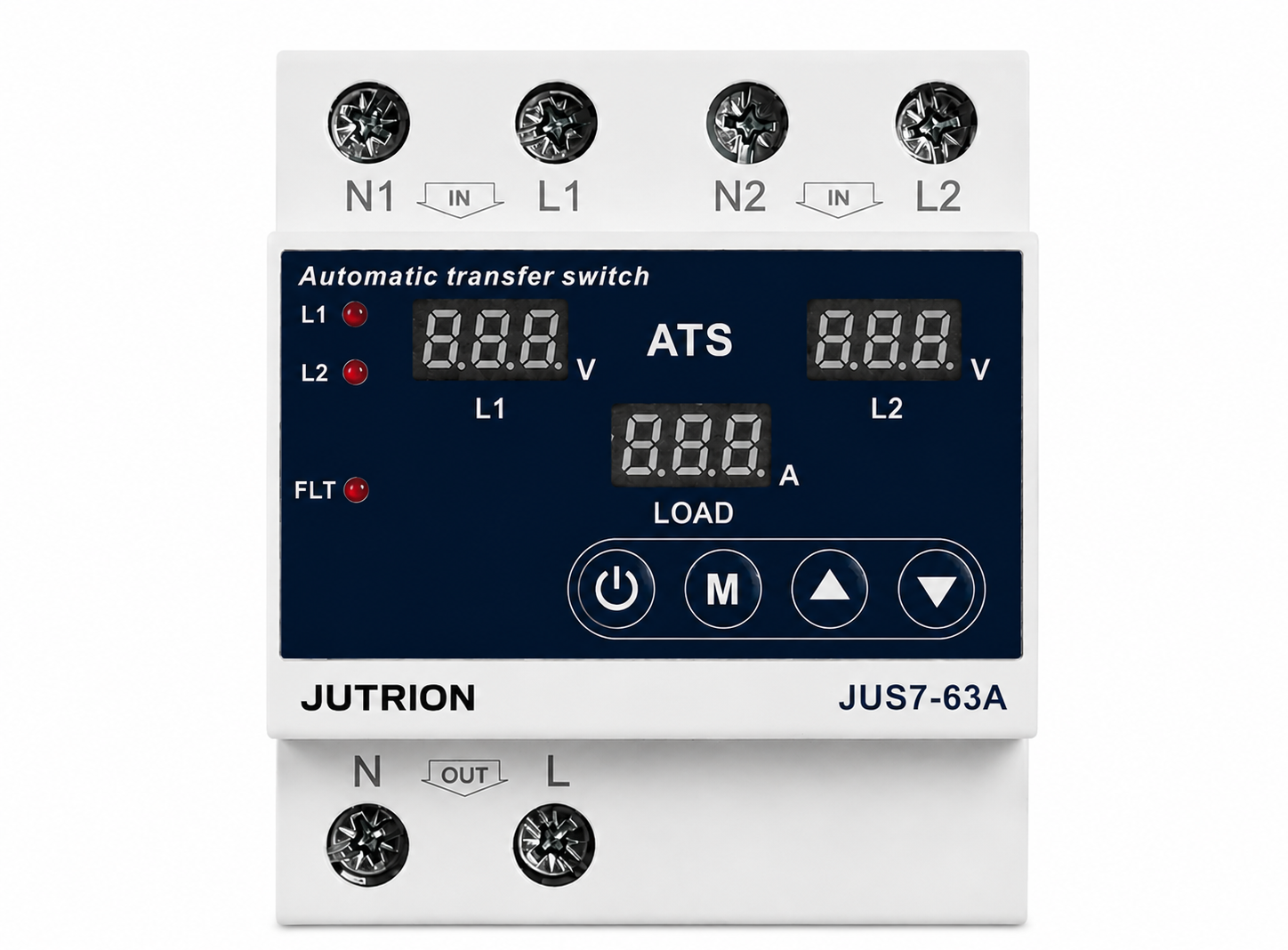
JUS7 Dual Power Automatic Transfer Switch
Why Partner with JUTRION Electric for Your ATS Needs?
At JUTRION, professionalism is defined by total control. Unlike standard assemblers, we manufacture and oversee every critical component before it integrates into the final ATS unit. This comprehensive in-house control allows us to enforce rigorous quality standards at every single stage of production. It not only ensures that every automatic transfer switch complies with strict global benchmarks, but also gives us the unique flexibility to support customized OEM/ODM requirements with precision and speed.
How JUTRION Empowers Your Business: Our Comprehensive Services
- Customized OEM/ODM Solutions: Tailored ATS design, branding, and configuration to meet your specific market and project requirements.
- End-to-End Supply Chain Support: Reliable production, strict quality control from components to finished products, and seamless global shipping.
- One-on-One Technical Support: Direct access to our professional engineering team for product selection, installation guidance, and troubleshooting.
- Rigorous Quality Assurance & Compliance: Comprehensive factory testing ensuring all automatic transfer switches comply with global electrical standards.
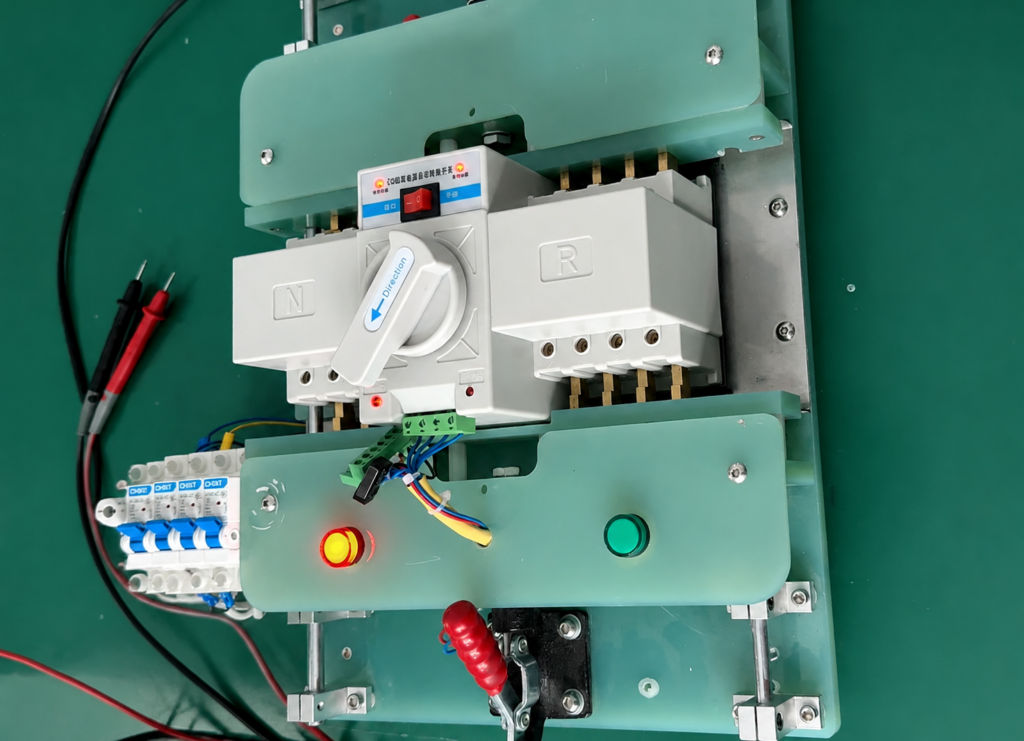

Let us provide you with samples for testing and evaluation.
Whether you need specific parameters or custom branding, our engineering team will tailor the samples to fit your project requirements perfectly. Let’s build a reliable partnership starting with a perfect match.
JUTRION ATS Selection Guide: How to Select the Ideal ATS for Your Application
PC-Class ATS: Performance & Specifications
Integrated heavy-duty load isolation switch with a single-unit structure, free of circuit breaker tripping elements. Features mechanical and electrical dual interlocking with three positions (ON I – OFF – ON II) for complete isolation functionality.
- High Withstand Current
- No Overcurrent Protection
- Rapid Switching Speed
- High Reliability
CB-Class ATS: Performance & Specifications
Assembled from two MCB/MCCB circuit breakers plus a mechanical interlock. Essentially a linkage of two circuit breakers equipped with built-in thermal-magnetic trips for overload and short-circuit protection.
- Integrated Circuit Breaker
- Overload & Short-Circuit Protection
- Economical & Space-Saving
- Dual Functionality
| Comparison | PC-Class ATS | CB-Class ATS |
|---|---|---|
| Basic Structure | Integrated transfer switching device | Two circuit breakers with interlock |
| Overcurrent Protection | Normally not integrated | Integrated in circuit breakers |
| Short-Circuit Protection | Requires upstream protection | Provided by MCB/MCCB |
| Transfer Performance | Faster and more durable | Suitable for general applications |
| Typical Application | Critical and industrial loads | Residential and general commercial loads |
| Cost | Higher | More economical |
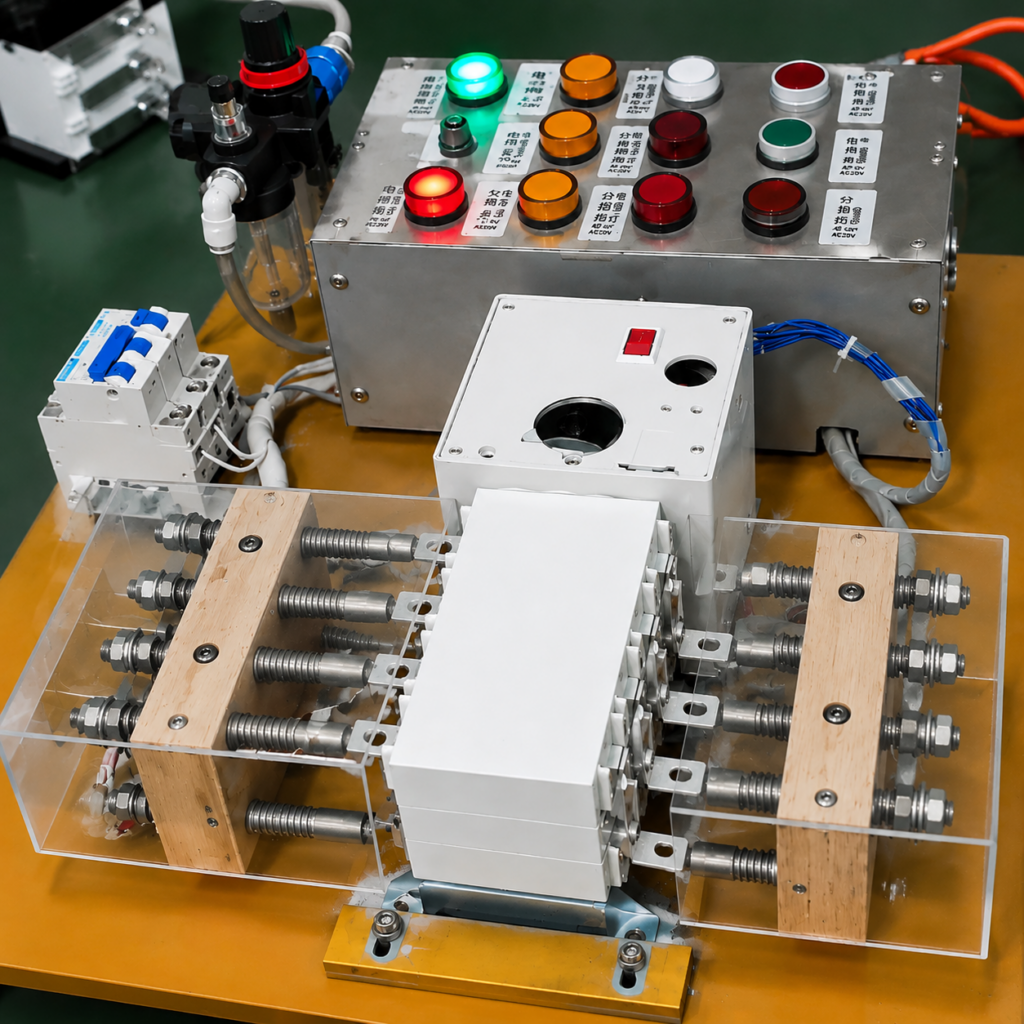
ATS Technical Parameters
- Rated Voltage:AC 110V/220V/380V /400V/415V
- Rated Current:16A – 3200A
- Poles:2P/3P/4P
- Transfer Time:≤ 0.2 s (Quick Transfer Type),≤ 2 s (Normal Type)
- Electrical & Mechanical Life:≥ 5000–10000 cycles
- Installation Method:Automatic /Manual/Electric/Remote
- Control Mode:Self-automatic / Manual / Remote control
- Detection Function:Voltage / Phase loss / Phase sequence
- Installation Method:Panel / Fixed / Drawer type
- Enclosure:IP20 / IP30 / IP40 (optional)
Operating Conditions for JUTRION ATS Products
| Comparison Summary | Standard Models | Extreme Model |
| Rated Operational Ambient Temperature | -5°C to +40°C (IEC Compliant) | -25°C to +70°C (Wide Temperature Range) |
| Current Derating Characteristics | Derating applies above 40°C per standard curve. | Full rated current without derating up to 70°C. |
| Insulation & Enclosure Temperature Resistance Material | High-strength flame-retardant thermoplastic with superior aging resistance. | High-temperature modified insulation with non-deforming arc chutes. |
| Controller Component Grades | Industrial-grade MCU ensuring reliable power switching logic. | Military-grade / Extended-temperature components for robust uptime. |
| High-Temperature Oxidation Resistance of Conductive Parts | Premium silver alloy contacts with high-purity copper busbars. | Thickened silver alloy contacts & widened red copper busbars for minimal temperature rise. |
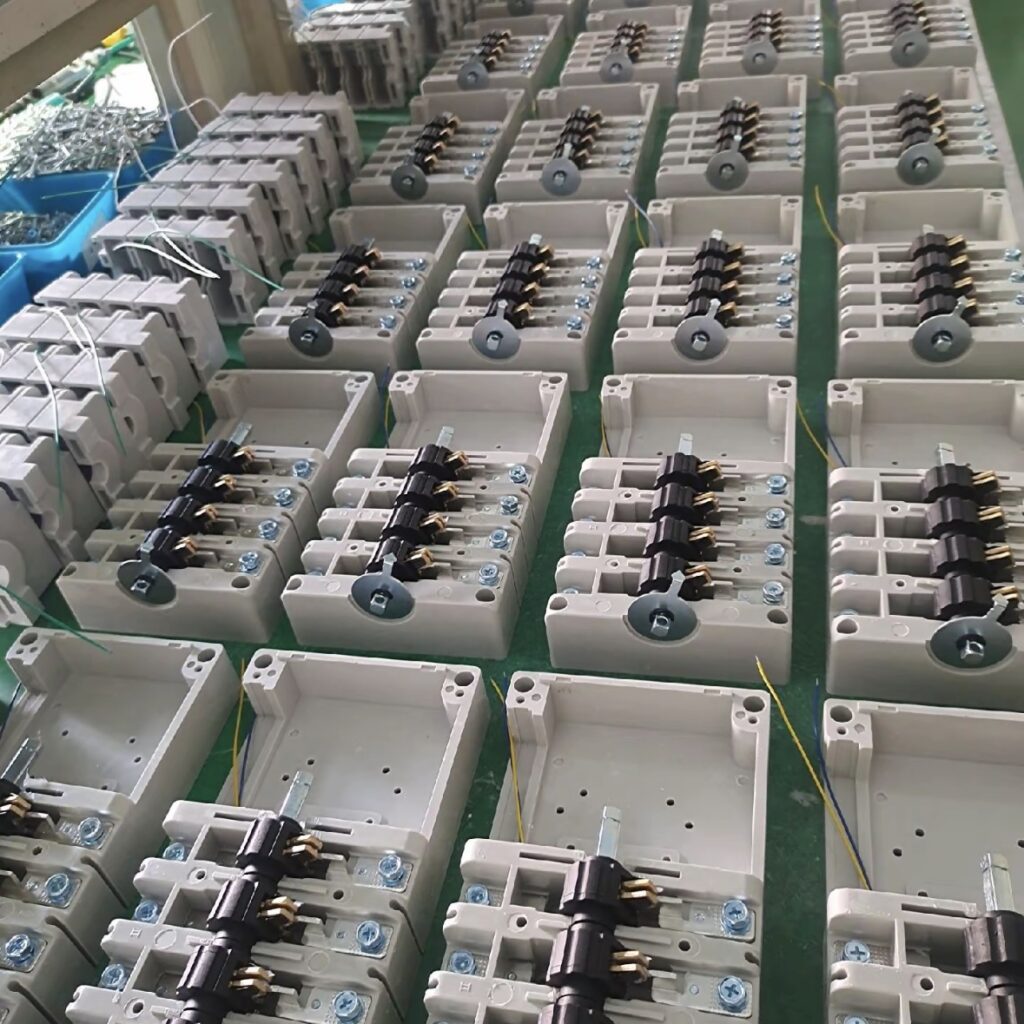
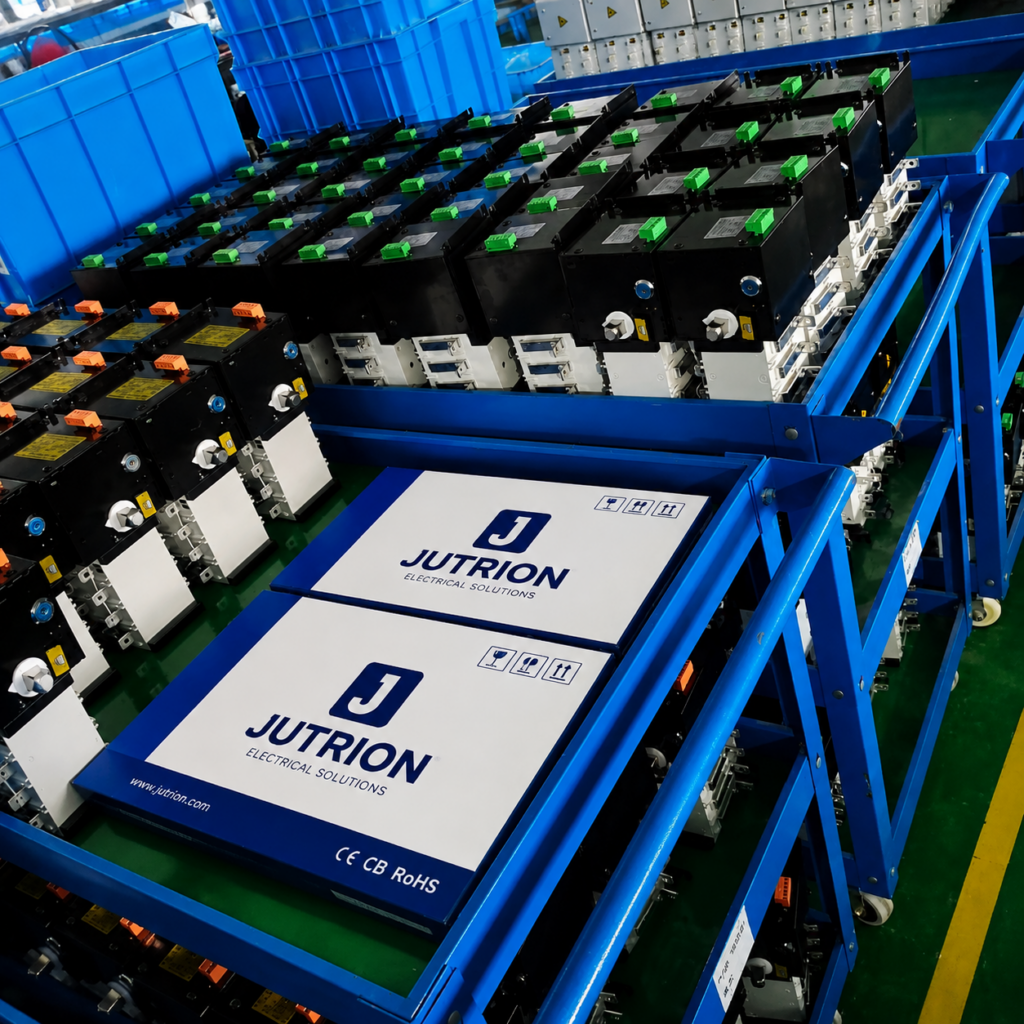
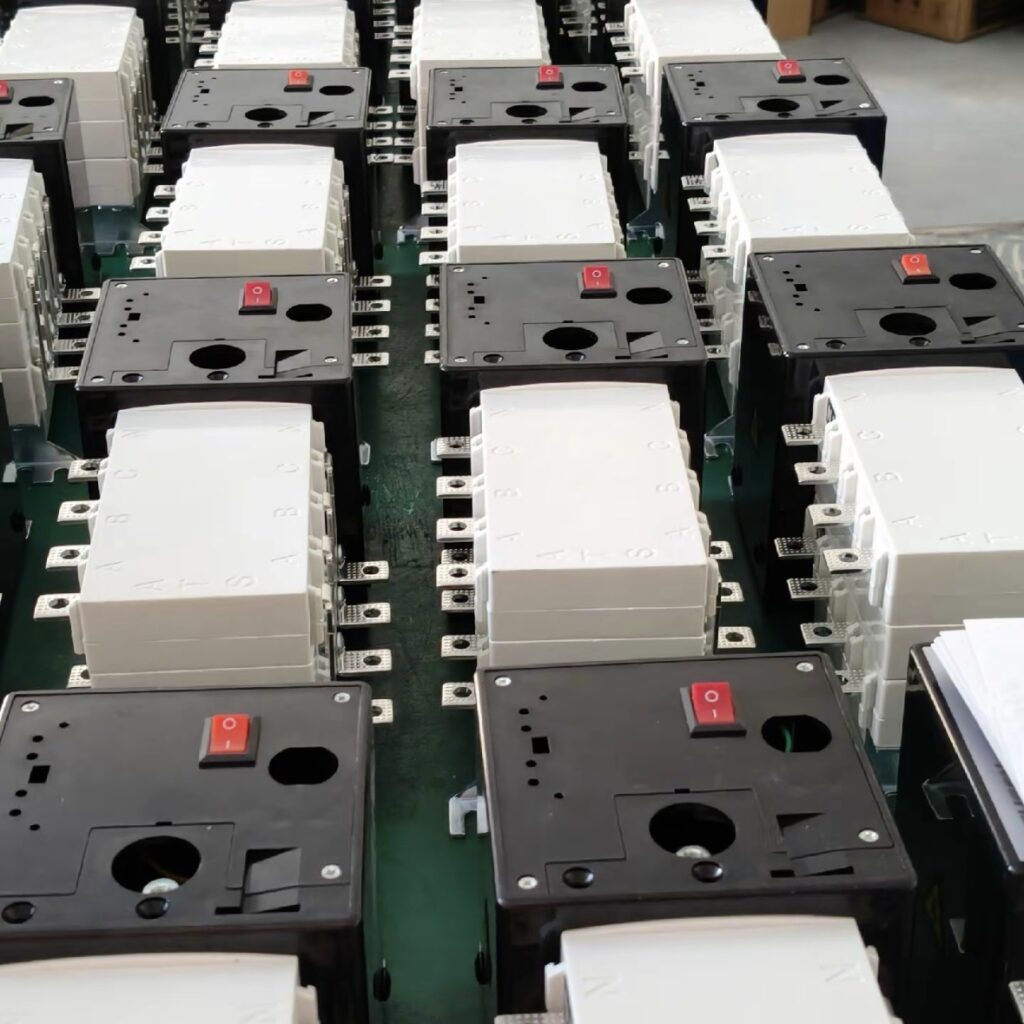
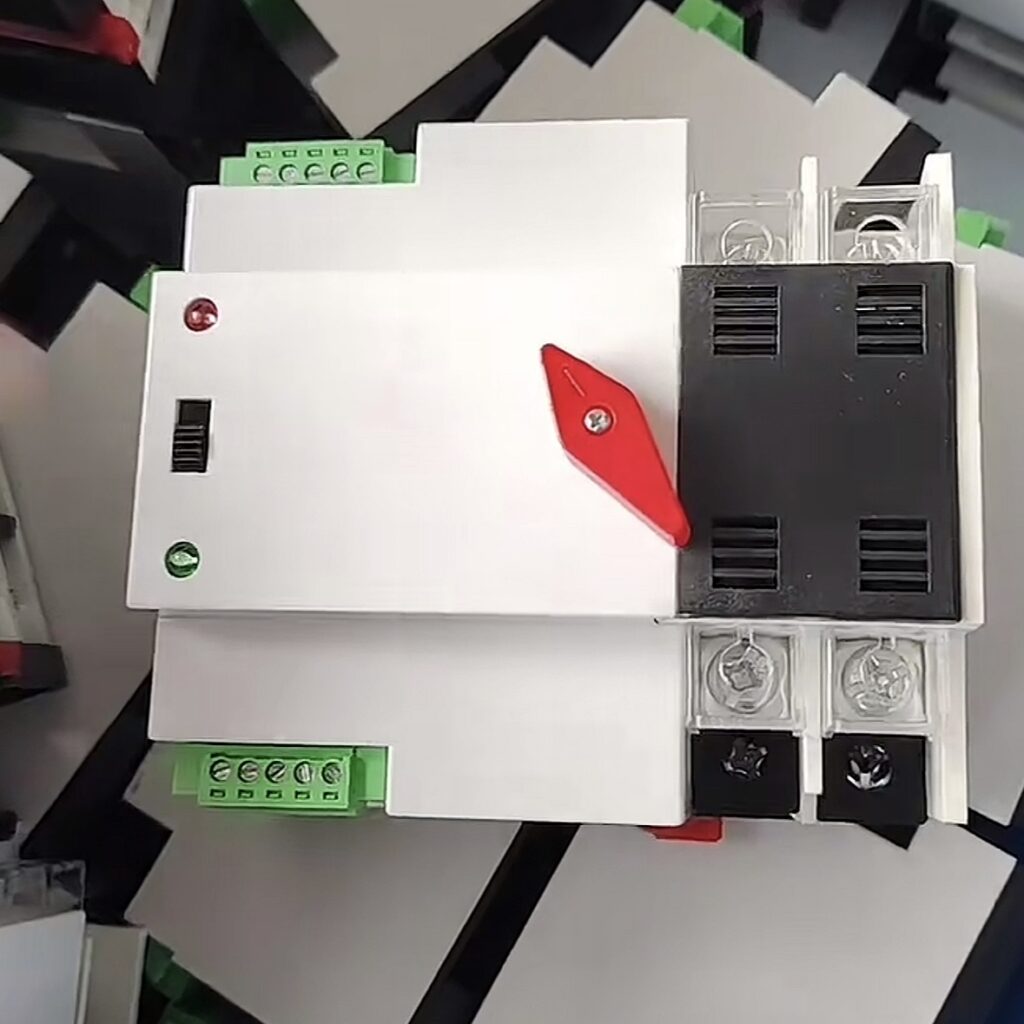
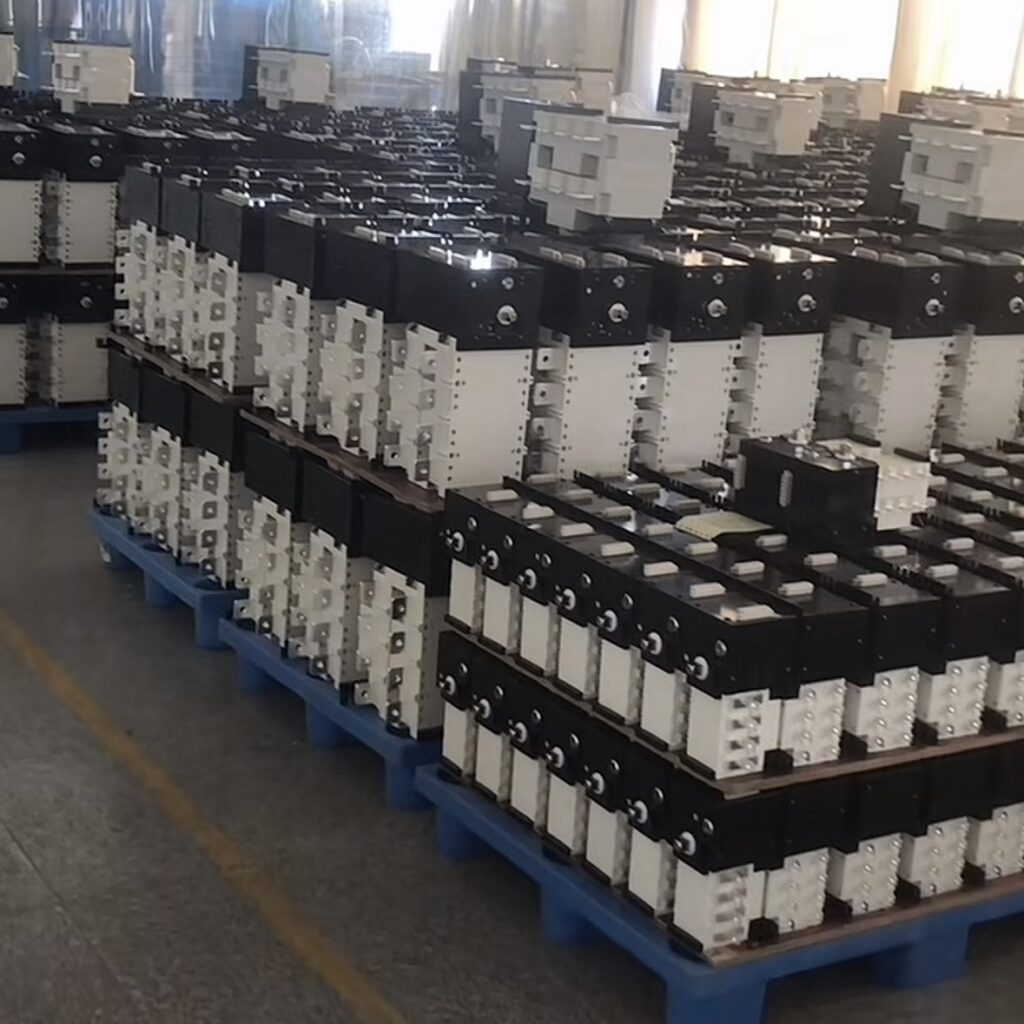
JUTRION ATS Manufacturing Facility
OEM/ODM and Ordering Information
| Item | Available Options |
|---|---|
| Rated Current | 16A–3200A, depending on series |
| Pole Options | 2P / 3P / 4P |
| Branding | Logo, label, packaging |
| Controller | Standard or customized functions |
| Communication | RS485 / dry-contact options on selected models |
| Samples | Available for evaluation |
| Certificates | Confirm by model and market |
| Lead Time | Customized Samples: 2–3 Working Days; Bulk Order Lead Time: Confirmed Based on Order Quantity |
Everything About Automatic Transfer Switches: The Engineer’s Selection Guide
What is a dual-power automatic transfer switch (ATS)?
A dual-power automatic transfer switch (ATS) is an intelligent electrical device designed to ensure continuous power delivery for critical loads. It automatically switch electrical emergency power from a primary power source to a backup power source (such as a generator or a secondary utility line) in the event of a power failure or electrical abnormality, maintaining stable and uninterrupted system operation.
How a Dual Power Automatic Transfer Switch Works
1.Continuous Monitoring
The built-in microprocessor controller monitors the primary power supply 24/7, tracking critical electrical parameters including voltage, frequency, and phase alignment.
2.Anomaly Detection
Upon detecting a power failure or electrical abnormality—such as a total blackout, under-voltage, over-voltage, or phase loss—the controller instantaneously issues a transfer command.
3.Safe & Rapid Transition
The ATS rapidly disconnects the primary power source and automatically closes the backup power circuit within milliseconds, minimizing interruption to ensure the continuous operation of critical loads.
4.Auto-Restoration
Once the primary power grid recovers and stabilizes, the ATS safely and automatically transfers the load back from the backup source to the main supply, resuming normal operation.
Where ATS is Used: Key Industry Applications
Critical Infrastructure & Data Center
Sub-industries: Data Centers, Server Rooms, Telecom Hubs
Description: Ideal for environments where even a momentary power interruption can cause catastrophic data loss or system crashes. ATS ensures absolute power redundancy for continuous server operations.
Healthcare & Medical Facilities
Sub-industries: Hospitals, Operating Rooms, Emergency Centers
Description: Crucial for safeguarding life-support systems, medical imaging equipment, and emergency lighting, ensuring uncompromised operational safety during grid failures.
Solar & Renewable Energy Systems
Sub-industries: Solar PV Plants, Microgrids, Battery Energy Storage Systems (BESS)
Description: Dynamically manages power routing between the solar inverter, battery storage, and the utility grid. It guarantees continuous clean energy supply and seamless backup transitions.
Industrial Automation & Manufacturing
Sub-industries: Automated Assembly Lines, Chemical Plants, Semiconductor Fab
Description: Protects automated production machinery and continuous industrial processes from costly downtime, material waste, and equipment damage caused by power fluctuations.
Commercial Buildings & Infrastructure
Sub-industries: Shopping Malls, Office Towers, Airports, Hotels
Description: Widely deployed to feed critical building loads such as fire pumps, evacuation elevators, ventilation systems, and emergency exit routing illumination.
Residential & Smart Home Standby Power
Sub-industries: Apartments, Smart Villas, Remote Off-grid Cabins
Description: Seamlessly integrates into terminal distribution boxes to switch between the main utility grid and local standby generators, ensuring domestic comfort and security.
How to Choose the Right Automatic Transfer Switch (ATS)?
Class Selection: PC-Class vs. CB-Class (Core)
- PC-Class: Single-unit integrated transfer switch featuring high-speed switching and robust short-circuit withstand capabilities. Ideal for critical loads such as fire protection systems, server rooms, UPS inputs, and main utility-to-generator emergency systems. Requires upstream circuit breakers for short-circuit protection.
- CB-Class: Assembled from dual circuit breakers with integrated overload and short-circuit protection. Offers a lower cost profile and is strictly suited for non-critical, general loads like standard lighting and HVAC. Standard CB-class switches should not be deployed in critical fire protection circuits.
Rated Current Selection
- Standard Loads: Switch rated current (Ie) >= Total calculated current x 1.25.
- Inductive Loads (Motors, VFDs, etc.): The current capacity must be scaled up to 1.5 times the load current to handle high inrush current.
- Generator Circuits: Match strictly according to the generator’s rated output current.
Pole Count Selection
- 2P: Tailored for single-phase 220V circuits.
- 3P: Designed for three-phase balanced circuits with zero harmonic distortion on the neutral line.
- 4P: Mandatory for TN-S distribution systems, dual distinct power grids (e.g., utility + generator), circuits with downstream residual current protection (RCD), high-harmonic load environments, and mandatory fire protection circuits.
Two-Position vs. Three-Position Configurations
- Two-Position (ON I – ON II): Features only main and backup closed positions. Delivers faster transfer times, ideal for standard loads utilizing self-transfer and self-restoring sequences.
- Three-Position (ON I – OFF – ON II): Features an intermediate “OFF” position providing a complete physical isolation gap. Highly recommended for fire protection systems, equipment maintenance overrides, and heavy-duty motor loads to guarantee absolute power source separation.
Controller Customization Based on Project Demands
- Standard Configuration: Built-in phase loss, under-voltage, and over-voltage protection.
- Utility-to-Generator Application: Upgraded with a specialized generator start/stop time delay module.
- Data Center Automation: Upgraded with RS485 communication protocols and dry contact signal feedback.
- Fire Protection Projects: Upgraded with a forced EPS/fire linkage emergency trip function.
Dual Power Automatic Transfer Switch Maintenance and Testing
- Visual & Contact Inspection: Monthly check for physical wear, loose terminal connections, or signs of overheating and arcing on the main contacts. Ensure the arc chutes are clean and intact.
- Mechanical Interlock Verification: Periodically inspect the mechanical and electrical dual interlocking mechanisms to guarantee they move smoothly without jamming, preventing dangerous cross-conduction.
- Manual Operation Testing: Conduct regular manual transfer cycles using the manual operating handle under zero-load conditions to verify basic mechanical linkages.
- Automated Sequence Testing: Perform annual simulated grid failure tests. Verify that the microprocessor controller accurately detects voltage drops or phase losses and cleanly executes the transfer within the specified milliseconds.
- Environmental & Cleaning Routine: Keep the enclosure free of industrial dust, moisture, and debris to protect the motorized mechanisms and internal electronics from premature aging.
How to Install an Automatic Transfer Switch (ATS)?
- Safety First & Power Isolation
Always shut down and isolate both the primary utility grid and the standby generator before starting. Verify that no voltage is present on any incoming terminals using a reliable digital multimeter to ensure absolute technician safety. - Enclosure Mounting
Mount the ATS securely inside a distribution box or control panel. Ensure the mounting surface is completely flat to prevent mechanical distortion of the internal interlocking shafts, and maintain sufficient clearance for ventilation and manual handle operation. - Main & Backup Power Wiring
Connect the incoming primary utility cables to the Main Power terminals (Source I) and the generator or secondary grid cables to the Backup Power terminals (Source II). Ensure all phases (L1, L2, L3) and the neutral wire (N) align perfectly with the terminal markings. - Load Terminal Connections
Route the heavy-duty copper conductors from the output terminals of the ATS directly to your critical load distribution board. Tighten all terminal screws strictly to the manufacturer-specified torque values to prevent loose contacts and abnormal temperature rises during continuous operation. - Secondary Control & Signal Wiring
Connect the control circuitry wires to the built-in microprocessor controller. If your project demands automated system automation, wire the specialized RS485 communication ports for dry contact feedback or connect the forced fire linkage trip signals.

CONTACT JUTRION FOR YOUR SAMPLE REQUEST