

Quick Answer: What Size Solar Combiner Box Do You Need?
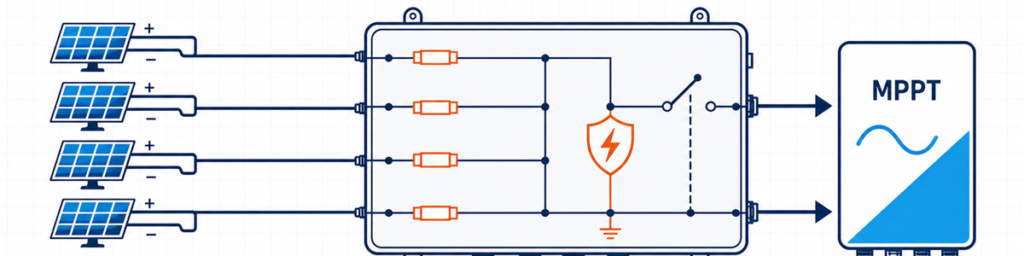
Four PV strings connected through a fused solar combiner box to an inverter MPPT inputប្រអប់ផ្សំសូឡាគួរតែត្រូវគ្នានឹងចំនួនខ្សែ PV ដែលអាចប្រើបានដែលបញ្ចូលទៅកាន់ធាតុបញ្ចូលអាំងវឺតទ័រមួយ វ៉ុលសៀគ្វីបើកខ្ពស់បំផុតក្នុងអាកាសធាតុត្រជាក់របស់អារេ ចរន្តរចនាផ្អែកលើ Isc រួមបញ្ចូលគ្នា និងការការពារដែលត្រូវការនៅទីតាំងនោះ។ ចំនួនធាតុបញ្ចូលតែមួយមិនគ្រប់គ្រាន់ទេ។ ខ្សែបួនអាចត្រូវការប្រអប់ 4-in/1-out មួយ សៀគ្វី 2-in/1-out ពីរដាច់ដោយឡែក ឬមិនត្រូវការប្រអប់ផ្សំខាងក្រៅទាល់តែសោះ អាស្រ័យលើប្លង់អាំងវឺតទ័រ និងខ្សែ។.
សម្រាប់អ្នកទិញ “ខ្សែ 4, 1000 V” ស្តាប់ទៅដូចជាលក្ខណៈបច្ចេកទេសដែលអាចប្រើបាន។ សម្រាប់វិស្វករដែលពិនិត្យការដកស្រង់តម្លៃ វាគ្រាន់តែជាការចាប់ផ្តើមប៉ុណ្ណោះ។ តារាងទិន្នន័យម៉ូឌុលអាចបង្ហាញថាខ្សែជិតដល់ 1000 V នៅព្រឹកត្រជាក់។ អាំងវឺតទ័រអាចចាត់ខ្សែទៅ MPPT ឯករាជ្យពីរ។ ផ្លូវទិន្នផលអាចត្រូវការផ្ទុកជិត 70 A បន្ទាប់ពីកត្តាចរន្តរបស់គម្រោងត្រូវបានអនុវត្ត។ ការពិតណាមួយក្នុងចំណោមនោះអាចផ្លាស់ប្តូរប្រអប់។.
The aim here is to turn the information already present on the module datasheet, inverter schedule and single-line diagram into a defensible preliminary specification. For general configurations and available product options, see the JUTRION PV combiner box range.
Start with the Inverter Drawing, Not the Number of Strings on the Roof
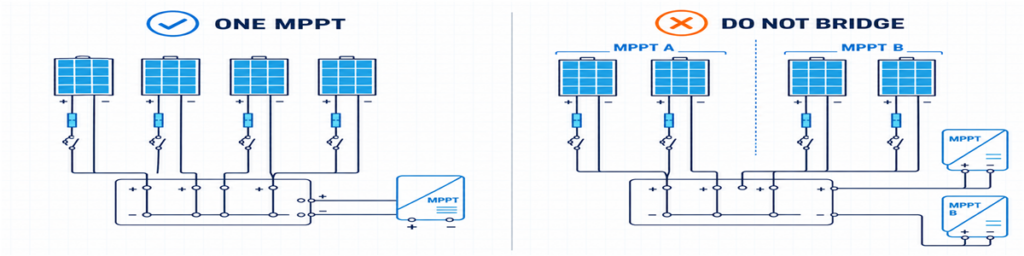
Correct PV string grouping for one MPPT compared with incorrectly bridging separate MPPT inputsThe strings entering one combiner output must have somewhere valid to go. That sounds obvious, yet it is where many early quotations go wrong.
Suppose a rooftop has eight strings. The inverter drawing assigns four to MPPT A and four to MPPT B. Calling for an 8-in/1-out combiner would join two circuits that the inverter was designed to control independently. The workable choices are normally two separate 4-in/1-out groups, one enclosure containing two electrically independent sections, or direct string connections if the inverter already provides suitable inputs and protection.
Strings intended to operate in parallel should also be genuinely compatible. Check the module type, modules per string, orientation and expected shading. Unequal string lengths have different operating voltages. Combining heavily shaded and unshaded strings can also produce a poor operating match even when the module labels are identical.
This gives the first usable rule:
Count the strings assigned to one compatible MPPT path, not every string visible on the project drawing.
When an External Combiner Adds Little Value
Many string inverters already provide multiple DC inputs, internal surge protection and a DC isolating function. If each string can run directly to a suitable inverter input, adding an external combiner may create extra cable terminations without solving a design problem.
A single-string box is a related but different case. A 1-in/1-out unit does not combine current; it acts as an external protection and isolation box. That can be useful where the inverter is remote, a local isolation point is required, or the project wants replaceable surge protection in an accessible location.
The Five Numbers Worth Putting on One Sheet
Before looking at fuse sizes or enclosure dimensions, collect five groups of information. Most can be copied directly from issued project documents.
| Information | Where it normally comes from | What it changes |
|---|---|---|
| Voc, Isc, Imp, temperature coefficient and maximum series fuse | PV module datasheet | Voltage, current and string-fuse limits |
| Modules per string and number of parallel strings | String schedule | Input count and total voltage/current |
| MPPT arrangement and input limits | Inverter datasheet and single-line diagram | Which strings may share an output |
| Minimum temperature, mounting and exposure | Project design basis and site data | Cold Voc, derating and enclosure |
| Destination country and applicable rules | Project specification | Protection method and documentation |
តម្លៃមួយដែលជារឿយៗត្រូវបានខកខានគឺចរន្តសៀគ្វីខ្លីអតិបរមាដែលអនុញ្ញាតរបស់អាំងវឺតទ័រ។ ចរន្តប្រតិបត្តិការអតិបរមា និងចរន្តសៀគ្វីខ្លីអតិបរមាមិនអាចផ្លាស់ប្តូរគ្នាបានទេ។ អារេដែលបានស្នើគួរតែត្រូវបានពិនិត្យទល់នឹងទាំងពីរ។.
The destination country matters just as much as the electrical data. A fuse calculation prepared for an IEC-oriented project should not quietly borrow a North American multiplier and present it as a universal rule.
Check Cold String Voltage Before Choosing 1000 V or 1500 V
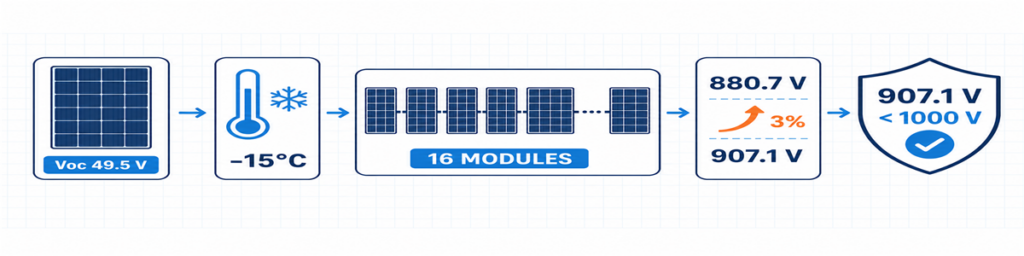
Cold-weather PV string Voc calculation for 16 modules resulting in a 907.1 V design voltageModule Voc is normally stated at standard test conditions. It rises as cell temperature falls, so the coldest expected condition controls the maximum string voltage.
Where the module datasheet gives a negative Voc temperature coefficient as a percentage per degree Celsius, an initial calculation is:
Voc,cold = Voc,STC × [1 + |βVoc| × (25 − Tអប្បបរមា)]
Vstring,cold = Voc,cold × number of modules in series
Enter the coefficient as a decimal. For example, −0.28%/°C becomes 0.0028 in the formula. If the module manufacturer provides a different low-temperature method, use that method instead.
The answer has to fit more than the inverter. The fuse-link and holder, SPD, switch-disconnector or breaker, terminals, conductors and completed assembly all sit in the same DC circuit. Replacing only the SPD with a 1500 V device does not convert a 1000 V box into a 1500 V assembly.
A little unused voltage margin is not wasted capacity. It absorbs the project-specific temperature basis and tolerances that have actually been identified. What should be avoided is a random margin with no recorded source.
String Fuses Depend on Reverse Current, Not on Habit
When parallel strings are healthy, each contributes current to the common output. If one string develops a fault, the others may feed current back into it. The string fuse is there to interrupt that damaging reverse current where protection is required.
An initial screen for the contribution from the other strings is:
Ireverse,screen = (n − 1) × Isc,string
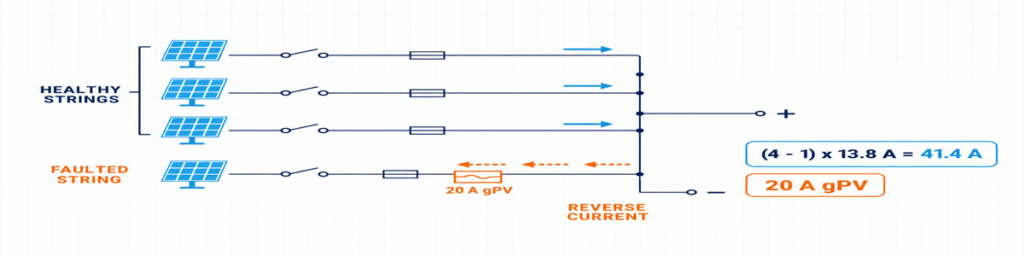
Reverse current from three healthy PV strings into a faulted string protected by a 20 A gPV fuseHere, n is the number of parallel strings. The expression shows why the answer changes quickly between two and four inputs: a faulted string in a four-string group may receive current from three healthy strings.
កុំចាត់ទុកកន្សោមនោះជាការរចនាការការពារដែលបានបញ្ចប់។ ហ្វុយហ្ស gPV ដែលបានជ្រើសរើសត្រូវតែផ្ទុកចរន្តដែលរំពឹងទុកក្រោមលក្ខខណ្ឌប្រអប់ជាក់ស្តែង ការពារខ្សែ និងឧបករណ៍ ស្ថិតនៅក្នុងកម្រិតហ្វុយហ្សស៊េរីអតិបរមារបស់ម៉ូឌុល និងមានសមត្ថភាពវ៉ុល DC PV និងសមត្ថភាពបំបែកគ្រប់គ្រាន់។ ប្រដាប់កាន់ហ្វុយហ្ស និងហ្វុយហ្សត្រូវបានពិនិត្យរួមគ្នា រួមទាំងឥទ្ធិពលសីតុណ្ហភាព និងការដាក់ជាក្រុម។.
IEC 60269-6 covers supplementary requirements for fuse-links used in photovoltaic strings and arrays up to 1500 V DC. The installation rules adopted for the project determine how that product is applied.
About the 1.56 × Isc Figure Seen Online
តួលេខ 1.56 × Isc ដែលធ្លាប់ស្គាល់គឺទាក់ទងនឹងកត្តា 125% ពីរដែលប្រើក្នុងផ្លូវរចនាអាមេរិកខាងជើងទូទៅ។ វាមិនគួរត្រូវបានដាក់ស្លាកថ្មីជារូបមន្ត IEC សកលទេ។ ប្រសិនបើគម្រោងត្រូវបានគ្រប់គ្រងដោយ NEC សូមប្រើកំណែដែលបានអនុម័ត បញ្ជីឧបករណ៍ និងតម្រូវការក្នុងស្រុក។ ប្រសិនបើវាជាគម្រោង IEC សូមអនុវត្តច្បាប់ដំឡើងដែលផ្អែកលើ IEC ដែលពាក់ព័ន្ធ និងការណែនាំរបស់អ្នកផលិតម៉ូឌុល ហ្វុយហ្ស និងខ្សែ។.
This distinction is worth stating in the quotation. Otherwise, two suppliers may return different fuse sizes even though both received the same array data.
Size the Combined Path Separately from Each Input
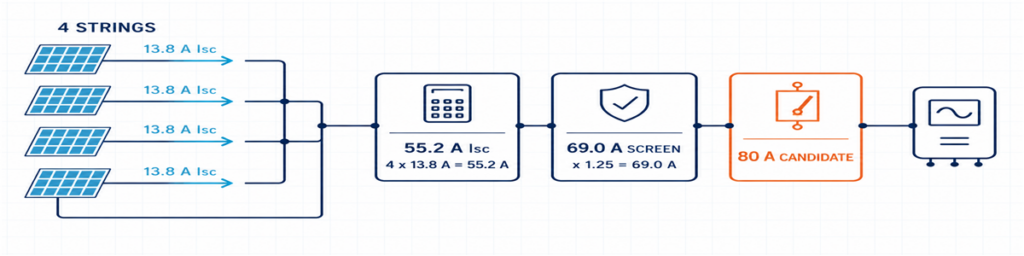
Four 13.8 A PV strings combined to 55.2 A Isc with a 69 A design screen and 80 A output-device candidateThe input and output sides carry different currents. Each input carries one string; the common output carries the sum of the parallel strings.
Isc,total = number of parallel strings × Isc,string
កត្តារចនាដែលត្រូវការរបស់គម្រោង និងកត្តាកែតម្រូវត្រូវបានអនុវត្តទៅលើខ្សែ និងឧបករណ៍ដែលសមស្រប។ លទ្ធផលប៉ះពាល់ដល់ខ្សែខាងក្នុង បាសបារ ស្ថានីយ ខ្សែចេញ និងឧបករណ៍ប្តូរទិន្នផល។ វាក៏ត្រូវប្រៀបធៀបជាមួយដែនកំណត់ដែលបានបញ្ជាក់របស់អាំងវឺតទ័រ។.
ការប្រើ Imp តែមួយសម្រាប់ការជ្រើសរើសទាំងមូលអាចធ្វើឱ្យផ្លូវការពារតូចពេក។ ការប្រើ Isc តែមួយដោយមិនពិនិត្យចរន្ត MPPT ធម្មតារបស់អាំងវឺតទ័រអាចខកខានដែនកំណត់ប្រតិបត្តិការ។ រក្សាតម្លៃដាច់ដោយឡែក ហើយផ្តល់គោលបំណងដល់តម្លៃនីមួយៗ។.
| Value | Use it to check |
|---|---|
| String Imp | Normal operating current and inverter MPPT compatibility |
| String Isc | String design current and overcurrent-protection calculations |
| Total Isc | Combined path and inverter short-circuit-current limit |
| Corrected project design current | Conductors, busbars, terminals and output device under installed conditions |
Heat can overrule an apparently comfortable catalogue rating. Closely grouped fuse-holders, terminal losses, the SPD and direct solar radiation all add to enclosure temperature. An 80 A device in a reference condition is not automatically an 80 A solution inside every outdoor box.
Fuses, Isolation, Breakers and SPDs Have Different Jobs
A combiner box is easier to specify when every component has one clear duty:
- gPV fuse: protects an individual string against the applicable reverse-overcurrent condition;
- switch-disconnector: provides PV DC-rated load switching and a defined isolation point;
- DC circuit breaker: switches the circuit and provides an overcurrent function when its characteristics and DC interruption ratings suit the application;
- PV DC SPD: limits transient overvoltage and does not replace overcurrent protection or isolation.
An output breaker is not mandatory simply because there is room for one. The system design may call for a switch-disconnector where overcurrent protection is already provided elsewhere, or for a breaker with a defined protective duty. Decide the function first.
The same principle applies to the SPD. Confirm the PV DC application, UCPV, protection modes, protection level, discharge-current duty, short-circuit behaviour and backup coordination. Type 2 is commonly used for induced surge conditions. Where an external lightning protection system or another lightning-current path is present, the arrangement may need Type 1 or Type 1+2 protection. See the JUTRION PV DC SPD range after the project voltage and lightning context are known.
For the isolating function, a device rated for the intended PV duty is more meaningful than a generic “DC switch” description. The JUTRION PV DC isolator range includes DC-PV2 options for review against the required voltage, current and pole arrangement.
A Four-String Example from Datasheet to Box
Illustrative example: This is a constructed commercial-rooftop case used to show the calculation. It is not a customer project or a universal design.
Four identical strings are assigned to one high-current inverter input. Each string contains 16 modules. The module datasheet gives Voc = 49.5 V, Isc = 13.8 A, βVoc = −0.28%/°C and a maximum series-fuse rating of 25 A. The project minimum temperature is −15°C. Its design basis also applies a stated 3% allowance after the temperature calculation.
The illustrative inverter has a 1000 V maximum DC input, an 80 A maximum input current and a 100 A maximum short-circuit current. No external lightning protection system is assumed.
The Drawing Points to Four Inputs and One Output
All four strings use the same modules and string length, and the inverter documentation permits them to feed the same input. A 4-in/1-out architecture is therefore appropriate at this stage. If the drawing divided them between two MPPTs, the answer would become two independent 2-in/1-out groups.
The Cold String Reaches 907.1 V
Cold module Voc = 49.5 × [1 + 0.0028 × (25 − (−15))] = 55.04 V
Cold string Voc = 55.04 × 16 = 880.7 V
Project design voltage = 880.7 × 1.03 = 907.1 V
A verified 1000 V assembly can pass this preliminary check, as can the illustrative inverter. The remaining margin is about 93 V. A seventeenth module would raise the result to approximately 964 V before the same allowance and would not pass this example after the allowance is applied.
Parallel Strings Make Individual Fusing Necessary
The other three strings can contribute an initial reverse-current screen of:
(4 − 1) × 13.8 = 41.4 A
នោះគឺលើសពីកម្រិតហ្វុយហ្សស៊េរីអតិបរមា 25 A របស់ម៉ូឌុល ដូច្នេះការការពារខ្សែនីមួយៗត្រូវបានទាមទារក្នុងឧទាហរណ៍នេះ។ វិធីសាស្ត្រគម្រោងបង្កើតការត្រួតពិនិត្យចរន្តហ្វុយហ្សទាបបំផុតបឋម 1.25 × 13.8 = 17.25 A ។ ហ្វុយហ្ស gPV 20 A ស្ថិតនៅចន្លោះតម្លៃនោះ និងដែនកំណត់ម៉ូឌុល 25 A ។ មុនពេលវាត្រូវបានទទួលយក ប្រដាប់កាន់របស់វា ការការពារខ្សែ សីតុណ្ហភាពប្រអប់ និងសមត្ថភាពចរន្តបន្តត្រូវតែត្រូវបានពិនិត្យ។.
The Common Output Needs More Than a 55.2 A Label
The combined short-circuit current is:
4 × 13.8 = 55.2 A
The example design basis uses 1.25 × Isc as its preliminary output-current screen:
1.25 × 55.2 = 69.0 A
ឧបករណ៍ផ្តាច់សៀគ្វី DC PV 80 A គឺជាក្របខ័ណ្ឌចាប់ផ្តើមសមហេតុផល មិនមែនជាជម្រើសចុងក្រោយដោយស្វ័យប្រវត្តិទេ។ កម្រិតកម្តៅដែលបានដំឡើង វ៉ុល ប៉ូល និងកាតព្វកិច្ចប្តូរនៅតែត្រូវពិនិត្យ។ ដែនកំណត់សៀគ្វីខ្លី 100 A របស់អាំងវឺតទ័រឆ្លងកាត់ការប្រៀបធៀប 55.2 A ។ ដែនកំណត់ប្រតិបត្តិការ 80 A របស់វាគួរតែត្រូវបានប្រៀបធៀបជាមួយ Imp របស់ម៉ូឌុលបួនដងពីតារាងទិន្នន័យពិតប្រាកដ។.
The preliminary box is now specific enough to review: four independently fused inputs, one combined output, 1000 V-class components throughout, a combined path designed around the stated 69 A screen, PV DC isolation and a Type 2 PV DC SPD subject to final coordination.
The Result on One Page
The calculation is easier to review when the assumptions, result and remaining check are kept together. This is also the point where a buyer can see whether two quotations are actually based on the same duty.
| Selection item | Illustrative result | What still needs confirmation |
|---|---|---|
| Configuration | 4 inputs / 1 output | All four strings feed one compatible inverter input |
| Maximum project voltage | 907.1 V | Site temperature basis, tolerance method and inverter limit |
| String protection | 20 A gPV preliminary selection | Fuse-holder temperature, cable protection and applicable rules |
| Combined short-circuit current | 55.2 A | Inverter maximum permissible short-circuit current |
| Preliminary output-current screen | 69.0 A | Correction factors and installed assembly temperature |
| Output isolation | 80 A frame is a starting candidate | PV DC duty, voltage, poles and installed current rating |
| Surge protection | Type 2 PV DC SPD initially | Ucpv, protection modes, LPS and backup coordination |
| Enclosure | Outdoor IP65 minimum | UV, corrosion, heat, glands and condensation |
Choosing Between a 1/1, 2/1 and 4/1 Configuration
JUTRION currently displays 1000 V DC, IP65 products in 1-in/1-out, 2-in/1-out and 4-in/1-out configurations. Use the input count to shortlist the architecture, then confirm the ratings that the project calculation produced.
| Configuration | Typical reason to shortlist it | Reason to stop and reconsider |
|---|---|---|
| 1 input / 1 output | One string needs an accessible protection and isolation point | No combining occurs; verify that a separate box adds a required function |
| 2 inputs / 1 output | Two matched strings feed one inverter input | The strings belong to separate MPPTs or exceed the combined-input limits |
| 4 inputs / 1 output | Four matched strings feed one suitably rated high-current input | The inverter needs two MPPT groups or the output path is underrated |
The worked example points toward a JUPV1000-4/1 architecture. It does not approve the internal fuse, output device or SPD by model name alone. Those parts have to be quoted against the 907.1 V project voltage, the proposed 20 A gPV string protection, the 69 A preliminary combined-current screen and the outdoor installation conditions.
Custom 1500 V or larger-string configurations deserve a fresh component and assembly check. They should not be treated as a label change to the 1000 V stock arrangement.
The Outdoor Enclosure Can Change the Current Rating
Electrical calculations are often completed in an office at 25°C. The box may spend its working life on a roof where the air is much hotter, direct sunlight warms the enclosure, and several fuse-holders carry current side by side. That difference affects more than comfort during maintenance.
Heat is produced at fuses, terminals, conductors, the SPD and the output device. Closely packed components have less opportunity to cool, while a sealed enclosure restricts air exchange. A component that carries its marked current under its reference conditions may require derating in the final assembly. This is why the 80 A switch-disconnector in the example remains a starting frame until the installed arrangement has been checked.
IP65 is useful, but it answers only an ingress-protection question. It does not automatically establish:
- resistance to long-term ultraviolet exposure;
- corrosion performance near the coast or in an industrial atmosphere;
- acceptable internal temperature under full current and solar loading;
- condensation control during daily heating and cooling;
- suitability of cable glands, seals and materials for the installed cables;
- insulation performance at high altitude.
Mounting details also matter. Cable entries made through the top of an outdoor enclosure create a different water path from bottom entry. Undersized glands may damage seals or leave insufficient cable support. Tight cable bends can transfer mechanical force to fuse-holders and terminals. The enclosure should be reviewed as an installed assembly, not as an empty plastic or metal box with an IP number.
IEC 61439-2:2020 covers power switchgear and controlgear assemblies up to 1500 V DC. The relevance here is practical: using individually rated components does not remove the need to verify the completed assembly, including temperature rise, dielectric properties, protective circuits, clearances, wiring and mechanical construction as applicable.
Send Enough Information for the Supplier to Check the Result
A short technical enquiry is more useful than a long purchasing template. Attach the module and inverter datasheets and state:
- strings per output and modules per string;
- module Voc, Isc, Imp, βVoc and maximum series fuse;
- minimum design temperature and any voltage allowance;
- inverter MPPT arrangement and input limits;
- calculated maximum voltage and combined design current;
- required fuse, isolation, breaker and SPD functions;
- enclosure location, IP requirement, ambient, UV and corrosion exposure;
- cable sizes, monitoring, destination market and quantity.
For the illustrative project, that becomes: 4-in/1-out, four identical 16-module strings feeding one MPPT, 907.1 V stated project design voltage, preliminary 20 A gPV fuses, 55.2 A total Isc, 69 A preliminary output-current screen, PV DC isolation, coordinated Type 2 PV DC surge protection and an outdoor enclosure.
Why Two “4-String, 1000 V, IP65” Quotations May Not Be Equivalent
One quotation may use gPV fuse-links and holders verified for the intended voltage and temperature. Another may list only a nominal fuse current. One box may provide a load-break switch-disconnector; another may use a device intended mainly for isolation. SPD Ucpv, protection modes, short-circuit behaviour and replaceability may also differ even when both quotations say “Type 2 SPD.”
The common output is another source of hidden difference. Compare the installed current capability of the busbars, conductors, terminals and output device, not only the largest ampere number printed in the bill of materials. Also check terminal capacity against the actual outgoing cable. A technically lower-priced quotation is not cheaper if it requires replacement glands, a larger enclosure or rework at site.
A useful comparison therefore normalizes the following items before price:
- input/output arrangement and MPPT grouping;
- maximum DC voltage of the complete path;
- string-fuse class, rating and module limit;
- លក្ខខណ្ឌចរន្តរួម និងសីតុណ្ហភាពដែលបានដំឡើង;
- មុខងារឧបករណ៍ទិន្នផល និងកាតព្វកិច្ច DC;
- ប្រភេទ SPD, Ucpv, របៀប និងការសម្របសម្រួល;
- សមត្ថភាពស្ថានីយ និងក្រពេញខ្សែ;
- សម្ភារៈស្រោម និងភាពសមស្របតាមបរិស្ថាន។.
ការជ្រើសរើសចុងក្រោយគួរអានជាផ្លូវអគ្គិសនីតភ្ជាប់តែមួយ។ ប្រសិនបើការដកស្រង់បញ្ជាក់តែចំនួនបញ្ចូល វ៉ុលនាម និងកម្រិត IP វាមិនទាន់ឆ្លើយសំណួរអំពីទំហំនៅឡើយទេ។.
ផ្ទៀងផ្ទាត់ប្រអប់បន្ទាប់ពីការដំឡើង
ការរចនាត្រឹមត្រូវនៅតែអាចត្រូវបានបំផ្លាញដោយប៉ូលបញ្ច្រាស ស្ថានីយរលុង ក្រពេញខូច ឬខ្សែសង្វាក់ដែលភ្ជាប់ទៅបញ្ចូលខុស។ ការដាក់ឱ្យដំណើរការគួរអនុវត្តតាមនីតិវិធីគម្រោង និងការណែនាំរបស់សមាសភាគ ដោយសៀគ្វី DC ត្រូវបានញែកដាច់ពីគ្នា និងសាកល្បងដោយបុគ្គលិកដែលមានគុណវុឌ្ឍិ។.
មុនពេលផ្តល់ថាមពលដល់ទិន្នផលរួម សូមកត់ត្រា៖
- អត្តសញ្ញាណខ្សែសង្វាក់ ប៉ូល និងវ៉ុលសៀគ្វីបើកដែលបានវាស់;
- ថាតើវ៉ុលខ្សែសង្វាក់ដែលបានវាស់មានភាពស៊ីសង្វាក់គ្នាសមហេតុផលជាមួយការរចនា និងជាមួយគ្នាទៅវិញទៅមកឬអត់;
- ការរឹតបន្តឹងស្ថានីយបានបញ្ចប់តាមកម្លាំងបង្វិលដែលបានបញ្ជាក់;
- ការបន្តនៃខ្សែការពារ និងការភ្ជាប់ស្មើសក្តានុពល តាមតម្រូវការ;
- ប្រភេទហ្វុយស៍ និងកម្រិតកំណត់នៅគ្រប់រន្ធដែលបានបំពេញ;
- ស្ថានភាពបង្ហាញរបស់ SPD និងទំនាក់ទំនងសំឡេងរោទិ៍ពីចម្ងាយ ប្រសិនបើបានដំឡើង;
- ការបង្ហាញប្រតិបត្តិការ និងទីតាំងរបស់ឧបករណ៍ញែកដាច់ពីគ្នា;
- ស្លាក ត្រារន្ធមិនប្រើ ការបង្ហាប់ក្រពេញ និងការបិទស្រោម។.
បន្ទាប់ពីប្រព័ន្ធបានដំណើរការក្រោមបន្ទុកតំណាង សូមត្រួតពិនិត្យរកកំដៅខុសប្រក្រតី ការប្រែពណ៌ ក្លិន ប្រតិបត្តិការហ្វុយស៍រំខាន ឬសំណើម។ នៅកន្លែងដែលផែនការថែទាំគម្រោងប្រើទែម៉ូក្រាហ្វី រូបភាពមូលដ្ឋានមានប្រយោជន៍ជាងនៅពេលលក្ខខណ្ឌបន្ទុក និងបរិស្ថានត្រូវបានកត់ត្រាជាមួយវា។ គោលបំណងមិនមែនដើម្បី “បញ្ជាក់” ការរចនាពីការស្កេនតែមួយទេ ប៉ុន្តែដើម្បីទុកឯកសារយោងសម្រាប់ការប្រៀបធៀបនៅពេលក្រោយ។.
IEC 62548-1:2023 ផ្តល់បរិបទរចនា IEC ទូលំទូលាយសម្រាប់អារេ PV រួមទាំងខ្សែ DC ការការពារ ការប្តូរ និងការចាក់ដី។ ការផ្គុំដែលបានបញ្ចប់ក៏ត្រូវការការផ្ទៀងផ្ទាត់សមស្របផងដែរ។; IEC 61439-2:2020 គ្របដណ្តប់ការផ្គុំឧបករណ៍ប្តូរថាមពល និងឧបករណ៍បញ្ជារហូតដល់ 1500 V DC ។ តម្រូវការ SPD DC របស់ PV ត្រូវបានដោះស្រាយដោយ IEC 61643-31.
ដើម្បីប្រៀបធៀបលទ្ធផលជាមួយការកំណត់រចនាសម្ព័ន្ធ JUTRION សូមផ្ញើកាលវិភាគខ្សែសង្វាក់ ទិន្នន័យម៉ូឌុល និងអាំងវឺតទ័រ សីតុណ្ហភាពទីតាំង តម្រូវការការពារ និងស្តង់ដារគោលដៅតាមរយៈ ទំព័រប្រអប់ផ្សំ PV. ។ នោះផ្តល់ឱ្យភាគីទាំងពីរនូវអ្វីដែលគួរឱ្យទុកចិត្តជាងមុនដើម្បីពិភាក្សាជាង “ខ្សែសង្វាក់បួន តម្លៃល្អបំផុត”។”
សំណួរដែលសួរញឹកញាប់
តើខ្សែសង្វាក់ពន្លឺព្រះអាទិត្យប៉ុន្មានត្រូវការប្រអប់ផ្សំ?
មិនមានអប្បបរមាជាសកលទេ។ ឧបករណ៍ផ្សំខាងក្រៅមានប្រយោជន៍នៅពេលខ្សែសង្វាក់ដែលត្រូវគ្នាត្រូវភ្ជាប់ប៉ារ៉ាឡែលមុនពេលបញ្ចូលអាំងវឺតទ័រមួយ នៅពេលវាកាត់បន្ថយការរត់ខ្សែវែង ឬនៅពេលគម្រោងត្រូវការទីតាំងកណ្តាលសម្រាប់ហ្វុយស៍ ការញែកដាច់ពីគ្នា ការការពារការកើនឡើងវ៉ុល ឬការត្រួតពិនិត្យ។ ប្រសិនបើអាំងវឺតទ័រទទួលយកខ្សែសង្វាក់ទាំងអស់ដោយផ្ទាល់រួចហើយ និងផ្តល់មុខងារដែលត្រូវការ ឧបករណ៍ផ្សំដាច់ដោយឡែកប្រហែលជាមិនចាំបាច់ទេ។.
តើហ្វុយស៍ទំហំប៉ុនណាគួរប្រើក្នុងប្រអប់ផ្សំពន្លឺព្រះអាទិត្យ?
ជ្រើសរើសហ្វុយស៍ gPV ដែលមានកម្រិត PV ពី Isc ខ្សែសង្វាក់ វិធីសាស្ត្រដំឡើងដែលអាចអនុវត្តបាន សមត្ថភាពខ្សែ លក្ខខណ្ឌបរិស្ថាន និងកម្រិតហ្វុយស៍ស៊េរីអតិបរមារបស់ម៉ូឌុល។ ហ្វុយស៍ត្រូវតែទប់ទល់ចរន្តដែលរំពឹងទុកដោយគ្មានប្រតិបត្តិការរំខាន ខណៈពេលដែលនៅទាបគ្រប់គ្រាន់ដើម្បីការពារម៉ូឌុល និងខ្សែ។ កុំអនុវត្ត 1.56 × Isc ជាច្បាប់ IEC ជាសកល; ការគណនាអាស្រ័យលើស្តង់ដារគោលដៅ។.
តើខ្សែសង្វាក់ដែលភ្ជាប់ទៅ MPPT ផ្សេងគ្នាអាចចែករំលែកប្រអប់ផ្សំតែមួយបានទេ?
ពួកវាអាចចែករំលែកស្រោមរូបវន្តតែមួយបានលុះត្រាតែសៀគ្វី MPPT នៅដាច់ពីគ្នាដោយអគ្គិសនី។ កុំផ្សំទិន្នផលនៃក្រុម MPPT ឯករាជ្យ លុះត្រាតែក្រុមហ៊ុនផលិតអាំងវឺតទ័រអនុញ្ញាតយ៉ាងច្បាស់នូវស្ថាបត្យកម្មនោះ។ ក្រុមនីមួយៗគួរមានខ្សែសង្វាក់ដែលត្រូវគ្នា ផ្លូវទិន្នផល និងកម្រិតកំណត់របស់ខ្លួន។.
តើខ្ញុំត្រូវការប្រអប់ផ្សំ PV 1000V ឬ 1500V ឬទេ?
គណនាតង់ស្យុងសៀគ្វីបើកក្នុងអាកាសធាតុត្រជាក់អតិបរមានៃខ្សែសង្វាក់ទាំងមូល ហើយបញ្ចូលការអនុញ្ញាតដែលតម្រូវដោយវិធីសាស្ត្រគម្រោង។ ជ្រើសរើសថ្នាក់តង់ស្យុងដែលរក្សាអាំងវឺតទ័រ និងរាល់សមាសភាគក្នុងផ្លូវផ្សំឱ្យស្ថិតក្នុងកម្រិតកំណត់។ ឧបករណ៍ការពារការកើនឡើងតង់ស្យុង (SPD) 1500 V តែមួយមុខមិនធ្វើឱ្យប្រអប់ដែលបានបញ្ចប់សមស្របសម្រាប់ 1500 V ទេ។.
តើអ្វីជាភាពខុសគ្នារវាងប្រអប់ផ្សំ PV និងប្រអប់ការពារ PV?
ប្រអប់ផ្សំ PV ភ្ជាប់ធាតុចូលខ្សែសង្វាក់ដែលឆបគ្នាពីរ ឬច្រើនចូលទៅក្នុងទិន្នផលរួមមួយ។ ប្រអប់ការពារ PV ដែលមានច្រកចូល 1/ច្រកចេញ 1 មិនផ្សំខ្សែសង្វាក់ទេ វាផ្តល់ទីតាំងងាយស្រួលសម្រាប់មុខងារដូចជា ការញែកដាច់ ការការពារការកើនឡើងតង់ស្យុង ឬការការពារចរន្តលើសនៅលើសៀគ្វីខ្សែសង្វាក់មួយ។.
ឯកសារយោងបច្ចេកទេស
- IEC 62548-1:2023 — អារេ photovoltaic (PV) — ផ្នែកទី 1៖ តម្រូវការរចនា
- IEC 60269-6:2010+A1:2021 — តំណហ្វុយសម្រាប់ការការពារប្រព័ន្ធថាមពល photovoltaic ពន្លឺព្រះអាទិត្យ
- IEC 61439-2:2020 — បណ្តុំឧបករណ៍ប្តូរថាមពល និងឧបករណ៍បញ្ជា
- IEC 61643-31:2018 — ឧបករណ៍ការពារការកើនឡើងតង់ស្យុង (SPD) សម្រាប់ការដំឡើង photovoltaic
