

AFDD ตัดวงจรบ่อย? สาเหตุ, สัญญาณการตัดวงจร, และลำดับการวินิจฉัย
AFDD ถูกรีเซ็ตและวงจรกลับมาทำงานอีกครั้ง สิบนาทีต่อมามันตัดวงจรอีกครั้ง ไม่มีกลิ่นไหม้ชัดเจน MCB ไม่ได้ทำงาน และเครื่องใช้ไฟฟ้าที่ทำงานอยู่ก็ทำงานได้ตามปกติเมื่อวันก่อน ณ จุดนี้ การเปลี่ยน AFDD อาจดูเหมือนเป็นคำตอบที่เร็วที่สุด แต่บ่อยครั้งมันเป็นการเคลื่อนไหวแรกที่ผิด.
เมื่อ AFDD ตัดวงจรซ้ำๆ คำถามที่มีประโยชน์ไม่ใช่เพียงแค่ว่าอุปกรณ์ “ไวเกินไป” หรือไม่ การตัดวงจรอาจเป็นไปตามสัญญาณอาร์ก แต่ AFDD-RCBO แบบรวมสามารถตัดวงจรได้เนื่องจากกระแสรั่วไหล โหลดเกิน ไฟฟ้าลัดวงจร หรือความผิดพลาดภายใน ช่วงเวลาของเหตุการณ์ การแสดงผลบนอุปกรณ์ และโหลดที่ทำงานในขณะนั้นมักจะบอกเรื่องราวที่มีประโยชน์มากกว่าตำแหน่งของคันโยกเพียงอย่างเดียว.
เครื่องดูดฝุ่นที่ทำให้ตัดวงจรทันทีชี้ไปในทิศทางที่แตกต่างจากวงจรภายนอกที่ตัดวงจรหลังฝนตก วงจรที่ทำงานยี่สิบนาทีก่อนจะตัดวงจรทำให้เกิดคำถามที่แตกต่างกันอีกครั้ง การตรวจสอบจะง่ายขึ้นมากเมื่อเหตุการณ์เหล่านั้นถูกมองว่าเป็นอาการที่แตกต่างกันแทนที่จะเป็นข้อร้องเรียนทั่วไปที่เรียกว่า “การตัดวงจรรบกวน”
บทความนี้ใช้ AFDD สำหรับอุปกรณ์ตรวจจับและป้องกันอาร์กฟอลต์แบบ IEC ผลิตภัณฑ์ในอเมริกาเหนือมักระบุเป็น AFCI หลักการวินิจฉัยของพวกมันทับซ้อนกัน แต่มาตรฐาน อินเทอร์เฟซแผง การแสดงผล และขั้นตอนการทดสอบไม่สามารถใช้แทนกันได้ คู่มือการทำงานและการเลือกใช้ AFDD ให้ข้อมูลพื้นฐานเกี่ยวกับผลิตภัณฑ์ที่กว้างขึ้น ที่นี่จุดเน้นอยู่ที่สิ่งที่การทำงานซ้ำๆ สามารถเปิดเผยเกี่ยวกับวงจรได้.
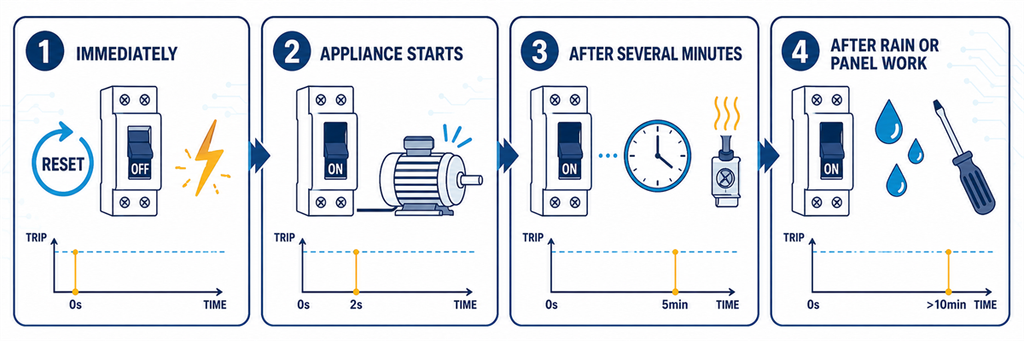
รูปแบบเวลาการตัดวงจรของ AFDD รวมถึงการรีเซ็ตทันที การสตาร์ทเครื่องใช้ไฟฟ้า การทำงานที่ล่าช้า ฝนตก และงานแผงเมื่อเร็วๆ นี้ข้อจำกัดหนึ่งควรชัดเจน: ห้ามบายพาส AFDD หรือสร้างอาร์กทดสอบโดยเด็ดขาด ผู้ใช้อาจบันทึกการแสดงผลและถอดปลั๊กอุปกรณ์ที่เข้าถึงได้หากคำแนะนำในพื้นที่อนุญาต สิ่งใดก็ตามภายในตู้ไฟฟ้าต้องมีการตัดไฟอย่างปลอดภัยและบุคลากรที่มีคุณสมบัติ.
เบาะแสแรกอาจยังอยู่บนอุปกรณ์
“มันตัดวงจรแบบสุ่ม” วินิจฉัยได้ยาก “มันแสดงการแจ้งเตือนอาร์กแบบอนุกรมเมื่อเครื่องชงกาแฟทำความร้อน” มีประโยชน์ บางอุปกรณ์แยกแยะระหว่างอาร์กแบบอนุกรม อาร์กแบบขนาน กระแสรั่วไหล กระแสเกิน ความผิดปกติของแหล่งจ่ายไฟ ความผิดพลาดภายใน และการเปิดวงจรด้วยมือ อุปกรณ์รุ่นที่ง่ายกว่าให้รายละเอียดน้อยกว่า ข้อความอาจปรากฏเป็นธงกลไก รูปแบบ LED หรือรหัสที่แสดงระหว่างลำดับการรีเซ็ตเฉพาะ.
ไม่มีรหัสสี LED AFDD ที่เป็นสากล ขึ้นอยู่กับตระกูลผลิตภัณฑ์ ระบบวินิจฉัยอาจใช้สีที่แตกต่างกัน จำนวนการกะพริบ รูปแบบรวม ธงกลไก หรือข้อความบนจอแสดงผล ปฏิบัติต่อทุกการแสดงผลเป็นเฉพาะรุ่นและอ่านคำแนะนำสำหรับหมายเลขแคตตาล็อกที่แน่นอนก่อนการตีความ.
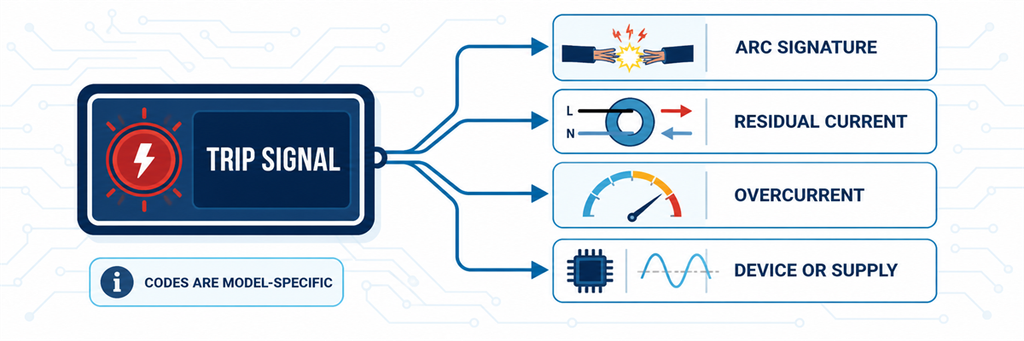
เส้นทางการวินิจฉัยการแสดงผลการตัดวงจร AFDD สำหรับสัญญาณอาร์ก กระแสรั่วไหล กระแสเกิน ความผิดพลาดของอุปกรณ์หรือแหล่งจ่ายไฟ| สถานะที่สังเกตได้ | สิ่งที่มันยืนยัน | หลักฐานแรกที่ต้องเก็บ | การตรวจสอบถัดไป |
|---|---|---|---|
| การแสดงผลอาร์กแบบอนุกรม | อัลกอริทึมอาร์กถึงเกณฑ์ความผิดพลาดแบบอนุกรม | โหลดที่ทำงานในขณะนั้น สภาพปลั๊กและสายไฟ จุดเชื่อมต่อที่หลวมหรือร้อน | อุปกรณ์ที่เชื่อมต่อ หน้าสัมผัสเต้ารับ จุดต่อ และความต่อเนื่องของตัวนำ |
| การแสดงผลอาร์กแบบขนาน | อุปกรณ์จำแนกรูปคลื่นเป็นอาร์กระหว่างตัวนำ | การเจาะเมื่อเร็วๆ นี้ ความเสียหายของสายเคเบิล ความชื้น ฉนวนที่ถูกบีบ และส่วนวงจรที่ได้รับผลกระทบ | การตรวจสอบฉนวนและสายไฟภายใต้การตัดไฟอย่างปลอดภัย |
| การแสดงผลกระแสรั่วไหล | ฟังก์ชัน RCD ทำงานบนผลิตภัณฑ์แบบรวม | อุปกรณ์เปียก การรั่วไหลสะสม การเดินสายนิวทรัล และการแก้ไขเมื่อเร็วๆ นี้ | การตรวจสอบกระแสรั่วไหลและฉนวน อย่าวินิจฉัยว่าเป็นการตัดวงจรจากอาร์ก |
| การแสดงผลโหลดเกินหรือไฟฟ้าลัดวงจร | ฟังก์ชันกระแสเกินทำงาน | โหลดที่วัดได้ เหตุการณ์การสตาร์ท สภาพความผิดพลาด เส้นโค้งเบรกเกอร์ และการป้องกันตัวนำ | การแก้ไขปัญหากระแสเกินแบบทั่วไป |
| การแสดงผลความผิดพลาดภายในหรือการทดสอบตัวเองล้มเหลว | ผลิตภัณฑ์ตรวจพบปัญหาภายในหรือไม่สามารถทำการตรวจสอบเสร็จสมบูรณ์ | สภาพแหล่งจ่ายไฟ การวางสายไฟ คำแนะนำรุ่น และสถานะซ้ำๆ | ปฏิบัติตามขั้นตอนการเปลี่ยนหรือการสนับสนุนของผู้ผลิต |
| ไม่มีสาเหตุที่เก็บไว้ได้ | เพียงแค่ว่าวงจรเปิด | เวลา โหลดที่เชื่อมต่อ สถานะการทำงาน สภาพอากาศ การแจ้งเตือน และงานเมื่อเร็วๆ นี้ | สร้างสาเหตุจากหลักฐานที่ทำซ้ำได้แทนการเดา |
ตารางเป็นวิธีจัดระเบียบหลักฐาน ไม่ใช่แผนภูมิรหัสสากล ใช้เฉพาะความหมายที่เผยแพร่สำหรับรุ่น AFDD ที่แน่นอนเท่านั้น ไฟสีเหลืองหรือการกะพริบสามครั้งบนผลิตภัณฑ์หนึ่งอาจหมายถึงสิ่งที่แตกต่างอย่างสิ้นเชิงบนอีกผลิตภัณฑ์หนึ่ง.
เมื่อไหร่ที่มันตัดวงจร?
ช่วงเวลามักจะเปิดเผยมากกว่าคำอธิบายแรกของลูกค้า ถามว่าอะไรเพิ่งเปิดสวิตช์ วงจรรับโหลดมานานแค่ไหน สภาพอากาศเปลี่ยนแปลงหรือไม่ และมีใครเพิ่งทำงานกับระบบติดตั้งหรือไม่ เหตุการณ์ที่ดูเหมือนสุ่มมักจะพัฒนารูปแบบที่ชัดเจนหลังจากการสังเกตสองหรือสามครั้ง.
มันเปิดวงจรทันทีเมื่อรีเซ็ต
- การตัดวงจรซ้ำทันทีสามารถบ่งบอกถึงความผิดพลาด downstream ที่ต่อเนื่อง การเดินสายไลน์หรือนิวทรัลที่ไม่ถูกต้อง โหลดแบบฮาร์ดไวร์ที่เชื่อมต่อ สภาพแหล่งจ่ายไฟนอกข้อกำหนดการทำงานของผลิตภัณฑ์ หรือความผิดพลาดภายในอุปกรณ์ การถอดปลั๊กเครื่องใช้ไฟฟ้าแบบพกพาไม่ได้ทำให้วงจรว่างเปล่าทางไฟฟ้า สายไฟคงที่ วงจรเต้ารับ โคมไฟ อุปกรณ์ควบคุม อุปกรณ์ที่เชื่อมต่อถาวร ฟิลเตอร์ และส่วนประกอบป้องกันไฟกระชากอาจยังคงเชื่อมต่ออยู่.
หากมันเปิดวงจรอีกครั้งทันที การรีเซ็ตซ้ำๆ ไม่น่าจะสอนอะไรใหม่ให้คุณได้ เก็บการแสดงผลไว้และดำเนินการตรวจสอบวงจรที่ควบคุมและตัดไฟอย่างปลอดภัย.
มันเปิดวงจรเมื่อเครื่องใช้ไฟฟ้าหนึ่งเครื่องสตาร์ท
ความเชื่อมโยงที่ทำซ้ำได้กับเครื่องใช้ไฟฟ้าหนึ่งเครื่องเป็นหลักฐานที่มีค่า แต่ยังไม่พิสูจน์ว่าเป็นสัญญาณรบกวนทางไฟฟ้าที่ไม่เป็นอันตราย ตรวจสอบปลั๊กของเครื่องใช้ไฟฟ้า สายไฟยืดหยุ่น สวิตช์ มอเตอร์ การเชื่อมต่อภายใน และเต้ารับที่จ่ายไฟให้ มอเตอร์แปรงถ่านที่สึกหรออาจสร้างสัญญาณที่แตกต่างจากตัวอย่างที่สมบูรณ์ หน้าสัมผัสปลั๊กที่หลวมหรือสายไฟที่เสียหายสามารถสร้างความผิดพลาดจริงที่ AFDD ตั้งใจจะตรวจจับได้.
หากเครื่องใช้ไฟฟ้าทำงานได้ตามปกติในวงจรอื่น อย่าสรุปว่า AFDD ตัวเดิมชำรุด ความต้านทานของวงจร สภาพของเต้าเสียบ ความยาวของตัวนำ โหลดอื่นที่เชื่อมต่ออยู่ และอุปกรณ์ป้องกันมีความแตกต่างกัน การเปรียบเทียบนี้บ่งชี้ถึงปฏิสัมพันธ์ที่ต้องตรวจสอบเพิ่มเติม ไม่ใช่การทดสอบความสอดคล้อง.
เปิดวงจรหลังจากผ่านไปหลายนาที
เหตุการณ์ที่เกิดขึ้นล่าช้าควรบันทึกระดับโหลด ความร้อน การสั่นสะเทือน และการเปลี่ยนแปลงของการเชื่อมต่อไว้ในบันทึก ในอุปกรณ์ AFDD-MCB หรือ AFDD-RCBO แบบรวม ฟังก์ชันป้องกันกระแสเกินเนื่องจากความร้อนอาจทำงานอยู่ จุดเชื่อมต่ออาจร้อนและไม่เสถียรเมื่อกระแสยังคงไหลต่อไป ควรวัดและตีความการทำงานจริงก่อนเพิ่มพิกัดกระแส พิกัดที่ใหญ่ขึ้นอาจทำให้ตัวนำไม่ได้รับการป้องกันอย่างเหมาะสม และไม่เปลี่ยนแปลงสัญญาณอาร์กที่แท้จริง.
อุปกรณ์ตัดวงจรเฉพาะในสภาพอากาศชื้นหรือหลังการทำความสะอาด
ความชื้นอาจส่งผลต่อเต้ารับภายนอกอาคาร กล่องรวมสาย โคมไฟ เครื่องใช้ไฟฟ้า และฉนวนที่เสียหาย ในอุปกรณ์แบบรวม ฟังก์ชันกระแสรั่วไหลอาจทำงานก่อนหรือแทนการตรวจจับอาร์ก ควรบันทึกรหัสการตัดวงจรและตรวจสอบเส้นทางการสัมผัสความชื้น อย่าติดป้ายทุกเหตุการณ์ที่เกี่ยวข้องกับสภาพอากาศว่าเป็นการตัดวงจรที่รบกวนของ AFDD.
อุปกรณ์ตัดวงจรหลังจากทำงานที่แผงไฟฟ้า
การติดตั้งหรือการแก้ไขล่าสุดทำให้ข้อผิดพลาดด้านการเดินสายและอินเทอร์เฟซอยู่ในลำดับต้นๆ ของสาเหตุ ได้แก่ การต่อสายไฟเข้าออกผิดด้าน การสลับสายนิวทรัล การที่สายนิวทรัลย้อนกลับผ่านอุปกรณ์ป้องกันตัวอื่น การประกบรางบัสไม่สมบูรณ์ ฉนวนถูกหนีบในขั้วต่อ การเตรียมตัวนำไม่ถูกต้อง หรือสายเคเบิลเสียหาย ควรตรวจสอบแผนผังผลิตภัณฑ์และความเข้ากันได้ของแผงไฟฟ้าอีกครั้งก่อนเปลี่ยนชิ้นส่วน.
ข้อบกพร่องมักอยู่ในหนึ่งในสี่ตำแหน่ง
ก่อนสั่งซื้อ AFDD ทดแทน ควรหาว่าอาการยังคงอยู่ที่ใด การตรวจสอบส่วนใหญ่จะจำกัดอยู่ในหนึ่งในสี่พื้นที่ และแต่ละพื้นที่ชี้ไปที่แนวทางการแก้ไขที่แตกต่างกัน.
- อุปกรณ์ที่เชื่อมต่อ: เครื่องใช้ไฟฟ้าแบบเสียบปลั๊ก สายพ่วง แหล่งจ่ายไฟแบบสวิตชิ่ง ไดรเวอร์ LED ดิมเมอร์ คอนแทกเตอร์ รีเลย์ และมอเตอร์.
- สายไฟประจำที่และจุดเชื่อมต่อ: ตัวนำที่เสียหาย จุดเชื่อมต่อหลวม อุปกรณ์เสริมที่ไหม้เกรียม ฉนวนที่ถูกบีบอัด กล่องรวมสาย เต้ารับ และโหลดที่เดินสายถาวร.
- การติดตั้งและอินเทอร์เฟซ: ความสัมพันธ์ของสายไฟและนิวทรัล ทิศทางการจ่ายไฟเข้า/ออก ระบบรางบัส การเตรียมตัวนำ แรงบิด การกำหนดค่าขั้ว อุณหภูมิภายในตู้ และการประสานงานของอุปกรณ์ป้องกัน.
- ตัว AFDD และแหล่งจ่ายไฟ: แรงดันไฟฟ้าที่ใช้งานได้จริง สถานะการทดสอบตัวเองทางอิเล็กทรอนิกส์ การแสดงข้อบกพร่องภายใน ความเสียหายของผลิตภัณฑ์ และข้อมูลความเข้ากันได้เฉพาะรุ่น.
การแบ่งหมวดหมู่ง่ายๆ นี้ช่วยหลีกเลี่ยงสมมติฐานที่ costly สองประการ: การเปลี่ยน AFDD ที่ยังดีอยู่เพราะเครื่องใช้ไฟฟ้าชิ้นหนึ่งมีจุดเชื่อมต่อเสียหาย หรือการมองข้ามข้อบกพร่องจริงเพราะไม่มีรอยไหม้ที่ชัดเจน.
ทำไมอุปกรณ์ทั่วไปจึงทำให้การวินิจฉัยซับซ้อนขึ้น
AFDD ไม่ได้ตัดวงจรทุกครั้งที่เกิดประกายไฟ สวิตช์คอนแทค รีเลย์ มอเตอร์แบบแปรงถ่าน ดีมเมอร์ และแหล่งจ่ายไฟอิเล็กทรอนิกส์ สามารถสร้างองค์ประกอบความถี่สูง ความไม่ต่อเนื่อง และเหตุการณ์สวิตช์ในระหว่างการทำงานปกติ การออกแบบที่เป็นไปตามมาตรฐานต้องแยกแยะพฤติกรรมการทำงานที่คาดหวังจากรูปแบบอาร์คที่เป็นอันตรายที่กำหนดไว้
การแยกแยะอาร์กพิจารณาการรวมกันของลักษณะต่างๆ เช่น ระยะเวลา ความไม่สม่ำเสมอ พฤติกรรมกระแสรอบจุดตัดศูนย์ และการรบกวนความถี่สูง นั่นคือเหตุผลที่สไปก์จากออสซิลโลสโคปเพียงจุดเดียว ประกายไฟจากการสลับที่มองเห็นได้ หรือเสียงคลิกที่ได้ยินไม่เพียงพอต่อการวินิจฉัยข้อบกพร่องอาร์ก.
เมื่อการตัดวงจรเกิดขึ้นซ้ำๆ ตามโหลดหนึ่ง การตรวจสอบสองสามขั้นตอนถัดไปควรตอบคำถามง่ายๆ: ปัญหาอยู่ที่ตัวเครื่องใช้ไฟฟ้า จุดเชื่อมต่อ หรือวงจรจ่ายไฟ?
- ถ่ายภาพสาเหตุที่ AFDD เก็บไว้ก่อนทำการรีเซ็ต.
- บันทึกรุ่นโหลด โหมดการทำงาน การตั้งค่าความเร็ว ตำแหน่งดิมเมอร์ และจังหวะเวลา.
- ตรวจสอบปลั๊ก สายไฟ เต้ารับ สวิตช์ จุดเชื่อมต่อ และสภาพที่มองเห็นได้.
- หากได้รับอนุญาต ให้นำอุปกรณ์ออกจากการใช้งานและยืนยันว่าอาการหยุดลงในช่วงเวลาการทำงานที่มีความหมาย.
- หากสาเหตุยังไม่ชัดเจน ให้นำอุปกรณ์และวงจรไปทดสอบภายใต้การแยกวงจรอย่างปลอดภัย.
- สำหรับการสนับสนุนทางเทคนิค ให้ระบุรุ่น AFDD และรหัสการผลิตพร้อมข้อมูลวงจร เหตุการณ์ และโหลด.
“การตัดวงจรที่รบกวน” ควรเป็นข้อสรุปของการตรวจสอบ ไม่ใช่ชื่อที่กำหนดในการเรียกบริการครั้งแรก เครื่องใช้ไฟฟ้าที่มีจุดเชื่อมต่อเสื่อมสภาพอาจยังทำงานได้ในขณะที่สร้างสัญญาณอันตรายที่แท้จริง.
หลังการปรับปรุงระบบ เริ่มต้นด้วยสายนิวทรัลและอินเทอร์เฟซแผงไฟฟ้า
ผลิตภัณฑ์ AFDD-RCBO แบบรวมต้องการให้ตัวนำไฟฟ้าที่ถูกตรวจสอบทุกเส้นไหลตามเส้นทางที่กำหนดไว้ สายไฟจากวงจรหนึ่งและนิวทรัลจากอีกวงจรหนึ่งสามารถทำให้การทำงานของกระแสรั่วไหลหลีกเลี่ยงไม่ได้ การเชื่อมต่อนิวทรัลกับดินที่ปลายทางสามารถเบี่ยงเบนกระแสออกจากเส้นทางกลับที่ถูกตรวจสอบได้ เงื่อนไขเหล่านี้อยู่ในขอบเขตการตรวจสอบกระแสรั่วไหล แม้ว่าฉลากด้านหน้าจะระบุว่า AFDD อย่างชัดเจนก็ตาม.
บนแผงไฟฟ้าที่เพิ่งแก้ไข รายละเอียดต่อไปนี้สมควรได้รับความสนใจ:
- สายไฟและนิวทรัลอยู่ในวงจรย่อยเดียวกัน;
- การใช้สายนิวทรัลร่วมหรือการจัดเรียงหลายสายต้องใช้ผลิตภัณฑ์และวิธีการเชื่อมต่อที่ได้รับการอนุมัติ;
- ขั้วจ่ายไฟและขั้วโหลดที่กำหนดต้องปฏิบัติตาม;
- สายนิวทรัลหรือขั้วนิวทรัลต้องเชื่อมต่อตามคำแนะนำอย่างเคร่งครัด;
- ประเภทรางบัส ระยะห่างขั้ว ความลึกของขั้วต่อ และระบบแผงไฟฟ้าต้องตรงกัน;
- ต้องไม่มีฉนวนตัวนำถูกหนีบในตำแหน่งที่ทองแดงควรสัมผัส;
- แรงบิดของขั้วต่อต้องเป็นไปตามคำแนะนำของผลิตภัณฑ์และแผงไฟฟ้า;
- อุปกรณ์อิเล็กทรอนิกส์ต้องได้รับการจัดการอย่างถูกต้องระหว่างการทดสอบความต้านทานฉนวน.
การทดสอบแรงดันสูงฉนวนทั่วไปไม่ควรใช้ผ่านอุปกรณ์ป้องกันอิเล็กทรอนิกส์ที่เชื่อมต่ออยู่ เว้นแต่วิธีการที่ได้รับการอนุมัติจะอนุญาต มาตรฐานการติดตั้งในท้องถิ่นและคำแนะนำผลิตภัณฑ์กำหนดว่าต้องถอด เชื่อมโยง หรือป้องกันสิ่งใดระหว่างการทดสอบ.
ทำไม MCB หรือ RCD อาจยังคงทำงานอยู่
อาร์กแบบอนุกรมเกิดขึ้นในเส้นทางกระแส โหลดสามารถจำกัดกระแสให้ต่ำกว่าเกณฑ์การโอเวอร์โหลดหรือเกณฑ์ทันทีของ MCB หากกระแสเดียวกันไหลออกทางสายไฟและกลับทางนิวทรัล RCD อาจไม่เห็นความไม่สมดุลของกระแสรั่วไหล AFDD กำลังมองหาลักษณะอาร์กที่กำหนดไว้ แทนที่จะรอเพียงกระแสเกินหรือการรั่วไหลลงดิน.
อาร์กแบบขนานระหว่างสายไฟกับนิวทรัลอาจยังคงสมดุลจากมุมมองของอุปกรณ์กระแสรั่วไหล กระแสของมันอาจไม่ต่อเนื่องหรือถูกจำกัดโดยเส้นทางที่เสียหาย ดังนั้นเบรกเกอร์ทั่วไปจึงไม่จำเป็นต้องเห็นการลัดวงจรโลหะที่เสถียร ข้อบกพร่องระหว่างสายไฟกับดินแตกต่างกันและอาจทำให้การป้องกันกระแสรั่วไหลทำงาน.
นี่คือเหตุผลที่ AFDD, เบรกเกอร์วงจรขนาดเล็ก, และ เบรกเกอร์ป้องกันกระแสรั่วพร้อมการป้องกันกระแสเกิน ตอบคำถามเกี่ยวกับข้อบกพร่องที่แตกต่างกัน มีเพียงผลิตภัณฑ์ที่รวมฟังก์ชันเหล่านั้นอย่างชัดเจนเท่านั้นที่ให้ทั้งหมดในชุดประกอบเดียว.
ปุ่มทดสอบพิสูจน์อะไร—และไม่ได้พิสูจน์อะไร
IEC 62606 คือมาตรฐานผลิตภัณฑ์สากลสำหรับ AFDD ในครัวเรือนและอุปกรณ์ที่คล้ายกัน ฉบับรวมปัจจุบันคือ IEC 62606:2013+A1:2017+A2:2022. โดยให้กรอบการทำงานในระดับผลิตภัณฑ์ ในขณะที่ข้อกำหนดการติดตั้งจะถูกควบคุมแยกต่างหาก เช่น ผ่านทาง IEC 60364-4-42:2024 และการนำไปใช้ในระดับประเทศ.
ฟังก์ชันการทดสอบขึ้นอยู่กับเงื่อนไขที่ระบุไว้สำหรับอุปกรณ์นั้น: การจ่ายไฟ, ตำแหน่งของมือจับ, สถานะโหลด และช่วงเวลาการทดสอบอาจมีความสำคัญทั้งหมด ตารางที่พิมพ์สำหรับกลุ่มผลิตภัณฑ์หนึ่งไม่ใช่กฎ AFDD สากล.
การทดสอบที่สำเร็จยืนยันฟังก์ชันภายในที่รวมอยู่ในเส้นทางการทดสอบของผลิตภัณฑ์และความสามารถในการสั่งตัดวงจรภายใต้เงื่อนไขที่ระบุ ไม่ได้พิสูจน์:
- สภาพของจุดเชื่อมต่อปลายทางทุกจุด;
- ความสมบูรณ์ของฉนวนของวงจรทั้งหมด;
- การป้องกันที่ถูกต้องต่อการโอเวอร์โหลด ไฟฟ้าลัดวงจร หรือกระแสรั่วไหล เว้นแต่ฟังก์ชันเหล่านั้นจะถูกทดสอบแยกต่างหาก;
- การไม่มีข้อบกพร่องเป็นช่วงๆ;
- ความเข้ากันได้กับโหลดอิเล็กทรอนิกส์ทุกประเภท;
- ว่าการตัดวงจรก่อนหน้านี้เป็นเหตุการณ์อาร์กจริง.
หากอุปกรณ์ไม่ทำงานระหว่างการทดสอบที่กำหนด ให้ปฏิบัติตามขั้นตอนการจัดการข้อบกพร่องของผลิตภัณฑ์ การจ่ายไฟ สายไฟ และเงื่อนไขการทำงานอาจต้องได้รับการยืนยันก่อนที่จะตัดสินว่า AFDD เองมีปัญหา.
ลำดับการแก้ไขปัญหาเชิงปฏิบัติ
ลำดับด้านล่างเริ่มจากหลักฐานที่ง่ายที่สุดไปจนถึงการตรวจสอบที่ต้องใช้การแยกวงจรและอุปกรณ์ทดสอบ ไม่ได้อาศัยการสร้างอาร์กหรือการถอดการป้องกันเพียงเพื่อให้วงจรยังคงทำงาน.
| ขั้นตอน | การดำเนินการ | ผลลัพธ์ที่ได้ |
|---|---|---|
| เก็บรักษา | ถ่ายภาพหรือบันทึกมือจับ ธง ลำดับไฟ LED เวลา โหลดที่ใช้งาน และสภาพไซต์งานก่อนการรีเซ็ต | ฟังก์ชันป้องกันใดและเหตุการณ์การทำงานใดควรนำการวินิจฉัย |
| ระบุ | ยืนยันหมายเลขแคตตาล็อก AFDD ที่แน่นอน สถาปัตยกรรม และคำแนะนำรหัสการตัดวงจรที่เผยแพร่ | ว่ามีการระบุอาร์ก RCD กระแสเกิน การจ่ายไฟ ข้อบกพร่องภายใน หรือการทำงานด้วยมือ |
| ถอดโหลดที่เข้าถึงได้ | ภายใต้ขั้นตอนผู้ใช้ที่ได้รับอนุญาต ถอดปลั๊กอุปกรณ์พกพาและเก็บอุปกรณ์ที่สงสัยไว้นอกการใช้งาน | ว่าอาการตามอุปกรณ์ที่เข้าถึงได้หรือไม่ สายไฟคงที่อาจยังคงเชื่อมต่ออยู่ |
| แยกส่วนวงจร | บุคลากรที่มีคุณสมบัติแยกโหลดแบบเดินสายแข็งและส่วนวงจรภายใต้การแยกวงจรอย่างปลอดภัย | สาขาใดยังคงมีข้อบกพร่อง |
| ตรวจสอบและวัด | ตรวจสอบจุดเชื่อมต่อ ความเสียหายของตัวนำ ความสัมพันธ์ขั้ว/นิวทรัล ฉนวน การรั่วไหล โหลด และเงื่อนไขข้อบกพร่องโดยใช้วิธีการที่ได้รับอนุมัติ | ว่าหลักฐานสนับสนุนข้อบกพร่องของสายไฟ อุปกรณ์ อินเทอร์เฟซ หรือการป้องกันแบบทั่วไป |
| ตรวจสอบอุปกรณ์ | ใช้ขั้นตอนการทำงานเฉพาะรุ่นและวิธีการเปรียบเทียบหรือเปลี่ยนทดแทนที่ได้รับอนุมัติ | ว่า AFDD หรือการจ่ายไฟ/อินเทอร์เฟซยังคงเป็นสาเหตุที่ยังไม่ได้รับการแก้ไข |
| พิสูจน์การแก้ไข | ทำการทดสอบการติดตั้งที่จำเป็นซ้ำและการทำงานที่เป็นตัวแทน แล้วบันทึกการกำหนดค่าสุดท้าย | ว่าวงจรปลอดภัยที่จะกลับมาใช้งานและเหตุการณ์สามารถตรวจสอบย้อนกลับได้ |
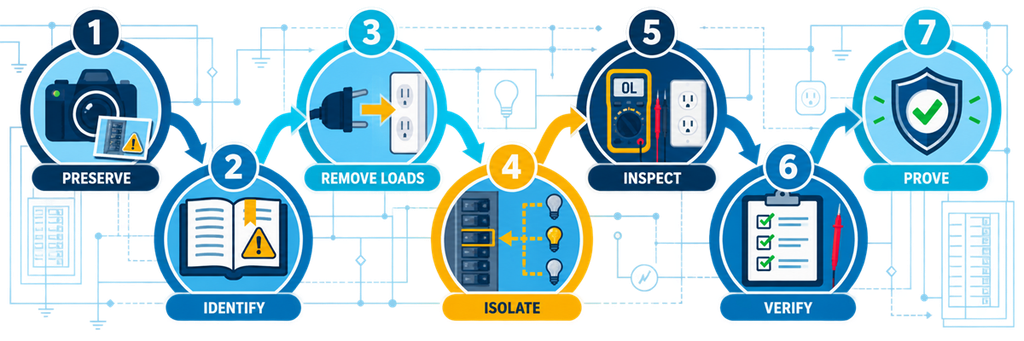
ลำดับการแก้ไขปัญหา AFDD เจ็ดขั้นตอนจากการเก็บรักษาหลักฐานการตัดวงจรไปจนถึงการพิสูจน์การแก้ไขกลับไปยังสถานการณ์เริ่มต้น. สมมติว่าหน่วยความจำการตัดวงจรชี้ไปที่เหตุการณ์อาร์กแบบอนุกรมและวงจรยังคงเสถียรหลังจากถอดเครื่องใช้ไฟฟ้าออก นั่นยังไม่ตัดสินว่าเครื่องใช้ไฟฟ้ามีปัญหาหรือเคลียร์ปลั๊กไฟ แต่ให้ขอบเขตที่ชัดเจนสำหรับการตรวจสอบครั้งถัดไป: ปลั๊ก สายไฟ จุดเชื่อมต่อของเครื่องใช้ไฟฟ้า และเต้ารับที่จ่ายไฟ หากเหตุการณ์กลับมาอีกเมื่อถอดโหลดพกพาทั้งหมดแล้ว ความสนใจจะย้ายไปที่สายไฟคงที่และอุปกรณ์แบบเดินสายแข็ง นี่คือเส้นทางตัวอย่าง ไม่ใช่การแทนที่รหัสที่แสดงโดย AFDD จริง.
ก่อนเปลี่ยนอะไร หลีกเลี่ยงทางลัด
- การลดระดับชั่วคราว: การเปลี่ยน AFDD ด้วย MCB หรือ RCBO อาจลบการป้องกันอาร์กฟอลต์ที่กำหนดโดยโครงการหรือกฎท้องถิ่น โดยไม่ระบุสาเหตุเดิม.
- พิกัดที่ใหญ่ขึ้นหรือเส้นโค้งที่ต่างกัน: เครื่องหมายเหล่านี้เปลี่ยนพฤติกรรมกระแสเกินแบบทั่วไป ไม่ใช่การปรับความไวต่ออาร์ก.
- การสร้างอาร์กทดสอบในสนาม: การคลายขั้วต่อหรือทำให้สายเสียหายไม่ปลอดภัยและไม่สามารถจำลองการทดสอบผลิตภัณฑ์ที่เป็นมาตรฐานได้.
- การยืมคำอธิบาย LED: สีเดียวกันหรือจำนวนการกะพริบเดียวกันอาจหมายถึงสิ่งที่แตกต่างกันในหมายเลขแคตตาล็อกที่ต่างกัน.
- “ไม่มีโหลด” หลังการถอดปลั๊ก: สายไฟแบบฝัง อุปกรณ์ให้แสงสว่าง อุปกรณ์ควบคุม และอุปกรณ์แบบต่อสายตรงยังคงเชื่อมต่ออยู่.
- การเปลี่ยนก่อนกำหนด: การถอดอุปกรณ์ออกก่อนที่จะเก็บรักษารหัส ข้อมูลเวลา และข้อมูลโหลด อาจทำลายหลักฐานที่จำเป็นในการสรุปผล.
สำหรับงานในอเมริกาเหนือ ให้ระบุและวินิจฉัย AFCI ที่อยู่ในรายการสำหรับแผงและกฎการติดตั้งที่เกี่ยวข้อง ไม่ใช่ IEC AFDD ทั่วไป. UL 1699 ครอบคลุมอุปกรณ์ตัดวงจรป้องกันอาร์กฟอลต์ ในขณะที่ฟังก์ชันป้องกันเพิ่มเติมใดๆ ยังคงอยู่ภายใต้ข้อกำหนดที่เกี่ยวข้อง หลักการวินิจฉัยแบบให้ความสำคัญกับฟังก์ชันก่อนยังคงมีประโยชน์ แต่ไม่ควรอนุมานการแสดงผล AFCI อินเทอร์เฟซแผง พิกัด หรือขั้นตอนการทดสอบจาก IEC AFDD.
ให้ข้อมูลเฉพาะเจาะจงแก่ฝ่ายสนับสนุนทางเทคนิคเพื่อใช้ในการทำงาน
รายงานที่สั้นและเฉพาะเจาะจงมักประหยัดเวลามากกว่าการรีเซ็ตอีกรอบ แทนที่จะเขียนเพียงว่า “AFDD ตัดวงจรแบบสุ่ม” ให้ระบุ:
- รุ่นและรหัสการผลิตของ AFDD หรือ AFDD-RCBO ที่สมบูรณ์;
- แรงดันไฟฟ้าที่กำหนด ความถี่ กระแส จำนวนขั้ว เส้นโค้ง ความสามารถในการตัดวงจร และเครื่องหมายกระแสตกค้างในกรณีที่มีการรวมไว้;
- ระบบแผงจ่ายไฟและบัสบาร์;
- การจัดวางแบบเส้นเดี่ยวหรือวงจรสุดท้าย;
- การแสดงผลการตัดวงจรตามที่สังเกตได้จริง;
- วันที่ เวลา สภาพอากาศ และเหตุการณ์เกิดขึ้นหลังงานติดตั้งหรือไม่;
- โหลดที่เชื่อมต่อและโหลดแบบต่อสายตรง รวมถึงหมายเลขรุ่นและโหมดการทำงาน;
- เหตุการณ์เกิดขึ้นตามโหลดหนึ่งตัว ส่วนหนึ่งของวงจร หรือตัวอุปกรณ์;
- การทดสอบที่เสร็จสิ้น เครื่องมือที่ใช้ และผลลัพธ์;
- ภาพถ่ายฉลากอุปกรณ์ การแสดงผล และรายละเอียดสายไฟที่มองเห็นได้ซึ่งได้รับอนุญาต.
รายละเอียดเหล่านี้ช่วยให้ฝ่ายสนับสนุนทางเทคนิคเปรียบเทียบเหตุการณ์กับตรรกะการตรวจจับของผลิตภัณฑ์ ขีดจำกัดการจ่ายไฟ และการติดตั้งที่ได้รับอนุมัติ หากจำเป็นต้องเปลี่ยน ให้เปรียบเทียบสิ่งที่เหมือนกัน: มาตรฐานผลิตภัณฑ์ ฟังก์ชัน แรงดันไฟฟ้า กระแส จำนวนขั้ว การจัดวางสายนิวทรัล ความสามารถในการตัดวงจร ประเภทกระแสตกค้าง อินเทอร์เฟซแผง และการรับรองตลาด ล้วนเป็นส่วนหนึ่งของการตัดสินใจ ช่วง AFDD และ AFDD-RCBO แบบรวมของ JUTRION สามารถตรวจสอบได้หลังจากทราบข้อเท็จจริงของวงจรเหล่านั้นแล้ว.
คำถามที่พบบ่อย
AFDD สามารถตัดวงจรได้โดยไม่มีอาร์คฟอลต์หรือไม่?
ใช่ ขึ้นอยู่กับสถาปัตยกรรมของผลิตภัณฑ์ AFDD-RCBO แบบรวมอาจตัดวงจรสำหรับกระแสรั่วไหล โอเวอร์โหลด ไฟฟ้าลัดวงจร ความล้มเหลวของการทดสอบภายใน หรือฟังก์ชันอื่นที่บันทึกไว้ การใช้งานด้วยมืออาจสับสนกับการตัดวงจรเพื่อป้องกันได้ อ่านการแสดงผลเฉพาะผลิตภัณฑ์ก่อน.
เหตุใด AFDD จึงตัดวงจรในขณะที่ MCB หรือ RCD ยังคงทำงานอยู่?
อาร์กแบบอนุกรมอาจอยู่ต่ำกว่าเกณฑ์กระแสเกินของ MCB และอาร์กระหว่างสายกับนิวทรัลอาจไม่ทำให้เกิดความไม่สมดุลของกระแสรั่วไหล AFDD จะประเมินลักษณะเฉพาะของอาร์กที่กำหนดไว้ ดังนั้นการทำงานโดยไม่ทำให้ MCB หรือ RCD ทริปจึงเป็นไปได้ในทางเทคนิค และเป็นหนึ่งในเหตุผลที่ฟังก์ชันเหล่านี้เสริมซึ่งกันและกัน.
เหตุใด AFDD จึงตัดวงจรเมื่อไม่มีอะไรเสียบปลั๊กอยู่?
การถอดโหลดแบบพกพาออกไม่ได้เป็นการถอดสายไฟติดตั้งถาวร เต้ารับ ระบบไฟส่องสว่าง ตัวควบคุม เครื่องใช้ไฟฟ้าที่เดินสายถาวร หรือข้อผิดพลาดในการติดตั้งออก หากเหตุการณ์ยังคงอยู่ การตรวจสอบแบบแยกส่วนจะเคลื่อนไปไกลกว่าอุปกรณ์ที่เสียบปลั๊ก ก่อนที่จะโทษตัว AFDD เอง.
AFDD ที่ตัดวงจรบ่อยครั้งสามารถเปลี่ยนเป็นเบรกเกอร์ทั่วไปได้หรือไม่?
ไม่ใช่เพื่อใช้เป็นทางลัดในการแก้ไขปัญหาทั่วไป การเปลี่ยนทดแทนอาจลบการป้องกันอาร์คฟอลต์ที่จำเป็น และอาจเข้ากันไม่ได้กับการออกแบบบอร์ดหรือวงจร กำหนดข้อกำหนดการติดตั้งที่เกี่ยวข้องและแก้ไขข้อบกพร่อง การเปลี่ยนทดแทนใดๆ ต้องมีฟังก์ชัน ค่าพิกัด การอนุมัติ และอินเทอร์เฟซที่จำเป็น.
ผลลัพธ์ที่เป็นประโยชน์คือหลักฐาน ไม่ใช่การคาดเดา
การวินิจฉัยที่ดีไม่ได้จบลงด้วย AFDD ที่ชำรุดเสมอไป อาจค้นพบหน้าสัมผัสปลั๊กที่หลวม ความชื้นในอุปกรณ์ติดตั้งภายนอก สายนิวทรัลที่ไขว้กันหลังการปรับปรุงใหม่ เครื่องใช้ไฟฟ้าที่สายไฟเสื่อมสภาพ หรือความผิดพลาดของอุปกรณ์ที่ยืนยันได้โดยการเปลี่ยนทดแทนภายใต้สภาวะควบคุม สิ่งที่สำคัญคือข้อสรุปต้องเป็นไปตามหลักฐาน ซึ่งจะทำให้อันตรายจากอาร์กที่แท้จริงยังคงมองเห็นได้ หลีกเลี่ยงการเปลี่ยนที่ไม่จำเป็น และให้ข้อมูลเพียงพอแก่ผู้สร้างแผงหรือผู้ผลิตในการแนะนำการแก้ไขที่ถูกต้อง.
เอกสารอ้างอิงทางเทคนิค
