

Current Transformers (CTs) | Low-Voltage & Industrial Measuring Transformers
JUTRION offers a range of current transformers (CTs) for low-voltage power distribution, energy metering, and industrial monitoring applications. Our CT solutions are available in multiple current ratios and accuracy classes to meet various project requirements.
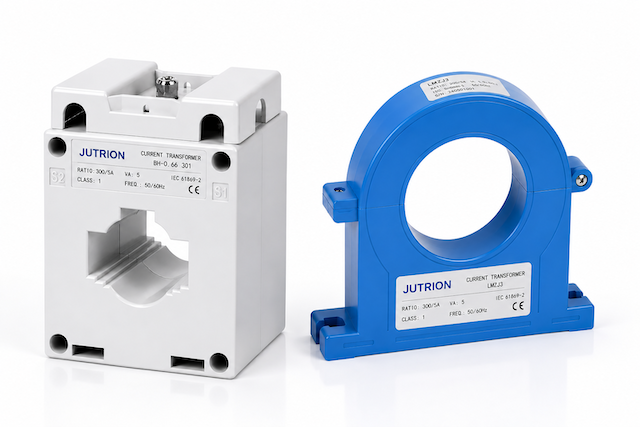
HIGH MEASUREMENT ACCURACY
Provides accurate current measurement for metering, monitoring, and electrical protection systems.
STABLE PERFORMANCE
Delivers reliable signal output with low measurement error, even during long-term operation.
MULTIPLE CONFIGURATIONS
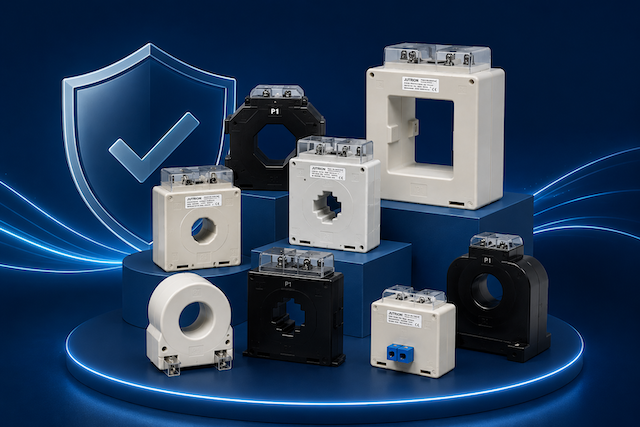
Available in ring-type, split-core, busbar, and DIN-rail designs to suit different installation requirements.
EASY INSTALLATION
Compact structure and flexible mounting options make installation and maintenance faster and easier.
What is a Current Transformer (CT)?
A Current Transformer (CT) is an instrument transformer designed to step down high alternating currents (AC) in a power system to a lower, standardized, and safer value (typically 1A or 5A). By producing a reduced secondary current that is directly proportional to the primary current, a CT enables standard electrical meters, protective relays, and monitoring instruments to safely measure and protect high-voltage electrical circuits without being directly exposed to dangerous power levels.
EXPLORE OUR CURRENT TRANSFORMER RANGE
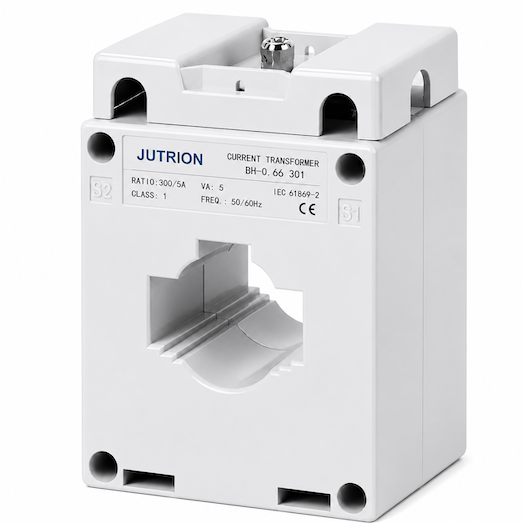
BH Series Current Transformers(Busbar Type)
Available in multiple current ratios and window sizes, the BH series is suitable for installation in distribution panels, switchgear, control cabinets, and industrial power systems. Its compact structure, stable output, and reliable insulation performance make it suitable for both new projects and equipment replacement.
- Multiple current ratios available
- Rated secondary current: 5 A or 1 A
- Accuracy classes available for metering and protection
- Compact design for panel installation
- Suitable for 50/60 Hz low-voltage systems
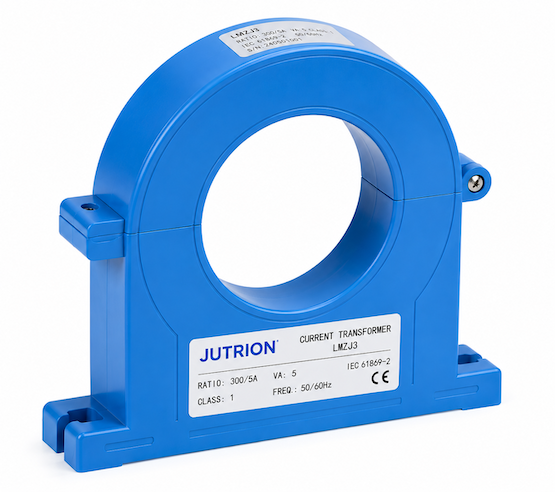
LMZJ3 Series Current Transformers(Window Type / Ring Type)
Available in multiple current ratios and window sizes, the LMZJ3 series is widely used in distribution panels, switchgear, control cabinets, and industrial power systems. Its excellent insulation performance, stable output, and durable construction ensure reliable long-term operation.
- Multiple current ratios available
- Excellent insulation performance
- High measurement accuracy
- Compact resin-cast design
- Suitable for 50/60 Hz low-voltage systems
WHERE CURRENT TRANSFORMERS ARE USED
Current transformers (CTs) are widely used in low-voltage and medium-voltage power systems to provide accurate current measurement for metering, monitoring, and protection. They safely convert high primary currents into standardized secondary currents, enabling electrical equipment and control systems to operate reliably across a wide range of industrial and commercial applications.
Energy Metering
Used with energy meters and multifunction meters to measure current and calculate power consumption accurately.
Power Monitoring
Provides current signals for monitoring systems, power analyzers, and energy management systems.
Electrical Protection
Works with protective relays and control devices to detect overloads, short circuits, and abnormal current conditions.
Distribution Panels and Switchgear
Widely installed in distribution boards, switchgear, control cabinets, and low-voltage power systems.
Industrial Equipment
Suitable for motors, generators, transformers, production lines, and other industrial electrical equipment.
Renewable Energy Systems
Used in solar PV, energy storage, wind power, and charging systems for current measurement and system monitoring.
HOW TO CHOOSE A CURRENT TRANSFORMER
Choosing the right current transformer requires consideration of the primary current, secondary output, accuracy class, rated burden, installation method, and application requirements. A properly selected CT helps ensure accurate measurement, reliable protection, and stable system operation.
1.Primary Current Ratio
Choose a current transformer with a primary current rating that matches the maximum operating current of your electrical system. Selecting an oversized or undersized current ratio may reduce measurement accuracy and affect system performance.
2. Secondary Current
The most common secondary current ratings are 5 A and 1 A. Select the appropriate secondary output according to the requirements of the connected energy meter, measuring instrument, or protection relay.
3. Accuracy Class
Different applications require different accuracy classes. Metering applications generally require higher accuracy, while protection systems focus on reliable operation under fault conditions. Always select a CT that meets the accuracy requirements of your project.
4. Rated Burden
The rated burden should be compatible with the connected meters, relays, and wiring distance. An inappropriate burden may increase measurement errors and reduce overall system performance.
5. Window Size and Installation Type
Select the appropriate window size and installation type based on the conductor or busbar dimensions. Ring-type, busbar-type, and split-core current transformers are available for different installation requirements.
6. Application Environment
Consider the installation environment, including temperature, humidity, insulation requirements, and available installation space. Choosing a current transformer designed for the operating conditions helps ensure long-term stability and reliability.
WHY CHOOSE JUTRION CURRENT TRANSFORMERS
- Reliable measurement accuracy
- Multiple current ratios and sizes
- OEM and ODM support
- Strict quality inspection
- Fast technical support
Current Transformer FAQs
What is a Current Transformer (CT) and how does it work?
A Current Transformer (CT) is an instrument transformer used to step down high alternating currents (AC) to a lower, standardized value (typically 1A or 5A). It works on the principle of electromagnetic induction, producing a secondary current that is directly proportional to the primary current for safe measurement and monitoring.
Why are Current Transformers necessary in electrical systems?
High-voltage and high-current circuits cannot be connected directly to standard measuring devices or protection relays. A CT isolates the instruments from dangerous primary voltages and steps down heavy load currents to a safe level, allowing meters and protection equipment to operate reliably and safely.
What is the difference between a Measuring CT and a Protection CT?
Measuring CTs are designed with high accuracy for normal operating current ranges to drive energy meters and power analyzers; they saturate quickly during fault conditions to protect connected instruments. Protection CTs maintain linearity over very high fault current ranges to ensure protective relays accurately detect short circuits and trip circuit breakers.
What happens if a Current Transformer secondary circuit is left open?ork?
Leaving the secondary winding of an energized CT open creates an extremely high voltage across the secondary terminals. This occurs because there is no counter-magnetic flux from secondary current, leading to severe insulation breakdown, equipment failure, and critical safety hazards for operators.
NEED THE RIGHT CURRENT TRANSFORMER FOR YOUR PROJECT?
Tell us your required current ratio, accuracy class, window size, installation method, and application. JUTRION will help you select a suitable current transformer and provide technical support, OEM/ODM customization, and a competitive quotation.